
WASHINGTON – The Israeli official in charge of rebuilding communities near Gaza and Lebanon wants the government to help 100,000 Jews from abroad settle in the country’s North and South.
Alumni of Birthright Israel, the program Aviad Friedman helped found, are among the people he is interested in recruiting. This time, though, he would invite them to bring their families and stay.
We sat down in a quiet corner of the Washington hotel that recently hosted the Jewish Federations of North America’s General Assembly.
I asked him where he thought he could find that many people willing to move to a place like Sderot, a few kilometers from Gaza, or Kiryat Shmona, just south of Lebanon.
“First of all, from Europe,” he said. Then he added, “I think from here.”
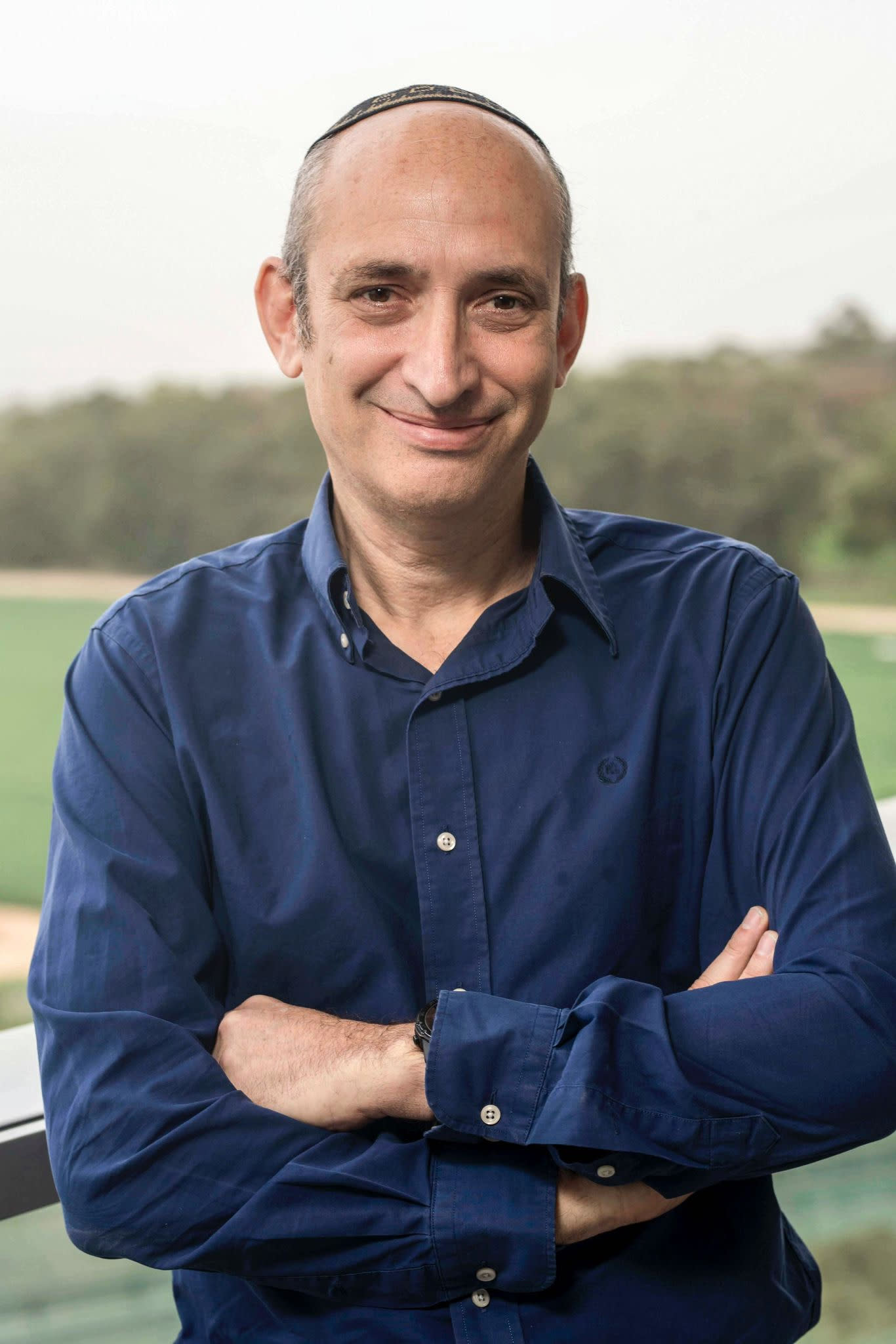
Friedman, a former director-general of the Construction and Housing Ministry, took over the Tkuma Directorate, the agency rebuilding Israel’s Gaza border communities, in March 2025. He moved to Sderot for part of each week to get to know the residents.
This year, he also took charge of the Tnufa Directorate, which oversees recovery in the North following Hezbollah’s attacks from Lebanon.
Friedman would start by recruiting 200 people. He pictured a couple bringing their two children to meet neighbors in Ma’alot in the Galilee or Katzrin in the Golan Heights.
The government already covers one-way airfare to Israel for eligible olim, new immigrants. Friedman wants the state to help families cover housing costs as well if they settle in the North or South.
Once the first group settles in, he believes others will follow. He gave no per-family amount or timetable.
Government's delay in support led to loss of trust
For comparison, the Central Bureau of Statistics counted 20,900 olim arrivals across Israel in 2025.
Tkuma already aims to roughly double the population of the Gaza border region to 120,000 by 2033. Friedman’s own proposal is to recruit 100,000 olim for the North and South.
Friedman worked on immigration from Russia and Ethiopia in the 1990s. He mentioned Ze’ev Elkin, whom he met in Ukraine, and Yuli Edelstein. Both moved to Israel from the former Soviet Union and became cabinet ministers.
Two cabinet ministers were a fairly select sample, I suggested. Friedman thought I was looking at the wrong generation.
Consider the sons and daughters of Soviet immigrants working in Israeli hi-tech today, he said. Their parents had paid a price to start over. What their children could do in Israel was among the reasons they had come.
The federations and Birthright have been sending volunteers to work near Gaza and in the North since the October 7 massacre in 2023. The federations also raised $908 million for emergency aid to Israel.
When I asked how that money helped, Friedman spoke about the days when the government was still getting organized. The federations had money they could put to work immediately.
He wanted the man he had met from Tucson, Arizona, to hear that from an Israeli official. Donors were entitled to know where their money went, too. Every April, Tkuma publishes its spending in the South, he said. He intends to do the same in the North.
A family that takes Friedman up on his invitation to meet the neighbors in Kiryat Shmona might well ask what the government has done for them.
Nearly all Gaza border communities see return of residents
By his own account, the state let northern residents down for the first two and a half years after October 7.
“I’m not looking for excuses,” he said, adding that funding is available now. He acknowledged that the wait had cost the state some of the trust it needs to bring people back.
One reason he thinks young people will move there is Tel-Hai College, which opened its first academic year as a university in October. Friedman would like to see enrollment grow from roughly 5,000 students to 15,000.
Smaller communities in the Galilee and Golan face a choice of their own. Some residents like their towns just fine at a few hundred families. Friedman would like them to make room for more.
Friedman’s father had advised him against taking on both jobs. His son had done well in business. Now he drives some 8,000 kilometers a month, sees too little of his wife and children, and has to explain to people why someone else got the funding they wanted. “What do you need it for?” his father asked, Friedman tells.
Friedman answered by naming two kibbutzim. The people of Nirim had come home. He remembered meeting displaced Nahal Oz residents who told him they didn’t want to go back.
On October 22, members of that kibbutz laid the cornerstone for a neighborhood they had been trying to build for about a decade. Tkuma says it will have 42 homes for young couples and families.
By Friedman’s count, residents had returned to 45 of the 47 communities near Gaza. I asked which two were still waiting. Be’eri and Nir Oz, he said.
Friedman told me every Jew wearing a conference badge in that hotel had the kind of insurance his grandfather could have used in 1939.
“Their insurance is called the State of Israel,” he said. I asked what sort of response he got when he spoke that way in American synagogues.
Over Shabbat, he answered, some congregants had waited until they could get him on his own. Then came a question for the former housing official: Where in Israel would he recommend buying a place?
They were asking about this, they assured him, “for the children.”