Archaeological study
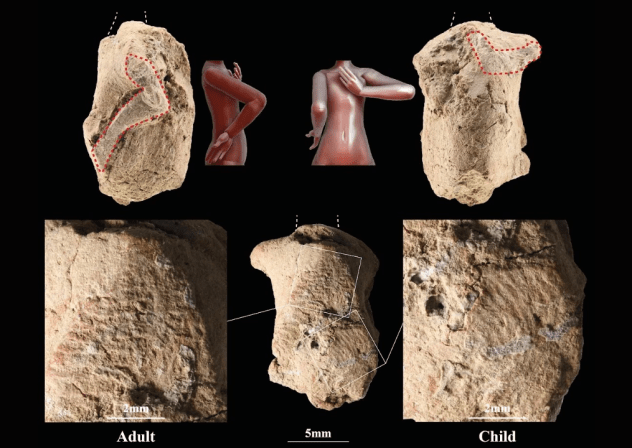
Israeli researchers uncover 15,000-year-old clay figurines, the earliest in Southwest Asia
The Natufians lived in the Levant from roughly 15,000 to 11,650 years ago and were the first people in Southwest Asia to establish permanent or semi-permanent settlements.
Collecting keepsakes may have helped autobiographical memory evolve in early humans, study suggests
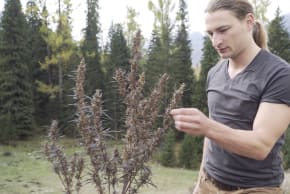
Ancient Scythian burial site from Siberia reveals earliest known use of cannabis as an intoxicant

New LED technology helps archaeologists uncover details invisible to the naked eye
New study shows human ancestor thrived in harsh desert conditions over 1 million years ago
The research challenges the long-held belief that only Homo sapiens had the capacity to thrive in extreme environments.

Archaeologists uncover artifacts from ancient Egypt's 2nd, 3rd, and 18th dynasties in Saqqara
the expedition uncovered over ten burials from the 18th Dynasty, indicating that Saqqara was used as a necropolis during the New Kingdom when Memphis was reinstated as the capital of Egypt.

800-year-old pottery fragment depicting Anatolian leopard discovered in Hasankeyf
The damaged piece showcases the body of a wild animal at the front, though its head is missing. Behind it, the head of a wild goat has been identified.

Different human ancestors walked together, footprints suggest
Study provides first evidence of different bipedalism styles on same footprint surface, attributed to both species.

Recent research into dinosaur diets shows why they ruled the Earth - study
The study used hundreds of fossils of well-fed dinosaurs to compare and contrast nutrition dynamics across five vertebrate assemblages of these beasts from the Triassic and Jurassic periods.

Ancient Jewish quarter of Phanagoria discovered in Black Sea area of Russia
Phanagoria's 1st century BCE synagogue was discovered last year, following excavations on the ancient Greek city.

How many sides does The Great Pyramid have? New study says it’s not four
The answer can only be seen from the air.

Spanish smiths used meteorite metals 3,000 years ago, study suggests
The Treasure of Villena, discovered in the Valencia region of Spain in, is considered one of the most important collections of prehistoric treasure in Europe, consisting of 66 mostly golden artifacts

New study reveals ancient Nile tributary helped transport stone blocks for Egypt's pyramids
The research, identified a tunnel that connected the pyramids of Giza. The tunnel has been identified as an ancient Nile branch, known as the Ahramat.

Peru's congress conducts hearing on alleged extraterrestrial 'Nazca mummies'
However, the authenticity of the so-called tridactyl mummies has been widely disputed by the scientific community.
