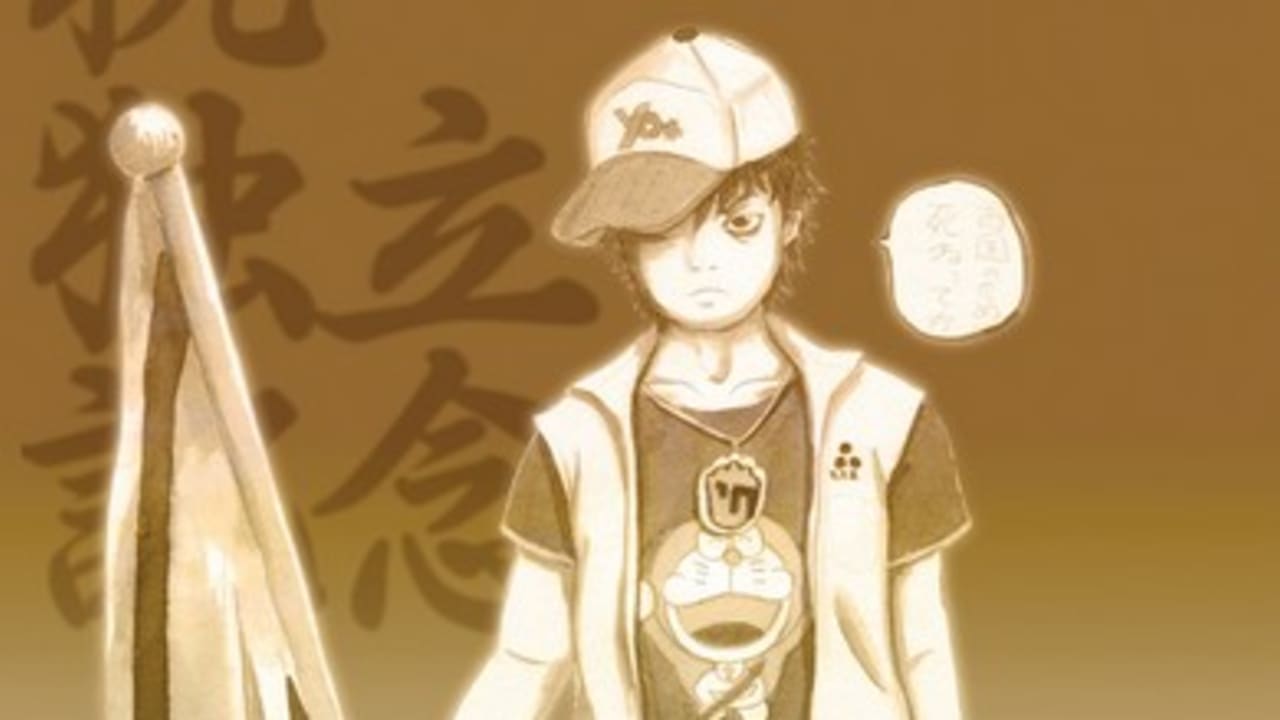
The lines of Japanese culture are blurred in “Manga at Yamatoya,” an exhibition that runs through February 22 at the Yamatoya bistro in Hod Hasharon. Produced in cooperation with Israeli design magazine Domus and the Anime and Manga Association of Israel (AMAI), the show features the works of Japanese and Israeli artists.“We were looking for a way to celebrate our two-year anniversary, plus we realized it was the 60-year anniversary of Israel-Japan relations,” says Srul Aviram who, with his wife, Japanese chef Aya Imatani, owns and operates the bistro bar.The goal of Yamatoya, which serves as an unofficial gathering place for the Japanese community in Israel, is to provide more than just traditional Japanese food. “We want to give an entire cultural experience,” Aviram says.Thus was born the manga exhibition.Manga, the Japanese word for “comics/cartoons,” consists of comics and print cartoons. The “Manga at Yamatoya” exhibition showcases the Japanese-style comics, including images drawn by Israel-based Japanese artist and Bezalel Academy of Art & Design graduate Eli Tsuchida; black-and-white work by Japanese illustrator Tettyu Imatani; and the work of several Israeli manga artists whose pieces were chosen for the exhibition through a contest held by AMAI.The show also includes a display of vinyl toys – dolls based on characters from Japanese anime (animation), most of which is created based on characters carried over from manga. These figures are a major industry in Japan and a mass consumer product, sold in locations such as supermarkets throughout the country. They appear in the exhibition courtesy of Israeli vinyl toy importer/distributor Urbanix.“Older people may be familiar with the Japan of the geisha, the samurai, Mount Fuji, but the younger generation knows Japan differently,” explains Dr. Ory Bartal, an expert on Japanese contemporary visual culture and lecturer on the subject at the Bezalel academy. The manga exhibition, Bartal explains, will expose some visitors to a Japan of which they were not aware.Manga, anime, vinyl toys – these are the things around which contemporary Japanese culture revolves. “It is a very sexy look,” says Bartal. “Video games, gadgets – a person over 50 doesn’t play Xbox and PlayStation, thus the older generation will have less of an understanding of the associations.”Likewise, most of the artists whose works are showcased are young, ranging in age from 12 to 25. This young, hip Japan image, labeled “cool Japan,” has even been adopted by the Japanese government as a sort of national branding, instituted in its public relations efforts.While manga may be comics, it is not just for children.Bartal notes there have been manga adaptations of literary classics such as Crime and Punishment and Hamlet, and adds that while manga is “popular and magical,” it is also challenging, so in order to follow the frequently complex plots of manga, reading the synopsis is a necessity.Maytal Sela-Huijgen, the curator of the exhibition, is a graduate of the Royal Academy of Art, The Hague, and the graphic editor of Domus. She says Japanese manga reflects what she sees to be a paradox of sorts in the way the Japanese live versus the way they express themselves artistically.“The thing I find very interesting is that I saw the Japanese culture as very formal in some ways, but through manga they express themselves. It can be their alter ego, let’s say. And in Israel, people are super out there. They don’t hold anything in, but they create these characters to live a different life.”Eli Tsuchida is an example of an artist who crosses over into both worlds. Born and raised in Japan, having read manga as a youth and having studied art at Bezalel, he does work that reflects both Japanese and Israeli influences. It was after studying at Bezalel and then returning to Japan, where he worked at a company drawing the characters in video games based on popular Japanese comics, that he began to adopt the manga style.Now living in Israel once again, Tsuchida says he incorporates the things he sees in daily life into his artwork.“As a Japanese in Israel, I see many things – some good, some funny – and I take them, I digest them, and I create a drawing.”He says he likes to take characters from popular Israeli culture – especially from television – and give them his own twist. He notes that among the Japanese community living in Israel, manga magazines from home circulate among friends. But he adds that he would love to see a manga magazine with the work of local artists produced for the Israeli market.The style of the other artists displayed in “Manga at Yamatoya” reflects additional influences. Japan-based Tettyu Imatani’s drawings take inspiration from American comics, and the drawings of the Israeli artists reflect their manga aspirations – for example, classic manga-style eyes, chins and facial features.While Bartal says the Israeli artists are indeed “on their way,” he notes that they still retain a sense of their origins. “With the Israelis, there are those who try to be Japanese, but there is always a local sense to it, and it looks very interesting.”It is what Bartal refers to as “a post-modern connection between humous and sushi.”Entrance to “Manga at Yamatoya” is free. For those planning to see the exhibition but do not want to have a meal (which can average between NIS 80-100), there are light snacks on the menu at around NIS 25- 30, in addition to beer and wine.The “Manga at Yamatoya” exhibition runs through February 22. Hours are Monday – Saturday, 1 p.m. – midnight.Fridays 6 p.m. – midnight. On Sundays the restaurant is closed. The Yamatoya Japanese bistro is located at 6 B’nai B’rith Street, Hod Hasharon. Telephone: (09) 740-7554.