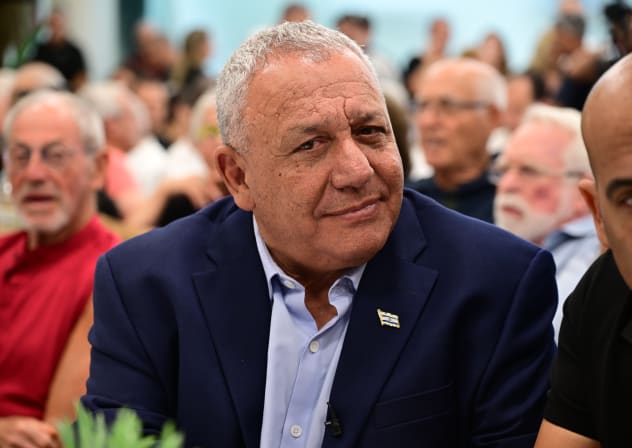
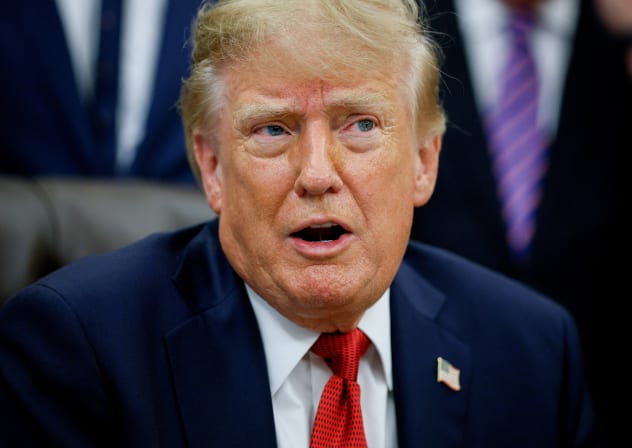
Finance Minister Yuval Steinitz and Defense Minister Ehud Barak remained at
loggerheads on the topic of defense expenditure Tuesday, with Barak rejecting
Steinitz’s claim that his ministry needs more transparency.
Steinitz
referred to the defense budget in his keynote speech at the annual Sderot
Conference for Society Tuesday, saying that he too believes in increasing the
defense budget, but that all spending must be justified.
RELATED:
Steinitz calls for cuts in defense budget
“At the treasury
we are asking for more transparency in the defense budget in order to save NIS
12 billion each year,” Steinitz said. “These are savings that will serve
educational and social aims. We are not talking about cutting the defense
budget, but rather about preventing budgetary exceptions.”
Barak, who
spoke to reporters at Defense Ministry headquarters in Tel Aviv at the same
time, said the Treasury already accounted for every shekel spent by his
ministry.
Defense Ministry Budgets Director Brig.-Gen. Reem Aminoach,
sitting alongside Barak, said the Treasury accountant assigned to his department
approves and signs every single purchase the ministry makes – from fighter jets
to cutlery. Achinoam pointed out that the accountant himself said on record in
November 2009 that nothing could be hidden from him.
Barak again weighed
in on the government’s economic policy, recommending that the budget deficit be
increased by 0.9 percent to meet defense needs, respond to grievances raised by
socioeconomic protests in summer, and to protect Israel from the effects of a
fresh global economic crisis.
He said the situation was more complicated
than the way Steinitz presented it, adding that instead of waiting for the
inevitable wave to reach Israel, the government must deal with it in
advance.
Although acknowledging that one must not live beyond their
means, Barak said Europe’s problems were caused mainly because they did not
worry early enough about financial stability, rather than because of
over-expenditure. He said Israel’s debt-to-GDP ratio of 78% afforded it the
luxury of being able to raise the deficit.
Barak was not the only person
to appear disturbed by the Finance Minister’s approach Tuesday. In Sderot,
Steinitz’s speech was disrupted several times by students angry over the
government’s alleged failure to adequately address social-justice issues raised
by this summer’s protests.
As Steinitz began speaking, students heckled
from the back of the hall, calling angrily for better conditions for contract
workers and more attention to employment options for those living in the
periphery. One man was arrested for threatening the minister, calling out: “You
might not be around in 2013, we know where you live.”
Slightly riled by
the interruptions, Steinitz responded to the protesters that it was he who
improved the benefits for doctors living and working in the periphery. Later on
he also referred to the conditions facing contract workers – the subject of a
four-hour general strike called by the Histadrut on November 8 – promising to
improve their conditions significantly.
“In order for us to properly take
care of society, we need a strong economy that grows and creates employment,”
said Steinitz, addressing the crowd. “We have to do what we can to stop mass
unemployment.”
He continued: “The global economic crisis is not only an
economic crisis, it is also a social one… The average salary in the US has
decreased by 10% in the last two years. When there is a recession it is not only
the unemployed that suffer, but also those who are working.”
This is the
eighth annual Sderot Conference examining social and economic
issues.
Held at Sapir College, its aim is to shift the focus of lawmakers
from the center of the country to the periphery. The conference attracts senior
politicians, academics and social activists.
Several of the Knesset’s
parliamentarian committees were held at the conference Tuesday.
The event
continues through Wednesday.