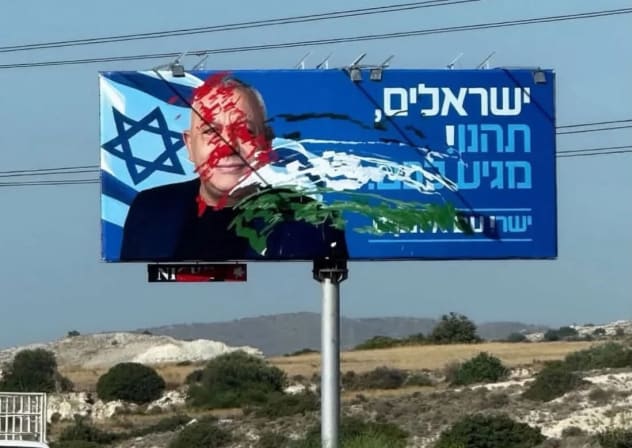
Kadima leader Shaul Mofaz on Thursday defended his decision to join the coalition of Prime Minister Binyamin Netanyahu calling the possibility to form a national unity government "a historic opportunity to make meaningful steps for the good of the public."
Mofaz, who has been heavily criticized as a "flip-flopper" for joining Netanyahu's coalition after having attacked the prime minister as "a liar" in his role as opposition leader, stated that "their are times when the leadership must make decisions even if they seem unpopular."
The newly-inducted vice premier added: "In my view, it would have been irresponsible to miss this opportunity. The responsibility is on me, and me alone. Let me be judged by my results - I will stand the test."
Kadima council chairman Haim Ramon marred the celebrations in the
party over Mofaz’s joining the cabinet Wednesday, when he
sent Mofaz a fiercely worded letter announcing that he was quitting his post and
leaving the party altogether.
Ramon was one of the founders of Kadima in
2005, leaving Labor along with current President Shimon Peres and MK Dalia
Itzik. The three of them moderated the image of Kadima, which at the time was
seen as a second Likud. He w a r n e d Wednesday that the party had returned to
being part of the Likud again.
“I cannot remain in the party after it
betrayed the vision it was built upon,” Ramon said.
“There is no more
Kadima ideologically. It was founded as a centrist party. Joining this
coalition does not mesh with our values.”
Ramon’s departure added fuel to a
mini-rebellion developing in Kadima. At the grassroots level, dozens of members
have sent letters saying that they are quitting the party to protest the
coalition deal with Netanyahu.
Among the party’s
28 MKs, only Robert Tibayev voted against joining the coalition in their faction
meeting. In the Knesset plenum, Tibayev and MK Shlomo Molla absented themselves
from the vote. MK Nino Abesadze, who has been very critical of the deal, voted
for it.
According to a law approved two years ago, seven MKs would be
enough to break off from the party. There are lawmakers who supported former
Kadima chairwoman Tzipi Livni who would want to break off if they could, but
they still do not have the required seven.
“I don’t like that we had to
go from criticizing Netanyahu to being part of his coalition in 20 minutes,”
Tibayev said. “I am worried that the party has lost its conscience.”
A
battle is expected in the party next week over the three Knesset committees
Kadima will chair according to the coalition agreement.
MK Avi Dichter is
expected to be named chairman of the Foreign Affairs and Defense Committee, and
MK Meir Sheetrit will likely head the Economics Committee.
The third
committee Kadima will receive remains unknown, though there have been rumors
about the Law Committee and the Education Committee. A source close to
Independence Party chairman Ehud Barak said he had checked with Netanyahu, and
he was sure that the Education Committee would still go to Independence faction
head Einat Wilf and not a member of Kadima.
Gil Hoffman contributed to this report.