BERLIN – Germany, Tehran’s No.1 EU trade partner, continues to lend
legitimacy to Iran’s government and to prop up its economic infrastructure, a
leading German-Iranian academic told
The Jerusalem Post on
Saturday.
Bilateral trade “stabilizes the Iranian dictator,” said
Dr. Wahied Wahdat-Hagh, an expert on German-Iranian relations and a
senior Fellow at the Brussels-based European Foundation for
Democracy.
RELATED:Extremist parties dominate Berlin election campaign“Even if Germany transfers technology for improving the
environmental problems of Iran, it strengthens the totalitarian dictatorship. It
would be very cynical if a German ministry would argue that transferring the
technology for combating pollution in Iran would help the protests of the
democracy movement,” Wahdat-Hagh said.
He criticized a recent study
favoring trade with Iran authored by Heike Walk, from the inter 3 Institute for
Resource Management, which was commissioned by Germany’s environmental
agency.
“Iran is undertaking great efforts to diversify its energy
sector,” including “with help of atomic energy,” Walk said in a interview with
Die Zeit last week.
Despite new EU sanctions, German exports to the
Islamic Republic increased by 2.6 percent between 2009 and 2010, reaching a
total of 3.8 billion euros, according to new trade data the
Post obtained last
week from the Federal Statistical Office in Wiesbaden.
German exports to
Iran dropped from approximately 2.22b. euros in the first half of 2010 to 1.76b.
euros in the first half of 2011, but German imports of Iranian goods increased
from 382 million euros to 453m. euros in the same period. The Federal Republic’s
consumption of Iranian gas and oil rose during the first six months of 2011 to
280m. euros, from 197m. euros in the first half of 2010.
German critics
of trade relations with Tehran have long argued that Iran finances its nuclear
program with revenue from its energy sector. Seventy percent of Iran’s
governmental revenues derive from its petroleum business, including 80% of the
country’s export activities.
The anti-Israel German Left Party, which has
76 of the 620 seats in the Bundestag, sent deputy Jan van Aken to visit Iran in
September. He called for a “solar dialogue” with Tehran and a relaxation of the
dual-use sanctions targeting Iran’s technological and energy
infrastructure.
Iran’s government has frequently converted dual-use
equipment, which can be used for both military and civilian purposes, into
lethal technology.
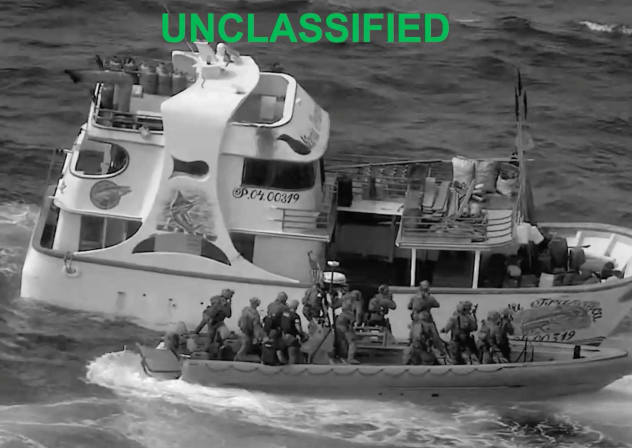
An example was Iran’s purchase of advanced speedboats
from Italy several years ago, which were transformed for military use on the
high seas to detain vessels.
A query about the number of approved
dual-use deals in 2010 and 2011 to the German Federal Office of Economics and
Export Control (BAFA) was not immediately returned.
The EU remains Iran’s
most important trade partner, with a reported total volume of more than 25b.
euros worth of trade in 2010. Almost 90% of Europe’s imports from Iran are
energy, making the Islamic Republic the sixth-largest energy provider to the
EU.
Meanwhile, Iranian Pastor Youcef Nadarkhani still faces the death
penalty for questioning Islam as the dominant form of religious instruction in
Iran.
Archbishop Ludwig Schick, who heads the Catholic Archdiocese of
Bamberg in Bavaria and is president of the German Bishops’ Conference’s
Commission for International Church Affairs, told the
Post on Friday, “We call
for the immediate release of Mr. Youcef Nadarkhani.
Mr. Youcef Nadarkhani
was sentenced on September 22, 2010, by a revolutionary court to death by
hanging in the city of Rasht because of ‘rejection of Islam’ and the ‘spread of
non-Islamic teachings.’ The sentence can be at any time applied. He was
apparently, therefore, arrested and condemned because he merely exercised his
right to religious freedom.”
Schick continued, “A condemnation because of
the choice of a religious affiliation stands in clear contradiction to Article
18 of the International Covenant on Civil and Political Rights. It is clearly
noted in the (General Comment) Nr. 22 of the UN Human Rights committee from July
20, 1993, that in Article 18 the right to change religions is included. The
Islamic Republic of Iran ratified in year 1975 the international covenant and
committed itself to meet the obligations of the covenant.”
The Pahlavi monarchy government, which was in power in 1975, signed the
international covenant. After the 1979 Islamic Revolution established
the Islamic Republic of Iran, the new Islamic-backed government did not
withdraw Iran's signature from the covenant.
The US State Department's 2010 International Religious Freedom Report
notes that 300,000 Christians live in Iran. According to the State
Department report, “Christians, particularly evangelicals, continued to
be subject to harassment and close surveillance. During the reporting
period, the government enforced its prohibition on proselytizing by
closely monitoring the activities of evangelical Christians,
discouraging Muslims from entering church premises, closing churches,
and arresting Christian converts.”