Washington Watch: The next president and the peace process
09/12/2012 22:50
The next president will have to work harder to enlist the support of America’s Arab allies to give the Palestinians the backing they need to revive the peace process.
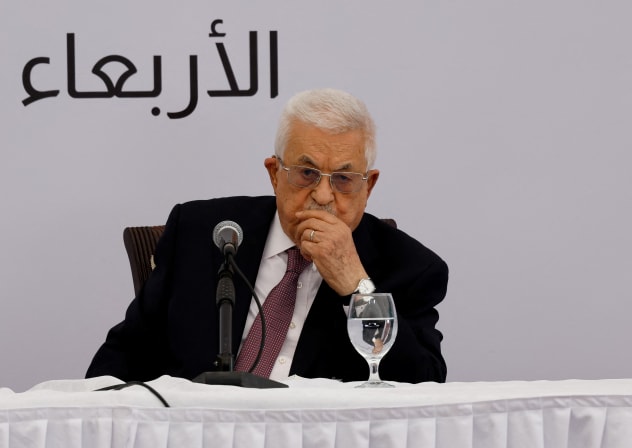
Chief Palestinian negotiator Saeb Erekat. Photo: Mati Milstein
Two days after taking office, Barack Obama announced a major Middle East
initiative, complete with a high-level special envoy, to restart Israeli-
Palestinian peace talks. It was a major blunder. It was poorly prepared, asked
more of the Israelis than the Palestinians, raised Palestinian expectations
beyond Obama’s ability to deliver and he failed to take his case directly to the
Israeli people. And he had no Plan B.
Don’t look for a repeat next
January no matter who is in the Oval Office.
Mitt Romney has shown little
interest in foreign policy beyond tossing barbs at President Obama and has
refused to discuss any details of what he would do as president. He leaves the
impression that he would outsource Middle East policy to the Israeli prime
minister.
At one of the GOP debates he said, “I’d get on the phone to my
friend Bibi Netanyahu and say, ‘Would it help if I said this? What would you
like me to do?’” Romney has signaled that his approach to the peace process
would be “Bush lite.” George W. Bush may have been the first president to make
Palestinian statehood a stated US goal, but he did little to bring it about. His
secretary of state made a weak effort to start talks late in the second term,
but it was too little, too late.
But even that may be too much for
Romney, who knows that every president who has ventured into the peace quagmire
has failed.
Last year he told an Israeli newspaper, “I don’t think
America should play the role of the leader of the peace process; instead we
should stand by our ally [Israel].”
Some have said that Netanyahu might
be more willing to resume peace talks with Romney in the White House because he
would have confidence that a pliable Republican with his neocon advisers and an
army of right-of-center Jewish financial backers would back him all the
way.
Don’t look for Obama to take the plunge, either. Not because he
tried, got burned and lost interest, but because he can’t want it more than the
Israeli and Palestinian leaders themselves, and so far neither one has shown any
real interest, just empty rhetoric and finger-pointing.
Netanyahu insists
any peace process must take a back seat until the Iranian nuclear standoff is
settled.
That sounds more like an excuse than a reason.
“There are
no prospects for reviving serious Israeli- Palestinian negotiations,” said Aaron
David Miller, a veteran peace envoy, in an essay on CNN.com. “Neither the
Israeli prime minister nor the president of the Palestinian Authority are
prepared to pay the price for a deal, let alone reach common ground on
Jerusalem, the peace process’ most explosive issue.”
The status quo may
appear inviting – the Israeli economy is doing well, buses are not blowing up on
Israeli streets, Palestinian security forces are maintaining order in the West
Bank – but the calm is deceptive.
The Arab awakening has shown that the
Israeli- Palestinian conflict is not the cause of instability in the region, but
that doesn’t mean it can be ignored.
Doing nothing will be risky, and the
next president won’t be able to neglect the conflict. He can’t go in with a
peace plan unless invited, nor can he afford to appear
indifferent.
Washington needs to show it is interested and involved, even
it is means motion without movement.
Otherwise it leaves a power vacuum
both allies and enemies will seek to fill, and that will degrade American
leadership not just in the region but globally.
It is against Israel’s
interest for the United States to disengage because no one else will look out
for Israel’s interests, and an Israeli government that contributes to weakening
the perception of American power damages Israel’s interests as
well.
Neglecting the peace process, even in its present semi-comatose
stage, is dangerous.
With growing power of the Islamists in the region,
Palestinians are likely to face greater pressure to confront rather than
compromise with Israel.
That pressure will come from the extremists who
have been preaching that the only way to get international attention and end the
occupation, as they believe they did in Gaza and southern Lebanon, is by armed
resistance.
The next president will have to work harder to enlist the
support of America’s Arab allies to give the Palestinians the backing they need
to revive the peace process.
Obama went to Cairo in June 2009 to give a
major speech reaching out to the Arab world. He made an inexplicable blunder on
the way home by failing to stop by next door and say shalom to the Israelis.
More was at stake than symbolism.
Faced with reluctant Israeli
government, he missed an opportunity to go directly to the Israeli people to
speak of his commitment to their security and his vision for peace.
By
flying past Israel, he left it to Netanyahu and his critics to define him as
unsympathetic, an image that persists despite tributes by no less than Defense
Minister Ehud Barak and President Shimon Peres that his administration has given
Israel unprecedented support.
Romney, who visited Jerusalem this summer
where he snubbed the Labor opposition and insulted the Palestinians, has said
Israel will be the destination of his first foreign trip as president. If he
gets the chance, he will have a lot of fence mending to take care of.
The
first thing Obama should do to improve bilateral relations and reassure Israelis
of his commitment to peace and to blocking Iran’s nuclear ambitions is to recite
the words from the Passover Seder, even if next week is Rosh Hashana, “L’shana
Haba’ah b’Yerushalayim,” “Next year in Jerusalem.” And mean it.
©2012
Douglas M. Bloomfield. bloomfieldcolumn@ gmail.com