Editor's Notes: What about a mini-region?
02/21/2013 20:08
Prof. Uriel Halbreich proposes a confederation of Israel, Jordan and Palestine.
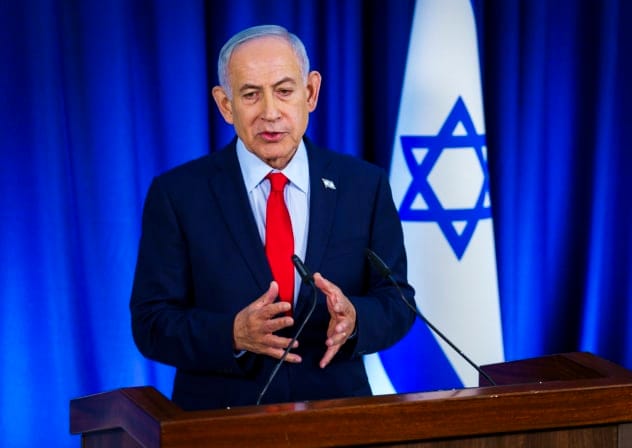
US President Obama with Prime Minister Netanyahu and PA President Abbas, September 1, 2010. Photo: REUTERS/Jason Reed
Uriel Halbreich, an internationally respected professor of
psychiatry, has devoted much of his long career to finding ways to combat
depression.
This year, after being awarded a Fulbright grant, he decided
to spend some time away from his work at the State University of New York at
Buffalo and return to Jerusalem, where he was born in 1943, to pursue a research
program on resilience and stress-related disorders.
In the meantime,
after decades of contemplation and cooperation with colleagues in Arab
countries, he thinks he has come up with a way to tackle the depressing Middle
East conflict.
“I have noticed in my professional contacts with Arabs and
Israelis that both sides often stress the conflict rather than what they have in
common,” Halbreich says in an interview. “But both sides have positive things
that they can advance, and that’s what I want to bring to the table.”
His
eyes sparkle as he unravels his plan.
“The first thing I’d like to put on
the table is the idea of creating a ‘mini-region.’ It is an idea that has been
tested in scientific cooperation, and I have just submitted to the Americans a
joint project proposal for Israel, Jordan and Palestine.
“In my opinion,
collaboration between the well-being or social welfare ministers of these three entities would represent a significant start.
You then focus on a joint
economic forum based on coooperation that already exists.
And then you
gradually move on to things like natural resources and water.
“So you
don’t call it ‘peace’ from the word go, because this is a sensitive matter. But
if you begin with issues of common interest, there can be a process that leads
to peace.
“It should be based on the European Union model of a
confederation of countries.
Jerusalem, which will remain the undivided
capital of Israel, would also serve as the capital of the mini-region, with
regional administrative agencies and, indeed, freedom of worship and freedom of
movement.”
Halbreich says that over the years, he has developed close
relationships with counterparts in the Muslim world, whom he prefers not to name
to protect their identities, including in countries such as Iran, Syria,
Lebanon, Egypt and Jordan.
Together, they established an organization of
22 states called PEMRN, the Psychiatric Eastern Mediterranean Research Network,
which Halbreich chairs.
“We started PEMRN at the initiative of a Lebanese
colleague, Fuad Anton, whom I can now talk about because he died. I was the
chair and he was the coordinator, but after his death, I am now trying to revive
it again, via Al- Quds University, with its headquarters in east
Jerusalem.
“I have not negotiated peace with the Arabs; we have discussed
only scientific cooperation, emphasizing common denominators and shared
interests. But I think this is a good starting point.”
Halbreich studied
medicine and psychiatry at Hadassah University Medical Center and Tel Aviv
University, and served as deputy chief medical officer and chief psychiatrist in
the Israel Navy.
He has lectured at top medical schools in Israel, the US
and Italy, and since 1988 has been a professor of psychiatry, obstetrics and
gynecology at the State University of New York at Buffalo, where he also served
as founder and director of the Life Cycle Center and BioBehavioral
Research.
Halbreich is a past president of the International Society of
NeuroPsycho Endocrinology as well as the International Association for Women’s
Mental Health. He has won prestigious prizes, including the Ben-Gurion Award
(1976), the Yair Gon Award (1978), the National Research Service Award (1980)
and America’s Top Psychiatrist (2008).
Halbreich is not enamored with the
US’s performance in the Middle East. He believes that “with a change of
attitude, and culturally sensitive, proactive, dignified and supportive
interactions, the superpower may play a more productive role in the
region.”
He tells the story of “a collaboration meeting” he once held
with delegations from Jordanian and American universities.
“Over lunch, a
Jordanian professor of forensic medicine said to me, ‘Professor Uriel, you are
not a real American.
First, you are not stupid, and second, you don’t
talk like Donald Duck.’ “He said this to me as a compliment, but it was really
derogatory to the Americans.
I don’t think it’s a shock that the Arabs
are burning down American embassies and consulates.
For them, the image
of ‘the ugly American’ has not changed.
“A taxi driver in Amman once
showed me a huge fortified compound that he called ‘The Devil’s Castle’ – it was
the American Embassy – and then drove a few blocks and showed me a smaller
building, saying ‘and this is his little assistant’ – it was the Israeli
Embassy.
“You can learn a lot from taxi drivers,” the eminent
psychiatrist adds, smiling.
Asked about the controversial issue of
Israeli settlements in Judea and Samaria, Halbreich says Palestinian demands are
unrealistic and immoral.
“When it comes to settlements, I am biased,” he
says.
“The Palestinians want to create a Judenrein state in the West
Bank, an area without Jews, and that’s totally unacceptable from a human rights
point of view. Where in the world is there a place where Jews are forbidden to
live because they are Jews? “If there really is a peace process, there is no
reason in the world that Jews shouldn’t live in the territory of the state of
Palestine.
“The mini-region can be modeled, as I said, on the European
Union: Israelis living in Palestine will vote for the Knesset, and on the other
hand, Arab Israelis, who see themselves as Palestinians, can continue to live in
Israel and pay taxes in Israel, but be citizens of Palestine. This would solve
many problems, including their not having to serve in the Israeli army and
honoring but not having to sing the Israeli anthem.”
Halbreich believes
his proposal will also resolve two other key issues: Israel’s demand to be
recognized as a Jewish state, and the Palestinians’ demand for the right of
return.
“Israel is a state for all its citizens,” he insists. “Israel
defines itself as a Jewish state, just like some Muslim states, and Israel’s
anthem is ‘Hatikva.’ But with a confederation model, Palestinian citizens may
live in the State of Israel.
“This is something that a Palestinian once
told me: If Abu Mazen [PA President Mahmoud Abbas] wants to return to Safed, let
him return to Safed. That’s his right of return. But his children and
grandchildren and greatgrandchildren are recognized as refugees, in perpetuity,
even by the United Nations, and this is an international abnormality that still
exists due to political interests and bureaucratic inertia.
“So Israel
can then accept the principle of the right of return, but how many Palestinians
over the age of 70 would actually want to exercise that right? Very few. Most
‘refugees’ should be encouraged to strengthen their roots in their current
homes.”
At a later stage, Halbreich believes, the mini-region could be
expanded to include others, such as the Christians in Lebanon, the Sunnis in
Iraq and the Kurds.
“In my opinion, the next conflict in the Middle East
will be in Kurdistan,” he says.
“The Kurds already feel that they are
very independent, they are in conflict with both Turkey and Iran, and they have
a lot of oil. So the way I see it, this situation will explode, sooner or
later.”