Upgrading schools
By JPOST EDITORIAL
08/27/2012 23:31
Some 2 million Israeli children returned to 4,500 schools and almost 63,000 classrooms on Monday, the largest number of pupils the country has educated in its 64-year history.
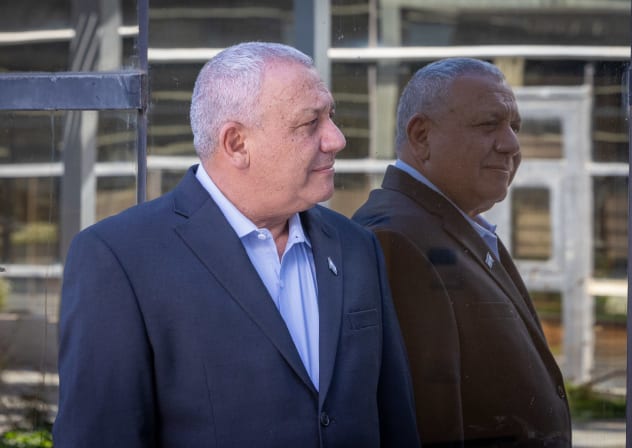
Netanyahu visits school Photo: GPO/Moshe Milner
Some 2 million Israeli children returned to 4,500 schools and
almost 63,000 classrooms on Monday, the largest number of pupils the country has
educated in its 64-year history.
With no threats of strikes by teachers,
it was an unusually smooth start to the school year, except for the firing of
several rockets at the South from Gaza, which caused no
casualties.
President Shimon Peres, who was visiting a school in the
area, praised the pupils and their families for their courage. “Facing the
threat of rockets you have shown steadfastness in learning, achievements and
creativity,” Peres said.
Prime Minister Binyamin Netanyahu made a
political point, deciding to visit a school in the Gush Etzion community of
Efrat.
“Efrat and Gush Etzion are an integral, fundamental and evident
part of greater Jerusalem,” Netanyahu declared.
Even if we put the
security situation and political problems aside, however, there are a plethora
of social issues hanging over our classrooms that need to be
addressed.
Many pupils still find it difficult to complete their
matriculation examinations, called Bagrut, for example. While there are
outstanding exceptions, such as in Shoham, where 86.2 percent of pupils pass,
some communities in Israel reflect a glaring underperformance in
grades.
In Kiryat Sefer, only 10% of pupils matriculate, and several
other predominantly haredi towns, such as Bnei Brak and Betar Illit, have
similar dismal results, according to the most recent data. In Jerusalem, our
capital, only 41% are said to be likely to pass their Bagrut
exams.
Graduation rates go hand-in-hand with demographics, economics and
social status. Wealthier, more secular Jewish towns, such as Modi’in, do well.
National religious communities perform above average while haredi and Arab
locales lag significantly behind.
The number of pupils currently studying
in Arab or haredi schools is approaching 40%. Poverty-stricken development
towns, where new immigrants have traditionally been concentrated, have also
fared well below average.
Problems of race and origin also need to be
confronted in the new school year. A report released by the Education Ministry
in April noted that “the gaps in the Meitzav standardized tests between
Ethiopian pupils and other pupils in Hebrew-speaking schools are
huge.”
Although the ministry has closed segregated schools in Petah
Tikva, there are still a number of schools in the country in which Ethiopian
children are disproportionately concentrated.
In Eilat, the ministry and
the municipality finally reached an agreement to allow children of African
migrants to study in schools alongside their Israeli peers rather than be sent
to a separate school. But this issue – of educating the children of foreign
workers and migrants – still afflicts a number of schools.
There are also
significant disparities in resources devoted to classrooms in a range of
communities across the country.
The government and local authorities
should work to equalize the treatment of pupils in all schools so that
geographic and ethnic discrimination do not further widen the gaps in
educational standards.
Investment in building more facilities and
classrooms in communities where there are chronic shortages, such as in Arab
schools in east Jerusalem, should be seen as a positive step. Such measures
convey the message that Jerusalem is a united and indivisible city rather than
one in which there is an Arab sector that feels neglected, thus growing closer
to the Palestinian Authority.
ISRAEL FACES immense hurdles in its
educational system.
The gaps in the multiple religious tracks and social
groups are not easy to bridge. The government’s decision to provide free
education to pre-schoolers was certainly a step in the right direction, but a
lot more needs to be done.
Investing more money in our schools and paying
our teachers higher salaries are clearly desirable goals, but money alone won’t
solve some of the cultural problems, such as widespread disinterest in
matriculation, unruly behavior in classrooms and youth violence in and out of
school.
There should be a joint commitment by the government, local
authorities, community leaders and parents to work together to upgrade the
culture of schooling to levels that we and the world can be proud of. At stake
is the future of our children – and the country.