The Jerusalem Post
Jpost search icon google-icon iphone
  Set as Homepage
Wed, May 22, 2013   13 Sivan, 5773
newspapers magazines
 
    • Breaking News
    • Diplomacy & Politics
    • Defense
    • National
    • Mideast
    • Syria
    • Iran
    • World
    • Business
    • Sports
    • Health & Science
    • Environment
  • Video
  • Opinion
    • Columnists
    • Editorials
    • Op-Eds
    • Letters
  • Jewish World
  • Lifestyle
    • Arts & Culture
    • Food & Wine
    • Travel
  • Features
    • Insights & Features
    • Week in review
    • On the Web
    • Shalva Superheroes
    • Obama in Israel
  • Blogs
    • In the news
    • Judaism
    • From the Middle East
    • Lifestyle
    • Aliya
    • Science and Technology
  • JPost Apps
    • iPhone app
    • iPad app
    • Android app
    • Twitter
    • Facebook
    • RSS feeds
    • JPost Toolbar
    • JPost Newsletter
    • JPost Alert
  • Premium Zone
    • The Jerusalem Report
    • The Experts
    • 20 Questions
    • e-paper
    • Ivrit
    • Christian Edition
    • Dash
    • Magazine
    • Metro
    • In Jerusalem
  • French
    • Politique & Social
    • Affaires Palestiniennes
    • Diplomatie & Monde
    • Art & Culture
    • Israel
  • Green Israel
JPost Learn Hebrew  
Advertise with us  
Nefesh Guided Aliyah  
Eldan  
AFMDA  
Africa Israel Group  
Isram Group  
Kupat Ha  
JPost Twitter  
JPost Facebook  
Classifieds  


Breaking News
 
 
  • JPost.com
  • Opinion
  • Op-Ed Contributors
 

Survivor voices

By ROBERT ROZETT
LAST UPDATED: 04/12/2010 12:31
Tweet

They are still speaking, soul to soul.

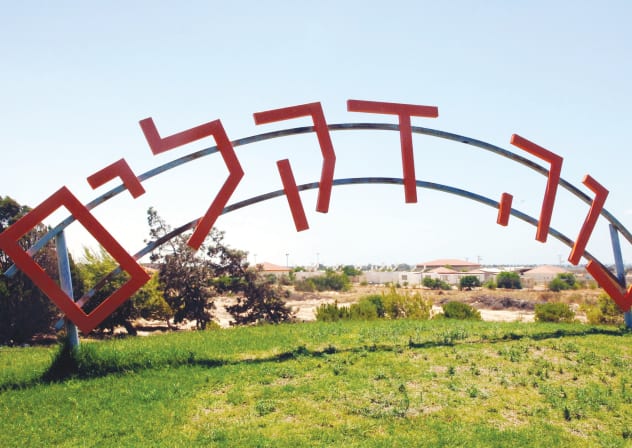
Artwork at Yad Vashem
Artwork at Yad Vashem Photo: AP
Survivor voices are crucial in trying to understand the Holocaust. It is not only that those voices are integral to providing a Jewish perspective; they are sometimes the only sources we have. At the same time, firsthand accounts are imperfect sources and, indeed, no documentation is unbiased and unflawed. Used with sensitivity, however, survivor voices help us sketch the historical record and, no less importantly, provide a window on the actions, thoughts and feelings of Jews in the maelstrom of the Shoah.

Much of the outline of the Holocaust comes from traditional documentation – memoranda, reports, letters and messages – created by the main protagonists . The overwhelming volume of this material is from the point of view of the Nazis and their partners, the local authorities in the areas where the murder was perpetrated and, to a lesser extent, from the Allied forces that fought against the Nazis and the neutrals who observed events from their safe havens.

Of course, Jews in the areas of Nazi domination also left precious written records, but given their plight, the vast majority of their experiences were not recorded in real time. It is up to postwar sources to reveal them, but no source can tell the entire story of the Holocaust, since six million people who knew best what they endured were murdered.

It is clear from German documentation that the Nazis engaged in the wholesale murder of Jews simply because they were Jews. Reports such as those issued regularly by the murder units on the Eastern Front (Einsatzgruppen and others) provide details about the time and place of mass murders, enumerating the victims and declaring that the vast majority were Jews. But such reports can tell us little about the behavior of the killers, and nothing of the Jews on the precipice of death.


MIRACULOUSLY, SOME survived the carnage. In her testimony, featured in Yad Vashem, Dina Beitler describes the scene at Ponary outside Vilna, where Germans and Lithuanians murdered some 40,000 Jews in the second half of 1941. After being led to a killing pit and forced to stand at its edge with machine guns trained on her, the shooting began.

She remembers: “I stood next to my grandfather... When they gave the order to shoot, my grandfather, Shmuel Lifshin, my mother’s father, started praying “Shema Yisrael... I only managed to say “Hear O Israel” once before they fired. I fell before the shots went off and the dead fell on top of me. I lay like that for a long time. I didn’t cry. I was petrified. I lay there. They kept on shooting. Later, after a long time the shooting died down and it became more or less quiet. I thought it was night. I started to move around, trying to get out. When I began to move, someone grabbed my leg. It turned out that another boy was lying on top of me... It turned out that he wasn’t injured either, he was okay. Somehow we helped each other get out from under the dead.”

We learn from Dina important facts. The murderers did their best to be thorough. Families (at least in this case) stood together and shared the moment of death. The moment and its aftermath were terrifying.

Such survivors lived to bear witness, and in Dina’s testimony this includes recalling her grandfather’s last words: “Shema Yisrael.” In this, Dina tells us that there were Jews who died as Jews, with the time-honored words of martyrdom on their lips.


OF ANOTHER scene of murder, that of Hungarian Jewish forced laborers in a collective farm at Dorozhischche in the Ukraine, there appears to be no contemporary written record. But from the testimony of survivors, we know that on April 30, 1943, the Hungarians placed between 600 and 800 Jews, sick with typhus, in a barn and set it ablaze. As the flames consumed the building, some men fled successfully, but most who tried were cut down by machine-gun fire. Not all of the mortally wounded and charred men died immediately; some lingered for days, in agony from their burns and bullet wounds, until their end finally came.


It is not only atrocities that are evoked by survivor voices. The struggle to maintain human dignity, comprehend the situation, and devise strategies to cope also comes through. In his memoir, Jack Werber explains how he learned to work more efficiently in the quarry at Buchenwald. He writes: “Crucial to survival was learning how to select and hoist onto your shoulder the right stone in a split second. It took me about a week to master how to carry the stones. If you took a stone that was too small, they beat you up for being a loafer. And if you chose one that was too large, you ran the risk of collapsing under its weight. After a while, I learned how to select stones that looked big but were lighter because they were a little hollow.”

Those of us lucky enough not to have suffered the horror of the Shoah, or to have been born after it can never fully comprehend what Jews endured. At best, we can sometimes approach an understanding. When we listen carefully to the voices of survivors – the words and the silent spaces between them – we learn, we empathize and we commemorate, thereby ensuring that their stories  will not be forgotten, and that their experiences remain etched in our souls.


The writer is director of the Yad Vashem Libraries and author of Approaching the Holocaust, Texts and Contexts, Vallentine Mitchell.
  • Send
  • Large
  • Small
  • Print
  • Share
Most Viewed in
1
Jordan’s king trying to play on Israel’s fears
2
No holds barred: Was the Holocaust punishment for sin?
3
Storming the Bastille of Israel’s religious bureaucracy
4
The American frienemy
JPost Community
Tweet
holocaust holocaust survivors holocaust memorial day yad vashem Jewish world Jews
Share this article
Tweet
Share
Send
Your comment must be approved by a moderator before being published on JPost.com. Disqus users can post comments automatically.

Comments must adhere to our Talkback policy. If you believe that a comment has breached the Talkback policy, please press the flag icon to bring it to the attention of our moderation team.
JPost Services
conferenceConference
newsletterNewsletter
iphoneMobile Apps
kotelcamKotel Cam
kolboJPost Alert
premiumPremium
JPost TV News  
Mobile Apps  
Bank Hapoalim  
Meir Panim  
Yad Ezra  
Rambam Hospital  
TourLuxe  
Zev Goldstein PLLC  
Penrose Gallery  
JPost Premium Zone  
JPost kotel Camera  
         
 
Israel Focus
JPost TV News
Coming soon to a screen near you!  
Nefesh B'Nefesh Guided Aliyah
Already living in Israel? Enjoy the Benefits of Aliyah!  
Give "Freedom" this Passover
to needy Israeli families. Donate now  
War Threatens
Protect the People of Northern Israel  
Intelligence Squared
The international debate forum, announces it is coming to Israel  
Bank Hapoalim
Israeli's number one bank  
Jerusalem Post Lite
Lite Edition of the Jerusalem Post for English improvement  
Learn Hebrew with us
Get 10 minutes free personal coaching in Hebrew through phone or Skype  
JPost newspapers
Sign up for the JPost newspapers and receive one month free subscription  
Kosher English Magazine
English language weekly magazine - especially for religious people  
JReport Kindle Edition
Now you can get the Jerusalem Report directly to your Kindle  
JPost Premium Edition
The very best articles are available only in our Premium edition  
Lifestyle Magazine
 
 
Real Estate
Don't Look For a House!
In Israel, our website will do it for you!  
 
Travel
Eldan Rent a Car
20% off all Car Rental Reservations in Israel  
Hertz Car Rental
Special Online Discounts!  
The King David Jerusalem Hotel
One of the world's truly iconic hotels, and a Jerusalem landmark  


Sites Of Interest:

Jerusalem Hotels
KKL-JNF
Poalim Online
BreitBart.com
Our Friends
Jerusalem Attractions
Jerusalem Tours
itraveljerusalem.com

JPost sites:

Learn Hebrew
The Jerusalem Report
Our Magazines
JPost Edition Francaise
Green Israel
Christian World
Jerusalem Post Lite

Services:

JPost Mobile Apps
JPost Premium
JPost Newsletter
JPost Toolbar
JPost News Ticker
JPost RSS feeds
JPost Archives
JPost Alert
JPost Kotel Cam

JPost Conferences:

NYC Conference
Diplomatic Conference

Information:

About Us
Feedback
Staff E-mails
Copyright
Sitemap
News Partners
Advertise with Us
Price List
Statistics
Ad Specs
Terms Of Service
Jpost.com, the online edition of the Jerusalem Post Newspaper - the most read and best-selling English-language newspaper in Israel. For analysis and opinion from Israel, the Jewish World and the Middle East. Jpost.com offers expert and in-depth reporting from Israel, the Jewish World and the Middle East, including diplomacy and defense, the Palestinian-Israeli conflict, the Arab Spring, the Mideast peace process, politics in Israel, life in Jerusalem, Israel's international affairs, Iran and its nuclear program, Syria and the Syrian civil war, Lebanon, the Palestinian Authority, the West Bank and Gaza Strip, Israel's world of business and finance, and Jewish life in Israel and the Diaspora.
 
About Us | Advertise with Us | Subscribe | Premium | Newsletter | RSS | Contact Us
 
All rights reserved © The Jerusalem Post 1995 - 2012