Don't forget the disabled
By JAY RUDERMAN
05/27/2012 22:20
Today in Israel (as the IDF Disabled Veterans Organization reports), there are close to 50,000 people with disabilities as a result of war.
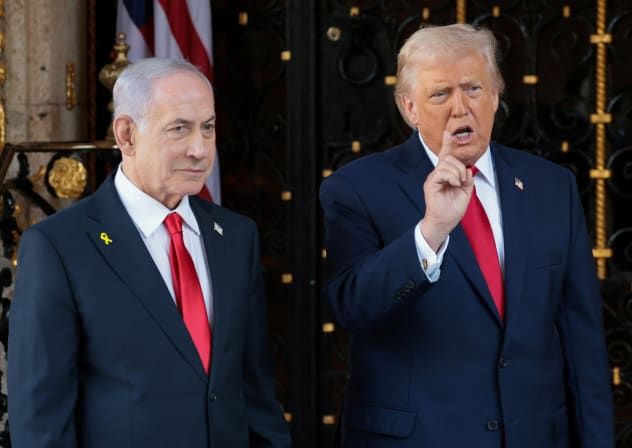
Netanyahu shakes hands with disabled veteran Photo: Ariel Jerozolimski
In anticipation of Remembrance Day, Prime Minister Binyamin Netanyahu said that
everyone in Israel “will become one family” when on that day the sirens sound in
memory of and tribute to our nation’s fallen soldiers and victims of
terror.
Remembrance Day is a day of special and communal reflection in
Israel – and for Netanyahu, the reflection is particularly solemn and painful
given the loss of his older brother, Yoni, 36 years ago at
Entebbe.
Across Israel earlier this month, public ceremonies were held.
Yet many Israelis were unable to fully participate in some of these ceremonies
and be a part of the “one family” of which Netanyahu spoke.
As was
reported in The Jerusalem Post on April 24, thousands of Israelis with
disabilities could not take part in certain Remembrance Day ceremonies because
the public venues and facilities in which they were held were inaccessible to
them. In other words, the venues and facilities weren’t really public after
all.
In the opening of the Jerusalem Post article, the distress that many
of our citizens felt is described: “‘As the nation gears up to collectively
mourn its dead, for citizens with various disabilities, national Remembrance Day
is a double tragedy. Not only are we mourning along with everyone else for those
who have been killed, but we are also mourning the fact that we cannot properly
pay our respects to those who have died or show solidarity with their families,’
commented Shlomo (Momo) Nekava, chairman of the Organization for Disability
Rights, who on Tuesday night and Wednesday will be among thousands of people
with disabilities shut out of public ceremonies because of inaccessibility
issues.”
A sad irony in all this is that today in Israel (as the IDF
Disabled Veterans Organization reports), there are close to 50,000 people with
disabilities as a result of war.
It is not known how many of those have
disabilities that would have prevented them this year from gaining access to a
venue where ceremonies were being held.
Yet for sure, on this day of
solemn remembrance, among those who could not gain access to the ceremonies were
those who were injured, wounded and sustained disabilities fighting alongside
those who fell.
Sad irony indeed.
And it calls attention to the
broader issue of disability in our nation.
It is urgent that we
understand that every day – not just that one solemn day – people in Israel with
disabilities are excluded from public spaces because of lack of
access.
They are also being excluded from the things that those without
disabilities take for granted every day.
Like the ability to be gainfully
employed and the opportunity even to observe Shabbat in a neighborhood
synagogue. In the United States, people with disabilities were even being shut
out from attending Jewish day schools, which is what brought our foundation into
the work we do on inclusion.
Today in Israel, people with disabilities
are being forced to live in congregate housing because there is insufficient
availability of accessible housing. I met with one man in a wheelchair who was
forced to live in an upstairs apartment in a building without an elevator, which
literally meant he had no chance to go outside.
People with developmental
disabilities, such as Down syndrome, autism and traumatic brain injury, are
being excluded altogether from Israeli life and relegated to the fringes because
of our dated practices that segregate people with disabilities.
Awareness
of the problem is fundamental to how we achieve progress in correcting it – and
how we eventually solve it.
People with disabilities are always going to
know special challenges – but there are far too many challenges, including those
involving access, which people with disabilities should not have to
face.
Bedrock in our beliefs as a nation is the phrase, “Kol Yisrael
arevim zeh lezeh.” All Jews are responsible for one another.
Yes,
progress is being made and there is hope for a better day with social justice
for people with disabilities.
But we can’t become complacent.
We
must work toward a better world, where everyone is valued both for their
abilities and for their differences, and in which everyone can fully
participate.
The writer is president of the Ruderman Family Foundation.