‘Bread, hashish and moon’
By ZVI GABAY
10/09/2012 18:08
Nizar Qabbani, an iconoclastic Arab poet, was one of the harshest critics of the backwardness in the Arab world. He wrote about the lack of human rights, the abundant corruption, and the low status of women in Arab society.
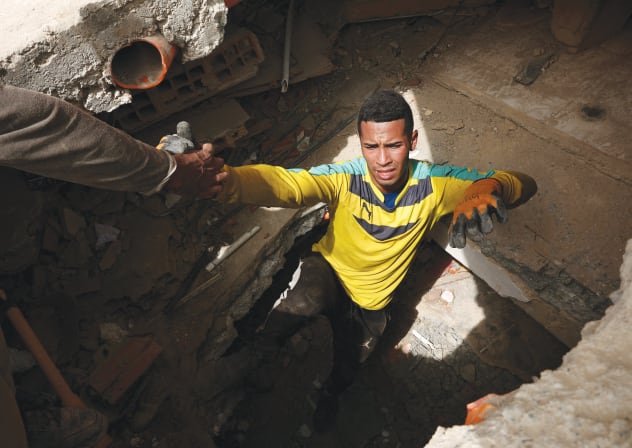
Arab Israelis protest Syrian President Assad. Photo: REUTERS/Ammar Awad
What caused the “Arab Spring” to erupt in such a way? Certainly one factor was
the critical writings by Arab intellectuals over the years, that prepared the
ground for the mass outbursts. Nizar Qabbani, an iconoclastic Arab poet born in
Syria who died in London in 1998, was one of the harshest critics of the
backwardness in the Arab world. He wrote about the lack of human rights, the
abundant corruption, and the low status of women in Arab society.
His
most famous poem, Bread, Hashish and Moon, written in 1954, lifted the veil on
the social ills of Arab society – ignorance, sickness, polygamy and
backwardness. This poem aroused widespread criticism; it was debated in the
Syrian parliament, with some delegates demanding legal prosecution of the
author.
Nevertheless, Qabbani continued to write, criticizing the ways Arabs
have allowed their old thinking to dominate them. He blamed the Arab rulers for
the backwardness of the people and for controlling the people’s destinies and
suppressing their freedom.
Below is a translation of the poem:
Bread, Hashish
and Moon
When the moon is born in the East,
The white roofs doze under stacks of
flowers;
People leave their shops and walk in groups,
To meet the moon,
Carrying
along bread and record players to mountain tops,
And narcotic utensils
And they
sell and buy fancy things, and images...
And they die when the moon lives.
What
does a bright disc do to my country?
The country of the prophets, the country of
simple people,
Tobacco chewers and dope peddlers.
What is the moon doing to us,
that we lose our pride,
And live to beg to heaven?
What does heaven have, for
the lazy, the weak...
Who turn dead when the moon lives,
And shake the saints’
graves?
Perhaps they would provide them with rice and children.
They
spread out beautiful embroidered carpets,
Enjoying an opium we call fate, and
divine decree?
In my country... in the country of simple people,
What feebleness
and laxity seize us when light pours?
Then carpets, and thousands of baskets,
and tea-cups,
And children fill the hills...
In my country, where the innocent
weep,
And people live on, light they do not see.
In my country, where people
live without eyes,
Where the innocent weep, pray, and fornicate,
And live on
fatalism, since eternity they lived on fatalism.
Calling the crescent: “O,
crescent! O, spring which rains diamonds, hashish and slumber!
O, suspended
marble god!
You unbelievable thing!
May you live for the East, for us, a cluster
of diamonds!
For the millions whose senses are numbed."
On nights in the East,
when the moon is full
The East sheds all dignity, and strife...
The millions who
run without shoes,
And believe in four wives, and the day of resurrection,
The
millions who do not find bread, save in fancy...
Living the night in houses of
coughs, never knowing medicine!
Bodies dying under the moonlight,
In my
country...while the stupid weep, dying of tears.
Whenever the moon’s face rises
over them, they weep more.
Whenever a soft lute excites them... and “Layali”
That death we call in the East: “Layalis” and songs.
In my country...
In the
country of the simple people!
While we regurgitate long tawashith
This disease
ravishes the East: The long tawashith...
Our East regurgitates its history, idle
dreams and past myths.
Our East, ever seeking heroism of any kind: Abu-Zayd
al-Hilali even.
(Translated from Arabic by Zvi Gabay).
The writer is a former
ambassador and deputy-general of the Foreign Ministry.