The Association for Fighting A-T Disease will hold a special, intimate fundraising evening at the Cameri Theater in Tel Aviv on Wednesday, Dec. 2, 2026. Donors attending the event will enjoy the premiere performance of "Shalom Bayit" ("Domestic Harmony"), starring Rivka Michaeli. Proceeds from the evening will support the association's work on behalf of patients with A-T and their families, as well as advance the fight against the rare disease.
Aimed at raising awareness of the rare hereditary condition and generating resources to sustain the association's activities, the event will be attended by donors, friends of the association, patients' families and other guests. Among those expected to attend are Dan Halpern, chairman of Correct and an association board member; Yoel Cheshin, chairman and founder of the 2B.VC venture capital fund; Moshe Debby, chairman and founder of Debby Communications; Moshe Edery, producer and owner of the Cinema City theater chain; Yoav Harlap, owner of vehicle importer Colmobil; attorney Uri Slonim; Gabi Rotter, co-CEO of the Castro fashion chain; Gabi Dishi, chairman and founder of the Alpha Group; attorney Rivi Irani; Rani Rahav, owner and chairman of Ran Rahav Communications; Avi Bar, owner of Imagine Media; Shay Livnat, chairman of UPS Israel; Moti Nachmias (Prashkovsky), deputy CEO of Prashkovsky Investments and Construction; Zvi Bar-Nathan, co-chairman of the Goldfarb Seligman law firm; Tova and Sami Sagol, Israeli social activists and philanthropists; Bechor Tzaban, co-founder and owner of the Tzaban Jewelry chain; Ami Lidor, an association member; Matti Pollak, CEO and owner of the Diesel fashion brand; Gil Ben-Hur, founder and CEO of Five Percent Online Ltd.; Rami Kleinstein; Rami Yehoshua, chairman and owner of Yehoshua Advertising; and Ronen Wiener.
Ataxia-telangiectasia (A-T) is a rare, progressive hereditary disease that affects multiple systems in the body. The first signs typically appear in toddlers during their second year of life and include loss of balance and slurred speech, caused by ataxia — a lack of muscle control. Most children with A-T (about 70%) also exhibit immunodeficiency, which usually manifests as recurrent respiratory infections that are life-threatening for the majority of patients. Because patients lack IgA and IgG antibodies — key components of the body's defense against infection — they are vulnerable to pneumonia that does not respond to standard antibiotic treatment. In patients with A-T, the combination of a weakened immune system and progressive ataxia can lead to pneumonia as a leading cause of death. Patients also face a risk of developing cancer that is 3,000 times higher than that of the general population.
Currently, there is no cure for the disease, and managing it requires multidisciplinary medical monitoring, supportive therapies and ongoing care for patients and their families.
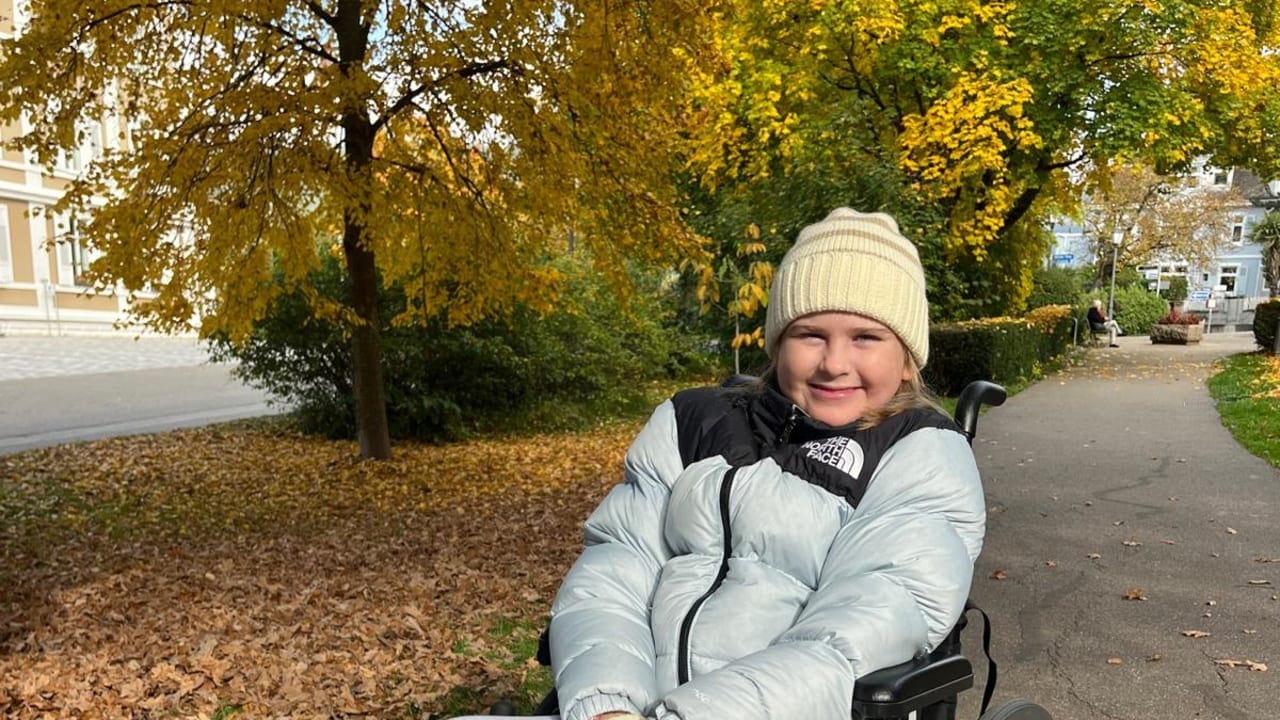
Maria's story is shared ahead of the fundraising gala to raise awareness of the fight against A-T.
12-year-old Maria's dream: To recover from the disease, gain independence and see world peace
Since early childhood, 12-year-old Maria has been living with A-T, a rare and severe hereditary disorder that causes profound physical disability, immunodeficiency and an elevated risk of cancer. Despite her physical limitations and complex daily challenges, she attends a mainstream class, excels in English, dreams of learning additional languages and, above all, wants to be like any other girl her age — spending time with friends, being independent and dreaming about the future.
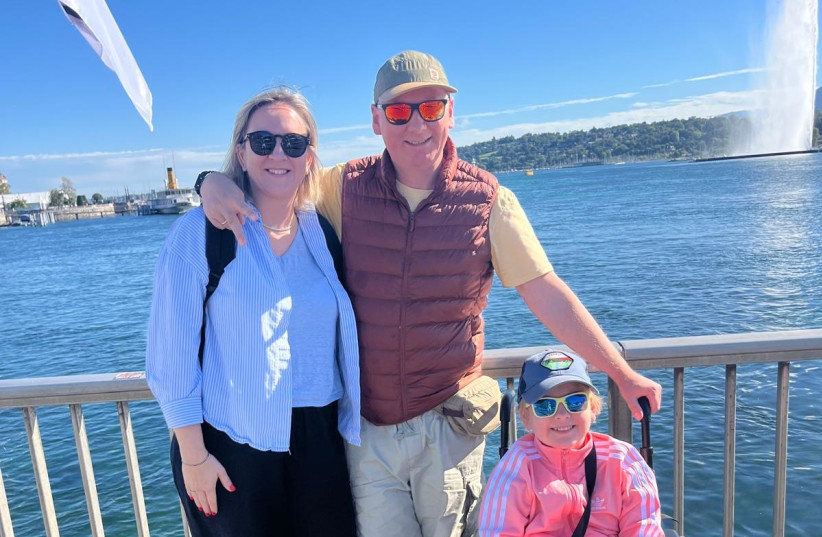
Maria is an only child to parents who immigrated to Israel from Russia about three and a half years ago. She is sociable, curious and loves being around people. Like many children her age, she enjoys playing Minecraft and Roblox, chatting with friends and spending time together. She stays in touch with her friends in Russia and has made several new friends in Israel, though she wishes she had many more. She especially loves when friends come over to visit her at home, where they are also greeted by two poodles and a cat that Maria adores and helps care for.
When Maria was 18 months old, her parents began noticing that something was off with her development. At age 3, while the family was still living in Russia, she was diagnosed with A-T. The diagnosis shook the family. "We knew there was a problem, but we never imagined it was this disease," her mother said. "It was a massive shock. It took us nearly a year to process the news and begin adjusting to our new reality."
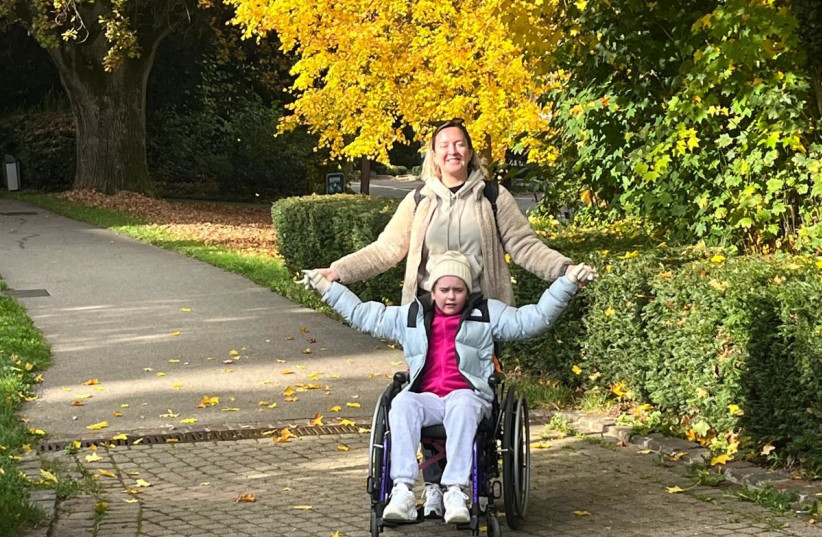
Today, at age 12, Maria faces significant mobility limitations and needs assistance with nearly every daily task. At school, she uses a wheelchair because walking with a walker exhausts her. At home, too, she requires help getting around, bathing and getting dressed. Yet it is precisely the small everyday tasks most children take for granted that highlight how deeply she longs for independence. Maria wants to dress herself, move freely and feel capable of doing things on her own.
Alongside her physical difficulties, one of her biggest challenges is social. Maria attends a regular school in a mainstream classroom and is accompanied throughout the school day by a young Russian-speaking aide who helps her integrate. She is an honor student in English with a special gift for languages, and she recently began studying French with a private tutor. Her academic success is a tremendous source of pride, allowing her to prove to herself and those around her that the illness does not define her abilities.
As she grows older, however, the gap between her and her peers becomes more complicated. She wants to join social gatherings and class activities held in the evenings, but she needs an adult companion. At an age when her classmates want to socialize without parents present, needing an escort makes it harder for her to fit in.

"She really wants to be with her friends, but at this age, kids no longer want an adult coming along to social hangouts," her mother said. "On the other hand, they are still too young for me to rely on them to know how to help her in every situation. So, more often than not, we simply have to skip those activities. That is one of the hardest things for me to deal with as a mother."
Maria is on the threshold of adolescence, a stage when the desire for independence, social belonging and acceptance becomes especially acute. To help her navigate these emotional and social hurdles, she sees a psychologist who guides her through self-acceptance, understanding social dynamics and coping with the limitations imposed by the disease.
Despite everything, Maria refuses to give up on her dreams. She loves learning, gets excited about new experiences and welcomes every opportunity to get out of the house and explore new things. When asked what she dreams about, she names three things: a big house with a swimming pool for her family, recovering from her illness and peace in the world.
For her mother, the top priority is enabling Maria to live as full and happy a life as possible — and, above all, helping her believe in herself and her abilities. "I always tell her that even with a disability, you can dream big and achieve meaningful things," she said. "I tell her about Stephen Hawking, who accomplished extraordinary things despite his severe physical disability. It is important to me that she knows she has abilities, she has a future and she can aspire to be whomever she wants."
This is the story of a 12-year-old girl living every day with a severe illness who asks only for the simplest things children her age want: friends, independence, a sense of belonging and the right to dream of a future where her possibilities are greater than her limitations.
The Association for Fighting A-T Disease was founded in 1999 by parents of children with the condition to improve their quality of life and drive the search for a cure. The organization supports patients and their families, raises public awareness and operates the National A-T Clinic at the Edmond and Lily Safra Children's Hospital, which it established in partnership with Sheba Medical Center at Tel Hashomer. Promoting innovative research and treatments, the association is widely regarded as a pioneering organization and a model for other disease advocacy nonprofits. In addition to its core activities, it currently leads the Coalition for Rare Diseases in Israel.
To order tickets online: Association for Fighting A-T Disease. To make a secure donation, click here. To join Round-Up Israel Igul LeTova
This article was written in collaboration with The Association for Fighting A-T Disease