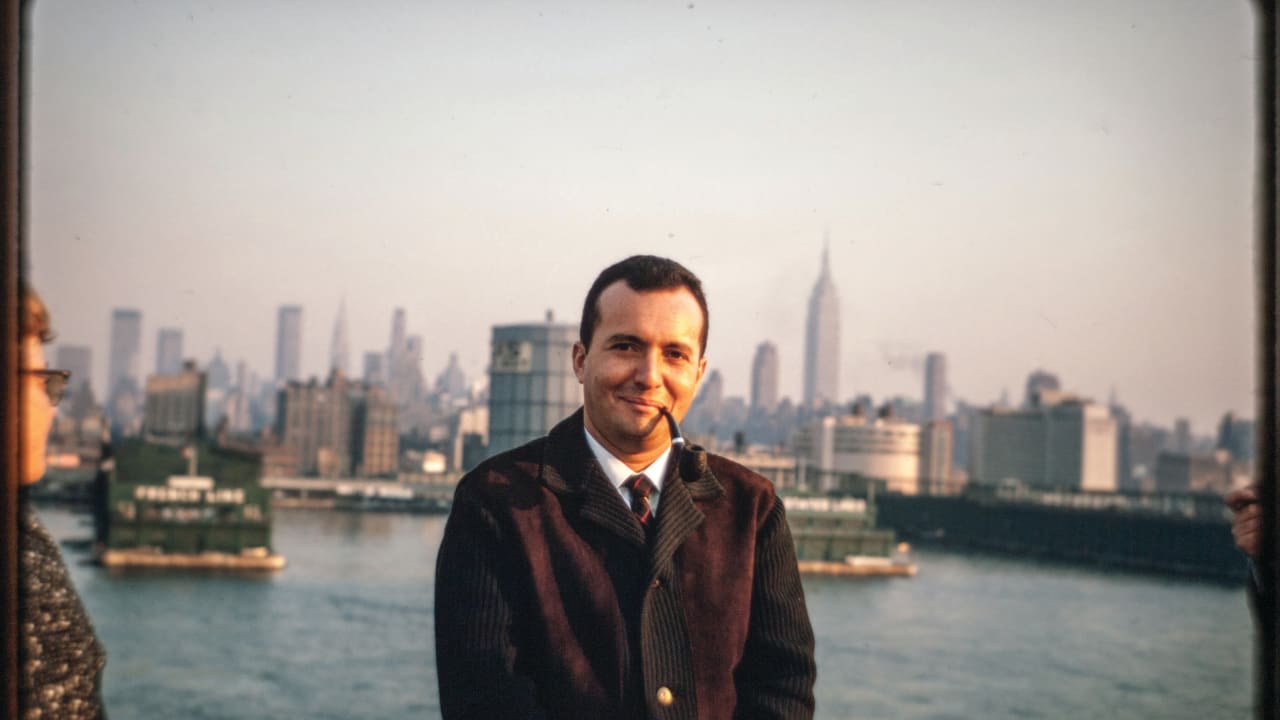
As I interviewed Boaz Dvir, the director of the new documentary, To Kill a Nazi, which had its Israeli premiere last week at the Haifa International Film Festival, it was impossible not to talk about the big story of the previous day - the hijacking of the flydubai flight that was foiled by Israeli passengers.
That was because this incident made To Kill a Nazi incredibly topical, since it tells the story of the extraordinary life of Michel Cojot, a French Holocaust survivor who became obsessed with assassinating the Nazi official Klaus Barbie, who was responsible for deporting his father to Auschwitz.
Later, Cojot was a passenger on the Air France flight that was hijacked to Entebbe. Much of the film details Cojot’s role in giving crucial information to Israeli authorities that enabled them to conduct the Operation Thunderbolt raid, one of the most successful and spectacular military rescues in history.
The documentary, narrated by Jason Alexander, will be shown on October 6 at the Menachem Begin Heritage Center in Jerusalem and is being screened around the world, including at the Jewish Film Festival in Australia, the Chelsea Film Festival in New York, and the Silicon Valley Film Festival later this month.
Cojot spoke in interviews about how, when he became a victim in the 1976 hijacking, he felt as if he had been given a second chance to prove himself because not long before that, he had located Barbie in Bolivia but had chosen, gun in hand, not to murder him.
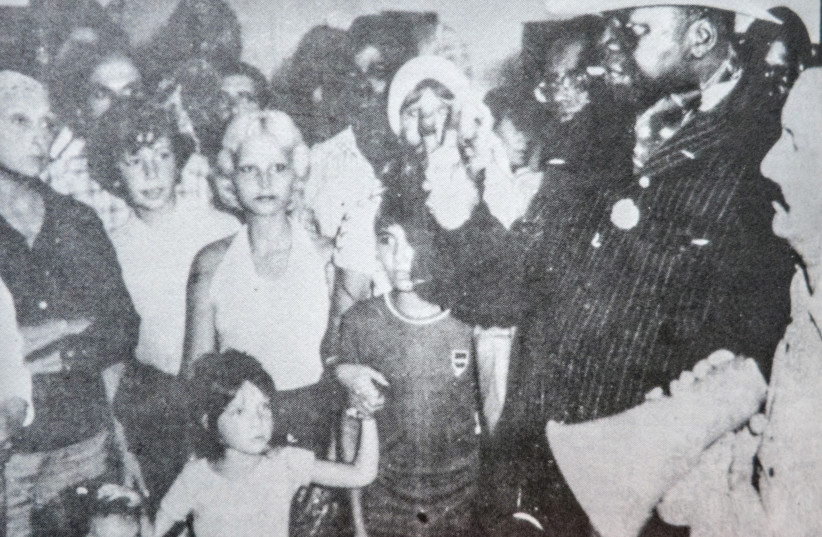
A whole army behind the Entebbe hijackers
My first question was what Dvir thought Cojot would have done had he been on the flydubai plane. “He would have joined those guys in storming the cockpit. Absolutely. In fact, when they landed in Entebbe, he got a few Israelis together and contemplated doing exactly that: overtaking the four terrorists.
“What changed his mind was seeing the Ugandan soldiers and noticing that the head hijacker, Wilfried Bose, was huddling with them. He realized that even if we take over the plane, there are these soldiers; there’s a whole army behind them.”
The story of Cojot’s experience in the Entebbe hijacking and his role in making Operation Thunderbolt possible could have easily been the subject of an entire documentary.
“It was drawn out and intense… The world was fixated on Entebbe for that whole week,” recalled Dvir, who grew up in Israel and was fascinated by the hijacking as a nine-year-old.
“My father woke us up that Sunday morning and said the words: The IDF did it,” said Dvir, a journalism professor at Pennsylvania State University, in addition to his work as a documentary filmmaker.
Much later, he planned to make a documentary about a different Michel – Michel Bacos, the Air France captain of the plane hijacked to Entebbe. Bacos became a hero because he said he had turned down the chance to be released early on, but chose to remain with the hostages.
But as Dvir researched Bacos’s story, he realized that a release of the flight crew was never on the table; the hijackers needed them there because the plane was a new kind of Airbus that almost no one knew how to fly.
While interviewing survivors of the hijacking, one name came up again and again: Michel Cojot. “They said: ‘There was a French hero there, and his name was Michel. Not Michel Bacos: Michel Cojot.’ That’s how I discovered this complex, fascinating Jewish character.”
While it has always been rumored that an Israeli firm designed the Entebbe airport terminal and gave the Mossad and the IDF the blueprints, Cojot, who was among the second group of hostages released before the raid, provided more crucial information, Dvir said.
“What really made the [Israeli] military hesitate was the reports from the other released hostages, one by one, telling them the terminal was rigged, that it was booby-trapped. You can’t storm a building that’s booby-trapped. The whole building explodes. Everything goes up in flames, and everybody dies. That was really holding them back. Then Michel assured them it was not.”
Cojot had checked the boxes that supposedly held the explosives and knew that they were empty.
“He went as far as taking photographs. Can you imagine? You’re a hostage, and you’re taking photos of the terrorists?… He’s making diagrams, taking notes, sneaking them to his son [Olivier, who was held hostage with him at first and was released with the first group]…

Cojot's father killed in Auschwitz, survived by hiding
“When I interviewed Israelis who were part of the rescue mission, they knew about Michel Cojot. I wasn’t breaking the news. They nicknamed him ‘Colonel Cojot.’ They thought he was a French military guy.”
Cojot’s plan to get information to the Israeli authorities worked, but he clearly risked his 12-year-old son’s life to carry it out. He even tasked Olivier with destroying Israeli passports in secret, so the hijackers wouldn’t know which hostages were Israeli.
This choice to turn his son into his assistant during the hijacking becomes even more complex and interesting when you look at Cojot’s own childhood. Cojot was born in France in 1938 to Jewish parents; when he was still a child, his parents acquired false identity documents. His name was changed several times so that he could escape deportation to the death camps.
But one day his father was caught and sent to Auschwitz, where he was killed. Cojot and his mother hid during the rest of the war, and she married a man after that who adopted Cojot.
Cojot went on to receive an MBA from Columbia University and had a successful career with the consulting firm, McKinsey & Company in France. He also married and had three children. But he was haunted by the loss of his father and blamed himself for not being able to save him, although he was just a child at the time. He could not enjoy living a normal life, and trained his own children on how to survive if there were ever another Holocaust.
GRADUALLY, HE became obsessed with a desire to take revenge on Barbie, who was responsible for the deportation of his father. After the war, Barbie was living openly in Bolivia, where he trained government-backed militias. Cojot even persuaded McKinsey to open an office in Venezuela that he headed, so he could more easily track Barbie.
The film shows how the Holocaust survivor managed to insinuate himself into Barbie’s inner circle, but also that, when Cojot was finally alone on a street with Barbie, he chose not to kill him.
“He was not a killer. He never fully explains it, not in his interviews or his book. It isn’t clear. Maybe it was subconscious, a feeling rather than a thought… ‘Don’t do it, don’t stoop to his level; you’re trying to get rid of evil, and now you’ll attach yourself to it if you kill him.’”
Not long after that, Cojot boarded the Air France flight and felt that this gave him a second chance to bring down evil. Besides sharing critical information with Israeli authorities, he also tried to bring this intelligence to the French government, but an official who answered the phone on Friday told him to call back on Monday; he spent a great deal of time trying to discreetly influence Bose, one of the hijackers. When the raid began, Bose could have killed the hostages, but he did not.
“Bose was such a hardcore guy. Why didn’t he throw the grenade or shoot the hostages? He knows he’s about to die. This is his life mission. He’s been a terrorist for a while, one of the leaders of the international terrorist movement connected with [infamous terrorist known as Carlos the] Jackal.
“There’s no doubt in my mind that Michel got to him. Michel played a tricky psychological game. I like to look at actions, and Michel convinced him to take several actions that harmed their cause.”
Chief among these actions was persuading the hijackers to release two groups of passengers.
“Releasing hostages doesn’t help the hijackers. First, they bring information to people planning a rescue. Second, it diminishes the hijackers’ power, which rests on how many hostages they hold. Fewer hostages from fewer countries means less power,” said Dvir.
“There was no reason to release them. They were protected by Idi Amin and Ugandan soldiers. The airport cafeteria was feeding everybody. But Bose let Michel manipulate him.”
Cojot wrote about how he shared his story of coming close to killing Barbie with Bose, and tried to convince him that if he were to kill Jewish hostages, he would be acting just like a Nazi.
Looking back on Cojot’s complicated life and legacy, Dvir said, “So many survivors don’t want to know or talk, or want to create their own bubble. I don’t blame them; life is difficult. Michel couldn’t do that. He always had to know the truth.
“Then he’d figure out how to deal with it. Painful, damaging, helpful; it didn’t matter. He had to know. That is the aspect of his life I personally relate to. I have the same obsession. What is the truth? Not what I want it to be. What is it, really?”
Speaking again about the flydubai incident, Dvir added, “I keep coming back to landing in Israel to show this film on the day of this attempted hijacking: Is there something going on? Some sort of divine intervention? Is Michel’s spirit here?”
See the film’s website tokillanazi.com for a full list of screenings.