
The Knesset’s newly announced election date, October 27, affirms Israel’s democratic character, counter to the anti-Bibi protest movement’s claims that Israel’s democracy was dead. It also confirms that Benjamin Netanyahu’s coalition will be the first Israeli government in 53 years to serve its full four-year term.
Such longevity is particularly surprising because, following United Torah Judaism’s departure, this unstable 60-member coalition lacks a formal parliamentary majority. Even more stunning: if ever a government deserved to fall – long before the October 7, 2023, Hamas-led massacre – it was this one.
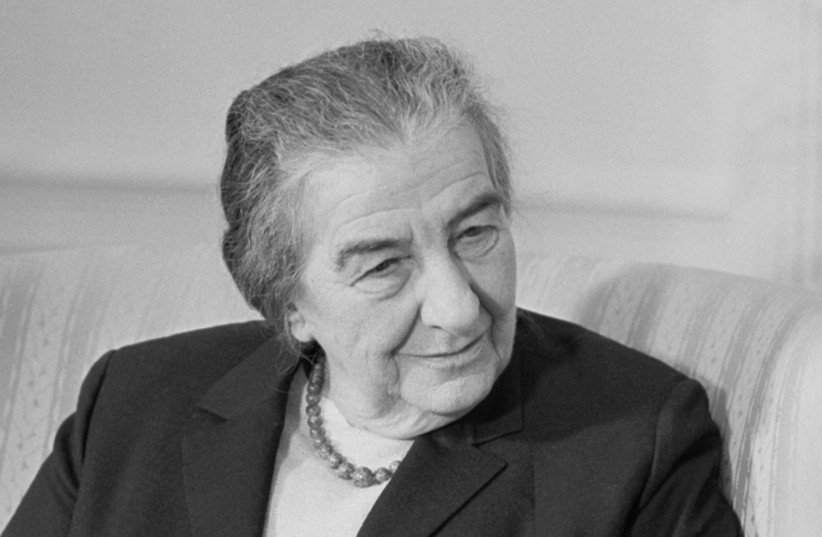
In 1969, prime minister Golda Meir secured a record-breaking 102-seat supermajority. Her Labor party – the Alignment – won 56 seats – another still-unbroken record. And reflecting Israel’s post-1967 unity, Menachem Begin led his Gahal bloc into the coalition, joining the National Religious Party, the Independent Liberals, and four Arab MKs from Alignment-affiliated parties.
True, Golda’s government also was surprised by a devastating attack – on Yom Kippur, 1973. But that catastrophe occurred as its term was ending. Forty-six days later, Meir’s government approved a national commission of inquiry to learn from Israel’s mistakes. The Agranat Commission issued its first Interim Report on April 1, 1974, 177 days after Egypt and Syria attacked Israel.
While neither mirror nor crystal ball, history can be a spotlight, illuminating similarities and differences. Today’s Israeli government has consistently scorned what was in the DNA of Meir’s government – a commitment to national unity. Too many cabinet members today are flame-throwing demagogues, and our prime minister keeps choosing to rile his base rather than unite the nation.
True, the government’s opponents have also been tribal, polarizing, and often overzealous. But when democratically elected governments take the responsibility to lead the nation, they shoulder more of the blame – not all of it – when politics turns ugly.
This also was the government that couldn’t govern straight – from its inception. What’s fascinating about this coalition’s pre-October 7 failures is how often many ministers’ poisonous polarization undermined their own goals.
Thoughtful, principled Likud supporters who wanted to see some much-needed judicial reforms should feel betrayed by the government’s incompetent, self-sabotaging judicial reform campaign.
This blatant case of political malpractice belongs in the Hall of Fame of Political Backfires. Had Justice Minister Yariv Levin, Netanyahu and their colleagues implemented the program more thoughtfully, more subtly, less vengefully, they could have passed some important reforms and avoided the searing divisiveness that weakened Israel, leaving it so vulnerable to Hamas’s attack.
Israeli demands during the election
Meantime, approaching the election, every Israeli should demand more thoughtful conversation from every politician.
For starters – and this is a wish list, not a prediction – we desperately need a change in tone. Obviously, election campaigns usually run shrill, but this mutual demonizing of political opponents must end. It’s unhealthy to frame every issue as a tribal do-or-die war of us vs them. And the casual toleration of vile rhetoric and political violence – as long as it’s targeting the others – is unacceptable, Left to Right.
The parties should launch the campaign by agreeing that, after the people speak on Election Day, the pols will discourage their own supporters from wielding the hooligans’ veto. Haredim (ultra-Orthodox), pro-Bibi thugs, and the anti-Bibi protest movement must stop demonstrating violently, while also ending this despicable totalitarian practice of harassing political rivals and their families at their homes.
All leaders should learn to criticize their own side’s excesses when necessary. And every patriotic Israeli should support a broad, effective law, modeled on RICO, America’s anti-racketeering statute, that stops political violence while prosecuting those conspiring to unleash the violence too.
Similarly, every Zionist party should vow to implement a fairer, more broad-based draft, promising to shut out any party that encourages draft-dodging and opposes national service for every young Israeli. Our soldiers – in the reserves and the regular army – need more comrades. And those unsuited for military duty should, at least, devote two years to serving the nation in some civic capacity.
Israel can ease the transition by deploying Israeli-Arabs for national service in their own communities and by developing more exclusively ultra-Orthodox army units. But it’s not fair to have our small society, facing such evil enemies and daunting challenges, overrun with freeloaders.
Israelis also need politicians willing to explain how to tackle some solvable problems that festered amid so many years of distracted and incompetent governance. Politicians should commit to fighting the murder spree in the Arab sector, combating protection rackets nationwide, and breaking the organized crime families.
Israel can learn from America’s experience crushing the Mafia, as well as former New York City mayor Rudy Giuliani’s crime-fighting initiatives in the 1980s. These and other policies reduced American crime rates by over 50% since the 1990s. A task force of crackerjack prosecutors, backed by elite police commandos, should become Israel’s Untouchables – honoring America’s legendary federal crime-busters in the 1930s.
Finally, beyond the big questions of war and peace, Israel’s wannabe leaders should address the little things that make life livable. My children and their friends worry about the soaring housing costs, overcrowded classrooms, understaffed hospitals, traffic-choked roads, foolishly managed construction projects, and unbearable tax burdens.
This government’s ministers preferred governing by bombast and trashing anyone who dared to criticize them, rather than improving Israelis’ quality of life.
Israelis deserve better. Wouldn’t it be great if, rather than enduring the next hundred days of partisan posturing and personal bullying, we experienced one hundred days of creative brainstorming and thoughtful discourse? So many of our kids have fought and sacrificed so much for a better Israel. Now it’s time for the leaders to step up and start realizing their dreams.
The writer is an American presidential historian and a senior fellow in Zionist thought at the Jewish People Policy Institute in Jerusalem. For America’s 250th, he published, with David Suissa, 250 Reasons to Thank America; and with the JJPI, The Essential Guide to the US-Israel Partnership, the 250th Anniversary Edition.