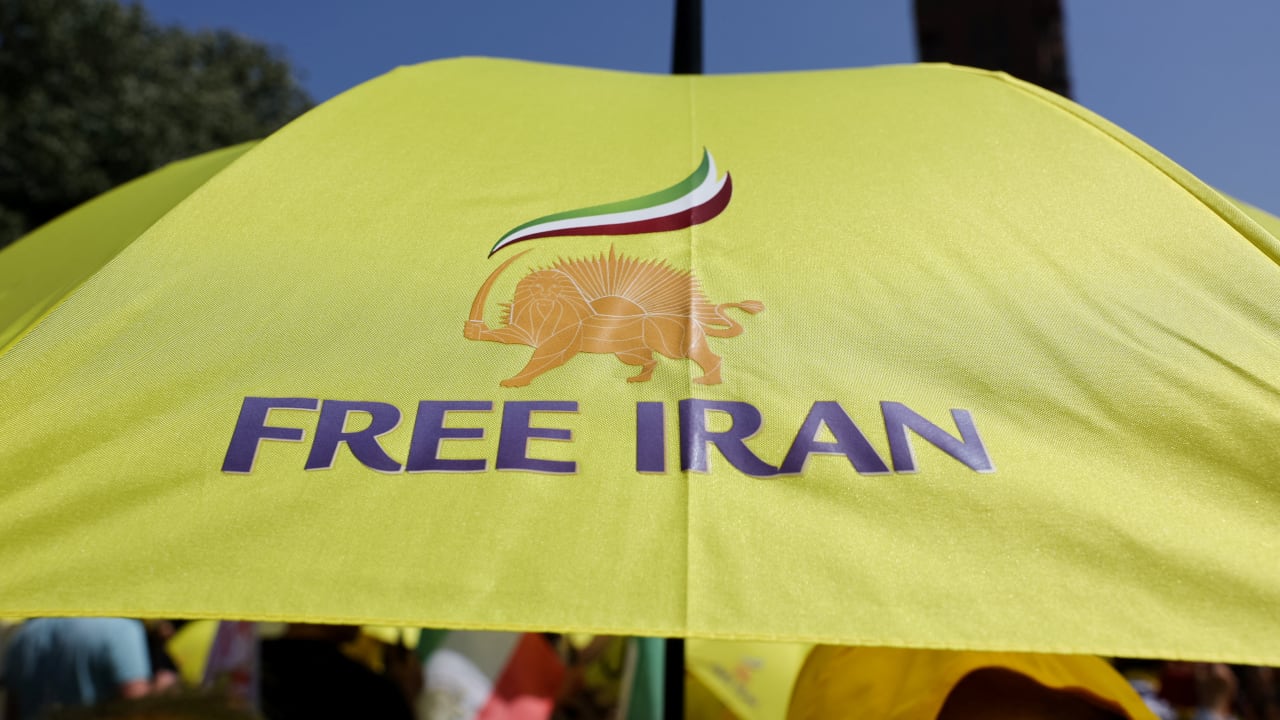
The United States has demonstrated overwhelming military power, inflicted enormous damage on the Iranian regime’s military capabilities, and exposed a weakness that Tehran has spent decades desperately trying to conceal. The question now is not whether America can continue striking Iran. Of course it can. The question is whether America needs to continue fighting the same way.
Reports that the Pentagon is considering a smaller American military presence in the Persian Gulf deserve to be viewed through that strategic lens. The Washington Post reports that Pentagon officials are examining whether the United States should rebuild its Gulf bases in the same configuration after months of Iranian attacks, while another option under consideration involves moving some forces farther west in the region. The Times of Israel likewise reports that Washington is weighing a major pullback following the damage inflicted during the war.
Some will immediately call this retreat. I call it the possibility of strategic transformation.
America does not have to abandon the fight simply because it reduces its exposure. In fact, Washington can pull back vulnerable forces while increasing the pressure on the Iranian regime through economic warfare, intelligence, cyber capabilities, and highly precise unmanned technology. America does not need to occupy Iran to defeat the regime that has terrorized its own people and destabilized the Middle East for generations. The United States can change the battlefield without surrendering the war.
The economic baseball bat
The Iranian regime understands military power, but it also understands something even more important: money. The Islamic Republic has spent decades building a network of terror, proxies, missiles, drones and militias that requires enormous financial resources to sustain. Hezbollah, the Houthis, Iraqi militias, and other Iranian-backed organizations do not operate on prayer and propaganda alone. They require weapons, salaries, intelligence, transportation and infrastructure. Every dollar denied to Tehran is potentially a dollar denied to the machinery of terror.

America has already swung the military bat. Now it is time to pick up the economic bat and keep swinging.
The United States should maintain relentless economic pressure on the regime. The objective should be to make it increasingly expensive for the Islamic Republic to finance repression and terrorism while making it increasingly possible for ordinary Persians to imagine a future without the mullahs.
This is about separating Iran's people from the regime that has stolen their country.
The Persian people are not the enemy. They are the people who have lived under this regime. They are the people who have watched their wealth disappear into foreign wars while their own economy struggles. They are the people who have repeatedly demonstrated that there is a deep reservoir of resistance to the Islamic Republic. The greatest long-term threat to the regime may not be an American aircraft carrier sitting in the Gulf. It may be a Persian mother, father, student or worker finally deciding that fear is no longer stronger than hope.
You don't have to occupy Tehran to make Tehran afraid
The greatest mistake America could make now would be believing that military withdrawal and strategic withdrawal are the same thing. They are not.
America can reduce the number of troops sitting on exposed bases while maintaining extraordinary intelligence capabilities and the ability to respond when American lives, Israel or American allies are threatened. Washington can use cyber capabilities against hostile military and government infrastructure. It can use intelligence to identify the people and organizations responsible for attacks and terrorism. It can deploy unmanned systems and other precision capabilities to hold legitimate military targets at risk without committing thousands of American soldiers to another ground war.
This is where the drone revolution changes the equation. America does not need to put another generation of young Americans in harm's way to keep pressure on the Iranian regime. AI-enabled intelligence and precision unmanned systems can give Washington the ability to identify and track the military and terrorist elements responsible for attacks and strike legitimate targets with extraordinary precision. The men directing terror, launching missiles and drones, funding militias and making life a living hell for the Persian people should never mistake an American troop pullback for American weakness. The battlefield has changed, and America can change with it.
That is the advantage of modern warfare. You do not always have to occupy the territory of an enemy to make the enemy understand that you can reach them.
The message to Tehran should be simple: America does not want to occupy your country, but neither will America allow your regime to attack Americans, threaten Israel, terrorize your neighbors and finance terrorism without consequences.
Let the Persian people finish the job
Ultimately, America cannot overthrow the Iranian regime for the Persian people. Nor should it try to manufacture an Iranian revolution from Washington. Freedom that lasts must ultimately be claimed by the people who live there.
But America can create conditions in which the regime becomes weaker, more isolated and less capable of suppressing its population.
That is why the next phase must be about pressure and patience. If major military operations have accomplished their objectives, Washington should pull back forces that no longer need to remain in exposed positions, protect American lives, maintain economic pressure and target the regime's financial networks. It should continue using intelligence and precision capabilities to deter renewed attacks, then watch what happens when the regime has fewer resources with which to intimidate its own population.
The Islamic Republic has survived for decades by convincing its enemies and its own people that it is stronger than it really is. That illusion has now been shattered, and once a dictatorship loses its aura of invincibility, the people living under it begin to see something they could not see before: the regime can be challenged, weakened and ultimately defeated.
Trump has an opportunity to finish what the military started
President Trump now has an opportunity that few American presidents have ever possessed. He can tell the American people that victory does not require permanent occupation and endless deployments.
America can win by knowing when to stop doing what the enemy expects.
Iran expects America to become trapped in a cycle of escalation. Tehran wants Washington to keep pouring troops, ships and aircraft into the region because every additional American asset becomes another potential target. The regime wants America to believe that if it pulls back, it has lost.
Trump should refuse to accept that false choice.
America can pull back because it has already demonstrated its power and badly weakened the Iranian regime. It can do so because economic pressure, technological superiority and intelligence capabilities do not require a permanent American army sitting on Iran's doorstep. Sometimes the most devastating weapon against a failing dictatorship is time.
America should keep the pressure on while allowing the Persian people to determine their own future.
The Middle East needs a different future
For decades, the Iranian regime has exported misery across the Middle East. Its fingerprints have appeared wherever terrorism, sectarian violence and proxy warfare have threatened innocent people. Israel has lived under the shadow of Iranian-backed terrorism. Arab nations have endured Iranian missiles, drones and militia networks. And the Iranian people themselves have paid an enormous price for a government that has consistently prioritized revolutionary ideology over the prosperity of its own citizens.
That cycle can end, but America must understand the difference between occupation and deterrence, between endless war and sustained pressure, and between bombing a country and dismantling the machinery of a regime that threatens the free world.
The war may be ending. The pressure must not.
The United States has already shown the Iranian regime that its military power is not untouchable. Now Washington should show Tehran that economic power, technological superiority and strategic patience can be even more frightening.
The military phase may be winding down, but the pressure on the regime should not. The goal is not to destroy Iran. The goal is to destroy the regime's ability to destroy everyone else.
If America can accomplish that without another generation of American soldiers being asked to occupy foreign soil, then Washington should seize the opportunity. Let the United States reduce its vulnerable footprint while maintaining the ability to respond decisively. Let the economic pressure continue. Let precision technology keep hostile military capabilities at risk. Most importantly, let the Persian people have the time and space to decide what kind of nation they want to become.
Dictatorships often look invincible right up until the moment they aren't. America has already swung the military bat. Now it is time to pick up the economic bat and keep swinging until the regime can no longer finance the terror, repression and destruction that have made life a living hell for the Persian people and so much of the Middle East.
America does not have to occupy Iran to win. It has to remain strong enough to make the regime afraid, smart enough to know when to pull its troops back, and patient enough to let the Persian people finish what military pressure began.
Dr. Mike Evans has written 120 books, is a #1 New York Times bestselling author and Nobel Peace Prize nominee. He is the founder of the Friends of Zion Museum in Jerusalem, the Ten Boom Museum in Holland, and Churches United with Israel, one of the largest Christian Zionist networks in America.