In July 1976, as a nine-year-old boy growing up in South Africa, my world was reshaped by the miraculous Entebbe hostage rescue and the tragic fall of Lt.-Col. Yoni Netanyahu.
That formative moment instilled a singular lesson into my consciousness: Jewish destiny is bound by mutual responsibility, and leadership demands personal sacrifice. That awakening guided me when I made aliyah 42 years ago, which later inspired me to found Torah MiTzion.
When evaluating the Diaspora landscape three decades ago, it was clear that while day schools, youth movements, and synagogues existed, there was a critical void: vibrant Torah learning institutions rooted in religious Zionism.
To fill this gap, our movement began establishing Religious-Zionist batei midrash (Torah learning centers) across the globe, from Memphis to Melbourne, Buenos Aires to Moscow, as well as our Lev Yehudi centers in India for Israeli backpackers.

The field of Diaspora shlichut has evolved dramatically, shifting from traditional institutional community roles to deploying living role-model families who embody safra v’sayfa, the book and the sword, seamlessly weaving high-level Torah scholarship with military service and aliyah.
To date, over 1,700 shlichim (emissaries) have served on the front lines of Jewish continuity.
Through intensive Torah study in hevruta (partner learning), classes, and active community engagement, our shlichim cultivate deep spiritual connections, strengthen Jewish identity, fight assimilation, inspire aliyah, and encourage IDF service.
Yet today, as Israel navigates one of the most perilous wars in its modern history, a new and alarming paradox has emerged.
Since October 7, 2023, many of our active shlichim abroad immediately returned to Israel to join their reserve units on the front lines in Gaza and Lebanon. They fought bravely in uniform before returning to their overseas communities as symbols of courage and resilience.
But as they stepped back onto foreign soil, they stepped directly onto a second, critical front line: the Diaspora front.
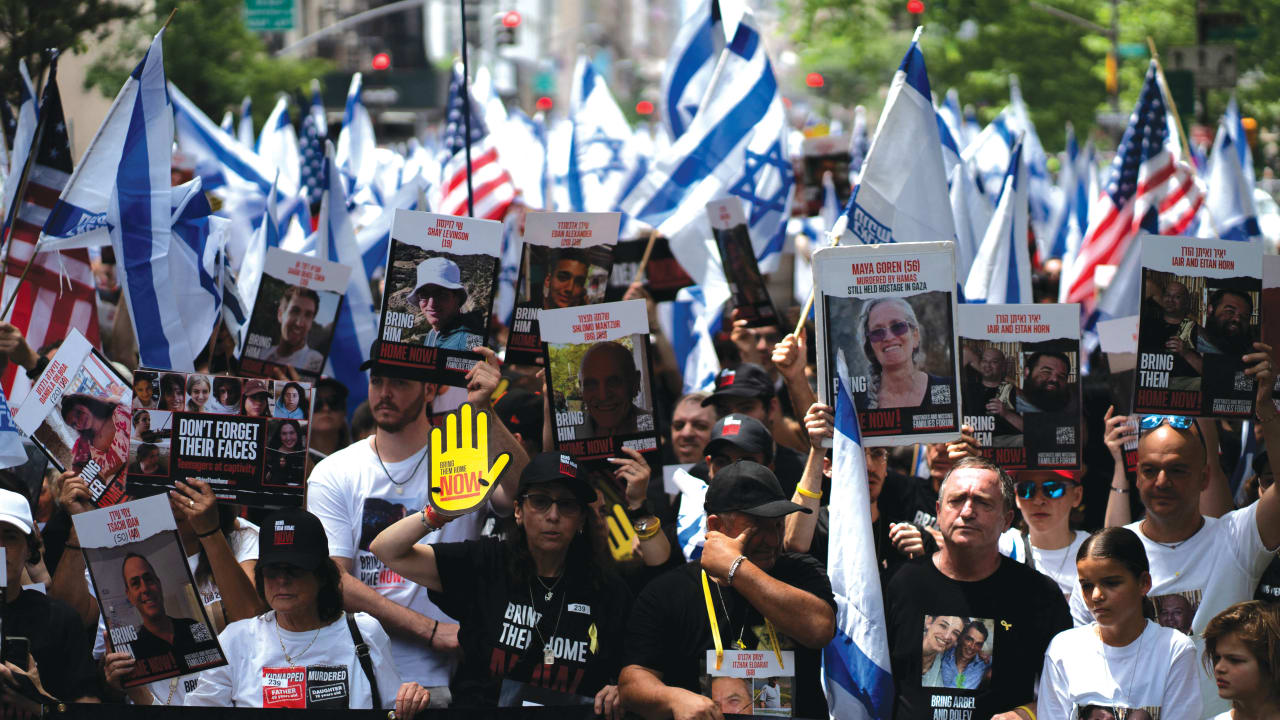
Around the world, Jewish communities are facing unprecedented waves of antisemitism, isolation, and anxiety. They look to Israel not just for military updates, but for spiritual fortitude and moral clarity.
They do not need virtual lectures; they need an authentic human embrace, a joint Shabbat table, and Israeli leadership anchored in faith and unity.
This has created our greatest wartime challenge. The young men and women who represent the ideal candidates for international shlichut are currently wearing IDF uniforms, deployed in operational combat.
As a result, we face a severe shortage of new shlichim candidates at the exact moment global Jewry needs them most.
The Diaspora front
While our finest leaders are defending our borders, assimilation continues unabated across Jewish communities worldwide. We cannot afford to abandon the Diaspora front.
The cost of this struggle has hit our Torah MiTzion family directly. Among our fallen heroes is Rabbi Avi Goldberg, who, together with his wife Rachel, served for three years as Rosh Kollel in Memphis.
Rabbi Avi embodied the harmony of Torah scholarship and elite military service before falling in combat during this war. His sacrifice, along with other alumni who gave their lives for Israel, reminds us that once you enter a life of shlichut, you remain a shliach forever.
To the young men and women, alumni of hesder yeshivas and midrashas, young religious Zionist families and educators: our nation needs you on every front.
Just as our soldiers answer the call to defend our land, we must answer the call to protect the soul of our global Jewish family. From Manhattan to Perth, Jewish communities are waiting.
We need you!
The writer is the founder and CEO of Torah MiTzion, a global religious-Zionist movement that has dispatched over 1,700 shlichim to establish Torah learning centers in Jewish communities worldwide over the past 30 years.