
In Abdanan, in Ilam Province, Iranian society’s embers flared again – a fire neither extinguished by brutal repression, subdued by Islamic thugs’ threats, nor halted by political promises and US President Donald Trump’s diplomatic mirage.
Events in the streets went beyond local protest or an emotional response to a deadly incident. Abdanan revealed an angry, seething society that, burdened by accumulated political, economic, and social crises, still seeks to express its will.
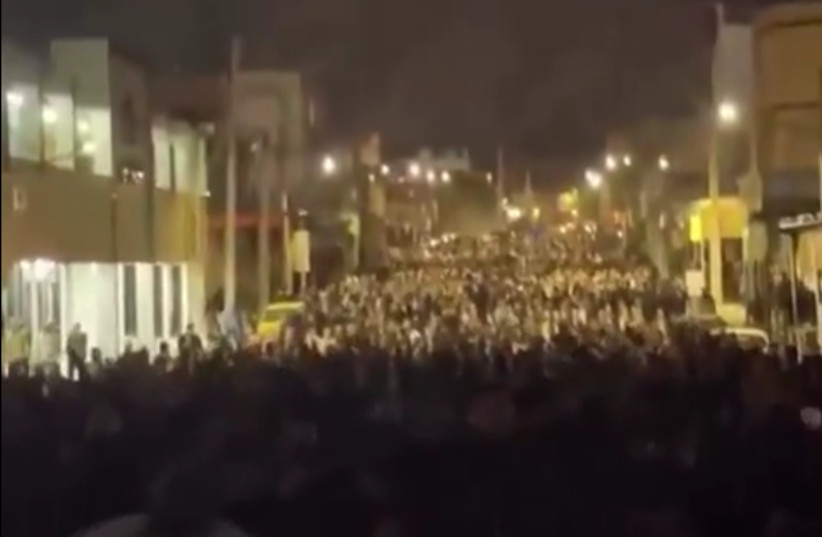
Those who took to the streets after 13 employees of the Dehloran petro-refining complex died turned mourning into political protest, showing how narrow the gap between social grief and political anger has become in Iran. This signaled a deep crisis that has long eroded the Islamic Republic’s legitimacy and created a historic rift between the occupying, repressive government and much of society.
Political history shows that authoritarian governments and dictatorships often mistake silence for consent, retreat for surrender, and the absence of street protests for stability. But Iran’s grieving, wounded, repressed society is not calm; its silence conceals anger awaiting an opportunity to emerge.
Through its repressive machinery, intelligence-security mafia, and propaganda machine, the Islamic Republic may temporarily contain protests, but controlling the streets cannot restore legitimacy.
Arrest, execution, and torture cannot produce legitimacy; threats or street displays cannot earn public trust; nor can national loyalty be expected when a repressive, murderous government reduces society’s demands to a security issue.
Abdanan offered a reminder: repression, however extensive, cannot replace political consent, and the occupying terrorist government’s authority, stripped of social acceptance, displays power’s anxiety rather than stability.
'Pahlavi will return'
The slogans “Death to the dictator,” “This is the final battle; Pahlavi will return,” and “Islamic Republic, where is your cartoon leader?” transcend a gathering’s momentary excitement.
They express a shift from protesting the regime’s incompetence to opposing the entire political structure. This signals a governance and legitimacy crisis under continued destructive, plundering rule.
The government can no longer quell the discontent of a repressed, grieving society demanding a different political system, exposing the historic crisis between the state and the Iranian nation.
Among Abdanan’s key messages is the independence of protesters’ political will from Washington’s calculations. For months, Iran’s media and political sphere have awaited Trump’s decisions, the White House’s direction, promises of military or economic pressure, and diplomacy’s mirage – as though Washington must determine Iran’s destiny while its nation drifts among the American president’s promises and slogans, Pentagon calculations, intelligence assessments, diplomatic hesitations, and Europe’s failure to see.
But Abdanan’s people took to the streets without awaiting a Trump speech, a US National Security Council meeting, or an EU statement. Their political action showed that, even under the hardest conditions, a nation’s will does not depend on foreign powers’ decisions.
Governments decide, forge alliances, and make promises through the media according to their interests, yet have forgotten both the genocide of the Iranian nation and its demands, pursuing hollow diplomacy with its murderers instead. The historic right to “self-determination” belongs to the Iranian nation; it is not America’s privilege to grant.
International pressure, sanctions, diplomatic isolation, or shifts in the regional balance of power may help the Iranian nation’s movement and influence domestic developments. Yet a nation’s destiny does not depend on foreigners’ will.
The West may offer opportunities, but cannot replace the Iranian nation’s social capital, political organization, or public will.
Trump seeks a meaningless diplomatic agreement; Europe prefers political and economic ties to human rights. Such grotesque, illogical, unexpected behavior reflected national interests and strategic calculations, not concern for humanity or human rights.
The Iranian nation has not entrusted its future to the consistency of politicians who neither represent it nor necessarily prioritize Iran’s freedom in foreign policy.
Abdanan stood on its own feet, exposing the political crisis following the Dey 1404 protests and showing that their objective endures.
The Shi'ite clerical government’s violent repression raised the cost of political participation without forcing society to retreat or resolving fundamental contradictions; protest continues to blaze. Iran’s rulers face not stability but fear and anxiety over survival, confronting a society that has shed its fear and refuses submission, while the regime’s loyalist base shrinks.
The government increased executions to survive, hoping to frighten or persuade society, but achieved nothing. Iranian society resembles a boiling pot of mounting pressure: each new incident exposes government incompetence and provides an outlet for accumulated discontent.
Monarchist slogans and support for the Pahlavi dynasty’s return in Abdanan carry particular significance, signaling a search for an alternative to the ruling system. Crown Prince Reza Pahlavi’s name is linked to that alternative and a transition beyond the Islamic Republic.
The issue goes beyond changing a government: it involves rebuilding the state’s relationship with the nation and Iran’s historical heritage, while restoring national pride and identity. These slogans can no longer be denied; what Abdanan voiced is a significant reality within Iranian society.
This reality also exposes contradictions among certain bankrupt political currents. The Mojahedin-e Khalq Organization (Islamic Marxism), the governmental reformist mafia (the Islamic Left), and separatists with a history of terrorism – including Komala and the Democratic Party of Iranian Kurdistan – align with the government in opposing monarchist discourse.
These three poisonous, corrupt currents share an opposition to restoring the Pahlavi political tradition to the center of Iran’s political future. Rather than compete politically, they resort to smears, character assassination, destructive attacks, and poisonous propaganda – not a defense of democracy.
They disregard the people’s will for discredited ideologies. Iran’s future, however, rests on national sovereignty and citizens’ right to choose through a free, democratic process.
The political legitimacy of this incompetent, bankrupt, slogan-spouting, illegitimate regime cannot be sustained by security and intelligence agencies, law enforcement, military structures, or repressive institutions.
No bond or trust remains between the authoritarian establishment and citizens, and civil disobedience has grown.
Iran’s protesting society increasingly believes the regime neither represents its wishes nor, with the clerics and Revolutionary Guard in place, can secure or envision an acceptable national future. The depth of this political crisis remains unknown to the West.
A nationwide revolution will shatter the collapsing regime’s power structure. Abdanan showed the world the continuing capacity for protest, citizens’ changing political language, and the emerging divide between society and the ruling system.
The Iranian nation’s social movements are not scattered protests but expressions of a dissatisfied society seeking lasting change. Clear political leadership enables spontaneous social organization and reveals a path beyond this historic crisis toward an order grounded in the rule of law, citizens’ freedom, territorial integrity, national security, and public will.
Abdanan’s message to Washington and European capitals was clear: Iran cannot be understood solely through its nuclear dossier, missile capabilities, regional rivalries, or deterrence calculations. A society deprived of freedom, impoverished, repressed, politically uncertain, and burdened by suffering cannot be ignored.
Pahlavi has repeatedly emphasized that government repression and violence have failed to break protesters’ resolve. Abdanan offered fresh evidence: Iranian society is a political actor with its own will, historical memory, and independent demands.
Abdanan reaffirmed a political truth: the mullahs’ regime cannot build a wall of terror and savagery between society and its aspiration for freedom. A living society carries a historic struggle; sovereignty over Iran belongs to the nation.
Abdanan’s rekindled embers showed that imposed silence means neither extinguished political-historical will nor surrender to ruthless repression.
A nation’s destiny cannot be entrusted to domestic fear or waiting on foreign powers. Iran’s future will be neither a White House gift, a product of European expediency, nor an outcome dictated by the Islamic Republic’s repressive machinery.
The regime’s displays of barbarism failed to silence the streets; it cannot erase anger and hope from national memory. Iranians’ will and free choice endure: they – not the American president – write Iran’s history.
Trump may drift among promises, negotiations, and hesitation, but Iran’s history will not pause for a White House decision.
The embers endure because neither Tehran’s rulers nor Washington’s hesitant politicians will determine Iran’s destiny; a nation determined to reclaim its future will. Abdanan voiced that message in the streets: the Iranian nation will not wait for Trump to determine its own destiny.
The writer is a Middle East political analyst. His latest book, Tehran’s Dictator, examines the theocratic era of Ali Khamenei (1989-2026). @EQFard