Hadash elects former MK Yousef Jabareen as party chairman, ousting Ayman Odeh
"We will do everything to prevent the Netanyahu, Ben-Gvir, and Smotrich government from continuing for another term," he said in a statement published by Hadash.

"We will do everything to prevent the Netanyahu, Ben-Gvir, and Smotrich government from continuing for another term," he said in a statement published by Hadash.


Liberman made the remarks during a visit to Kibbutz Be’eri, one of the southern communities bordering Gaza that was brutally attacked by Hamas terrorists during the October 7 massacre.

Deputy Minister Sharren Haskel served as a keynote speaker at the Maritime Med conference and the East Med Energy Transition Summit.

"This is the beginning of the end of the worst government in Israeli history, and the sooner the better," says Benny Gantz.

The remarks came on Tuesday, as Bennett outlined his plans for the country if elected, alongside opposition leader Yair Lapid, at the first major campaign event of their newly merged Together party.
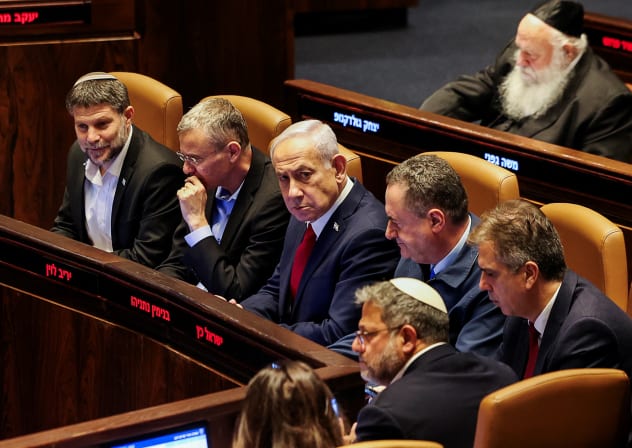
The remarks came on Tuesday, as Bennett outlined his plans for the country if elected, alongside opposition leader Yair Lapid, at the first major campaign event of their newly merged Together party.

On Tuesday, Rabbi Dov Lando, the spiritual leader of the haredi (ultra-Orthodox) Degel Hatorah faction, gave a green light to work toward dissolving the Knesset “as soon as possible.”

Bennett has never built a home. Bayit Yehudi was a vehicle. Yamina was a vehicle. Bennett 2026 was a vehicle. Together, his new merger with Lapid, is a vehicle.

Justices say minister lacked basis to remove retired judge Nechama Munitz, whose committee is central to filling vacancies on public broadcaster’s council.

The political alliance that was once considered Netanyahu’s most stable anchor, his exclusive political asset, can no longer be taken for granted.

Bereaved families accused the government of attempting to whitewash government failures through the revision, as lawmakers resumed debates on the continuous government bill.
