Netanyahu's testimony ended, his credibility remains at the heart of the case - analysis
The immediate next stages are remaining defense evidence, summaries, and then judgment, with the judges having three versions of the same broader story.
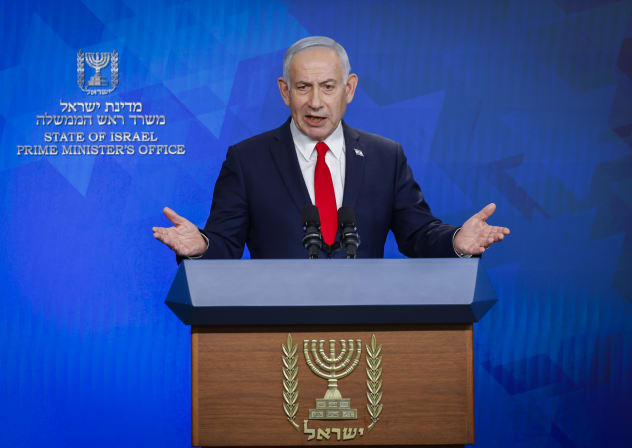
The immediate next stages are remaining defense evidence, summaries, and then judgment, with the judges having three versions of the same broader story.


Speaking with Gideon Oko and Amichai Attali on the 103FM program Seven Nine, Regev said that after several days of uncertainty, the party would hold primaries.

According to the police spokesperson, Barakeh gave a speech in 2022 where he said "words of praise and identification with terrorists and terrorist organizations."

“A nation cannot base its long-term strategy on a president who currently supports Israel,” Bennett said during a conversation with Jennifer Sutton.

Bennett said that he has spent the past two years working with professionals in various aspects to build plans addressing the core problems facing the country.

According to their statement, Netanyahu "made it clear at the meeting that he is committed to approving the laws and will work to advance them quickly."

According to the sources, Likud's Central Committee Chairman Haim Katz believes that Prime Minister Benjamin Netanyahu's demand could "crush the Likud."


The Likud is set to meet on Wednesday to discuss the party's future and to debate replacing the primaries with a “selection committee” system.
Shas Party leader Arye Deri also attributed the boycott of coalition voting to the recent rise in police arrests of haredi draft evaders.

"We respect President Trump, but first of all, the soldiers of Israel, our fighters, our citizens. The security of Israel's civilians comes first," he said.
