Sixty-five years to the day after the UN voted for the partition of mandatory
Palestine – a move the Jews accepted and the Arabs rejected – the same body
overwhelmingly voted on Thursday to grant the Palestinian delegation the
upgraded status of non-member observer state.
The vote was 138 in favor,
nine against and 41 abstaining.
“The moment has arrived for the world to
say clearly: Enough of aggression, settlements and occupation,” Palestinian
Authority President Mahmoud Abbas said to the packed UN General
Assembly.
“We did not come here seeking to delegitimize a state
established years ago, and that is Israel; rather we came to affirm the
legitimacy of the state that must now achieve its independence, and that is
Palestine,” he said.
“We did not come here to add further complications
to the peace process, which Israel’s policies have thrown into the intensive
care unit; rather we came to launch a final serious attempt to achieve peace,”
Abbas continued.
“Our endeavor is not aimed at terminating what remains
of the negotiations process, which has lost its objectivity and credibility, but
rather aimed at trying to breathe new life into the negotiations and at setting
a solid foundation for it based on the terms of reference of the relevant
international resolutions in order for the negotiations to
succeed.”
Abbas said that the Palestinians will accept no less than “the
independence of the state of Palestine, with east Jerusalem as its capital, on
all the Palestinian territory occupied in 1967, to live in peace and security
alongside the State of Israel, and a solution for the refugee issue on the basis
of Resolution 194.”
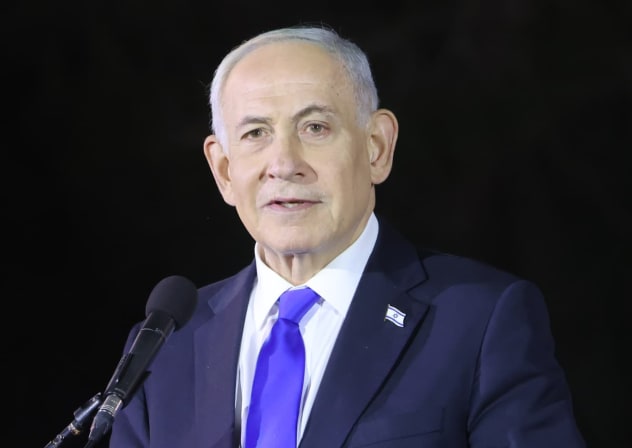
Prime Minister Binyamin Netanyahu condemned Abbas’s
strong critique of Israel as “hostile and poisonous,” and full of “false
propaganda.”
“These are not the words of a man who wants peace,” he said
in a statement.
The PA president said nothing about immediately resuming
talks with Israel without preconditions, though he did pledge to “act
responsibly and positively in our next steps, and... to work to strengthen
cooperation with the countries and peoples of the world for the sake of a just
peace.”
The countries opposing the move were the US, Israel, Canada, the
Czech Republic, Palau, Micronesia, Nauru, Panama and the Marshall
Islands.
Abbas, who called the resolution a “birth certificate of the
reality of the state of Palestine,” used the recent fighting in Gaza to frame
his request for the statehood upgrade and painted both Israel and its birth in
demonic colors.
“Palestine comes today to the United Nations General
Assembly at a time when it is still tending to its wounds and still burying its
beloved martyrs of children, women and men who have fallen victim to the latest
Israeli aggression, still searching for remnants of life amid the ruins of homes
destroyed by Israeli bombs on the Gaza Strip, wiping out entire families, their
men, women and children murdered along with their dreams, their hopes, their
future and their longing to live an ordinary life and to live in freedom and
peace,” he said.
“The Israeli aggression against our people in the Gaza Strip has confirmed once
again the urgent and pressing need to end the Israeli occupation and for our
people to gain their freedom and independence,” Abbas continued, pointedly
avoiding the mention of the rocket and missile bombardment of Israeli cities
from Gaza.
“This aggression also confirms the Israeli government’s
adherence to the policy of occupation, brute force and war, which in turn
obliges the international community to shoulder its responsibilities toward the
Palestinian people and toward peace.”
The Palestinian people, Abbas said,
“miraculously recovered from the ashes of the nakba [the Arabic term meaning
“catastrophe” that refers to Israel’s victory in the War of Independence] of
1948, which was intended to extinguish their being and to expel them in order to
uproot and erase their presence, which was rooted in the depths of their land
and depths of history.”
In Abbas’s telling of history, “hundreds of
thousands of Palestinians were torn from their homes and displaced within and
outside of their homeland, thrown from their beautiful, embracing, prosperous
country to refugee camps in one of the most dreadful campaigns of ethnic
cleansing and dispossession in modern history.”
Israeli Ambassador to the
UN Ron Prosor dismissed the move as empty symbolic posturing that will change
nothing tangible on the ground, but push the chances of securing a peace accord
between Israel and the Palestinians into the distant future.
Prosor said
that he has never heard Abbas say the phrase “two states for two peoples”
because the Palestinians have never accepted that Israel is the nation-state of
the Jewish people.
“They have never been willing to accept what this very
body recognized 65 years ago – Israel is the Jewish state.”
Prosor said
that the Palestinians were asking for recognition of a Palestinian state without
themselves being willing to recognize the Jewish state. Beyond that,
Prosor said, Abbas is trying to erase Jewish history by earlier in the year
trying to wipe out a Jewish connection to Jerusalem.
“You said that Jews
were trying to alter the historic character of Jerusalem, Prosor said.
“President Abbas, the truth is that Jerusalem had a Jewish character long before
most cities in the world had any character.”
Instead of revising history,
Prosor said, Abbas should start “making history by making peace with
Israel. This resolution will not advance peace,” he said. Nor will it
change the fact that the Palestinian Authority has not control over Gaza, 40
percent of the territory they claim to represent.
“President Abbas, you
can’t even visit nearly half the territory you claim to represent. That
territory is controlled by Hamas, an internationally recognized terrorist
organization that rains missiles on Israeli civilians.”
Prosor said the
resolution sends a message that the international community is willing to turn a
blind eye to peace agreements.
“For the people of Israel, it raises a
simple question: Why continue to make painful sacrifices for peace, in exchange
for pieces of paper that the other side will not honor? “There is only one route
to Palestinian statehood. And that route does not run through this
chamber in New York. That route runs through direct negotiations between
Jerusalem and Ramallah that will lead to a secure and lasting peace between
Israelis and Palestinians,” he said. “There are no shortcuts. No quick fixes. No
instant solutions.”
The resolution was presented to the General Assembly
by the representative of Sudan, who called this a victory for the “values of
truth.”
Staunch European allies such as Germany and the Netherlands, who
opposed Palestinian admission into UNESCO last year as a state, were among those
who this time only abstained, while other friendly countries, such as Italy,
voted for the move.
The vote took place on the annual “Observance of the
International Day of Solidarity with the Palestinian People.”
Senior
diplomatic officials voiced deep disappointment over the European votes. Up
until a few days ago, when France declared that it would support the move,
senior officials held out hope that the EU might abstain as a bloc, something
that would have deprived the Palestinian Authority of a moral
victory.
One senior official said that the recent fighting in Gaza tipped
the scales in Europe, with the Europeans worrying that if Abbas would not gain
some kind of diplomatic victory, he would lose all stature and
authority.
“Had the vote taken place before the Gaza operation, the EU
would have voted differently,” one official said.
The Prime Minister’s
Office has made clear in recent days that the vote would free Israel of its
obligations under the Oslo Accords, since Jerusalem views the move as a blatant
violation of the underlying principle of those agreements: that all outstanding
issues be resolved through negotiations, not through unilateral
actions.
Israel’s immediate reaction is expected to be the deduction from
tax transfers it makes to the PA each month of some NIS 800 million that the PA
owes to the Israel Electric Corporation.
Further steps are expected if
the Palestinians use this new status and try to join other UN bodies or, as a
result of their enhanced status, attempt to haul Israel or its citizens before
the International Court of Justice or the International Criminal Court on war
crime charges.
Hours before the vote, Netanyahu – realizing that Israel
was facing a stinging diplomatic defeat – said that regardless of how many
countries vote against Israel, “no force in the world will get me to compromise
on Israel’s security.”
Netanyahu said that the decision will “not change
anything on the ground. It will not further the establishment of a Palestinian
state, but will make it more distant.”
Netanyahu’s comments came while
touring an exhibit of recently declassified documents marking the upcoming 35th
anniversary of Anwar Sadat’s visit to Jerusalem at the Begin Heritage Center in
Jerusalem.
“Israel’s hand is always extended in peace, but a Palestinian
state will not be established without recognition of the State of Israel as the
state of the Jewish people, without an end-of-conflict declaration and without
true security arrangements that will protect Israel and its
citizens.”
The prime minister, who said that none of the conditions he
reiterated are even mentioned in the Palestinians’ UN resolution, said that
peace is only achieved through negotiations and not by unilateral declarations
“which do not take into consideration Israel’s vital security and national
interests.” He recommended not being impressed by the applause that he expected
to be heard at the UN.
“I remember the international community’s applause
that the government of Israel received when it decided to unilaterally withdraw
from Gaza,” he said. “We got applause and then rocket fire. We left Gaza, and
Iran entered, exactly like what happened in Lebanon.”
Netanyahu said he
would not enable another Iranian base to be established, this time in Judea and
Samaria, a kilometer away from Jerusalem.
“It does not matter how many
will vote against us, there is no force in the world that will cause me to
compromise on Israeli security and there is no force in the world able to sever
the thousands-year-old connection between the people of Israel and the Land of
Israel,” he said.