Draft dodgers will either 'enlist or go to prison,' Netanyahu says in closed-door meeting - report
Further, KAN reported that Netanyahu acknowledged the draft law was unsuccessful and that it would not be brought back in the next government.

Further, KAN reported that Netanyahu acknowledged the draft law was unsuccessful and that it would not be brought back in the next government.


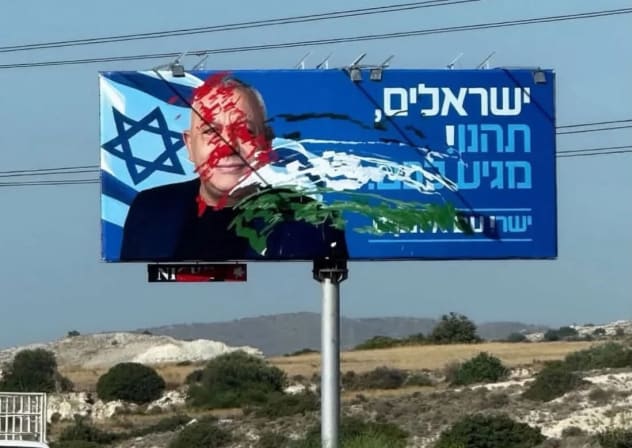
The vandalism came days after Eisenkot's campaign billboards sparked debate in Cyprus over foreign political advertising and the island's growing Israeli presence.
POLITICAL AFFAIRS: Israel's potential youngest Knesset member, Yonatan Shalev, speaks on why he believes Naftali Bennett is the man to lead Israel out of its polarization.

Netanyahu needs to show the Israeli voters that his claimed superpower, influencing Americans to support the Jewish state, is still potent.

A Maariv poll found that Likud rose to 22 seats, while Benny Gantz, Ayelet Shaked, Yuli Edelstein, and Dedi Simchi could win four seats with a new party.

The party, led by MK Avi Maoz since its founding in 2019, opposes homosexuality, the LGBTQ community in general, and pushes for expanding Jewish settlements in the West Bank.

One week earlier, Haskel alleged in a sworn affidavit that members of the New Hope-United Right faction were required to film themselves voting for Michael Rabello as state comptroller.

"We regret that instead of focusing on securing important diplomatic achievements, you chose, once again, to exploit the occasion to spread poison and venom," the letter from Eisenkot's team said.

According to the poll, if elections were held today, Benjamin Netanyahu and Gadi Eisenkot would each lead with 23 seats, an increase of two seats for each compared with the previous poll.

Haskel said that she would consider alliances with those who see themselves as able to be part of a broad Zionist government and would be willing to sit in a government with Netanyahu.

Trust can only be rebuilt through the formation of new international alliances grounded in shared values, mutual responsibility, and respect for international law.
