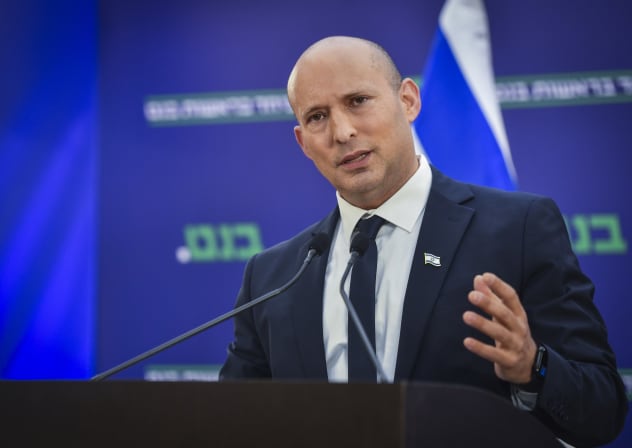
Public Diplomacy and Diaspora Affairs Minister Yuli Edelstein (Likud) on
Thursday called on Defense Minister Ehud Barak to increase access to Joseph’s
Tomb, located on the southern edge of Nablus, which has a waiting list of
thousands of Jews wanting to make the pilgrimage.
At present, access to
the tomb is limited to one nightly trip a month.
“We have to return to a
normal situation, under which those who want to come and to pray and to touch
the stones there can,” Edelstein told
The Jerusalem Post.Late on
Wednesday night, Edelstein, along with Social Welfare and Communications
Minister Moshe Kahlon (Likud) and Science and Technology Minister Daniel
Hershkowitz (Habayit Hayehudi) made a surprise visit to the tomb, to highlight
the need to make it more accessible and to mark the end of a two-year renovation
project.
“It was the first visit of ministers after more than 10 years,”
said Edelstein, who added that “it was very emotional” to be able to pray
there.
“As you know, for years Joseph’s Tomb was ruined and neglected and
burned down. Thanks to the Samaria Regional Council, it was
renovated. It was important for us to be there as Jews, Israelis and as
ministers to see the new condition of Joseph’s Tomb and to call for a return to
the situation in which it would be possible to pray there regularly,” Edelstein
said.
He said it was possible to accommodate this need, in coordination
with the IDF, given the improved security situation in the West Bank.
The
ministers were joined by more than a thousand worshipers from all over the
country, in an event that was organized by the Samaria Regional
Council.
Nablus, located at the site of the biblical city of Shechem, was
placed under the control of the Palestinian Authority after the 1993 Oslo
Accords.
But Israelis were given free access to Joseph’s Tomb in the
1990s.
Israel withdrew from the tomb in 2001, shortly after a gun battle
in which six Palestinians and Border Police Cpl. Madhat Yusef were
killed.
Within a week, a Palestinian mob destroyed the compound, and
Eilon Moreh resident Hillel Lieberman, who also held US citizenship, was later
killed en route to the tomb. Lieberman, a father of seven, was a founder and
administrator of the Od Yosef Chai Yeshiva at Joseph’s Tomb.
For two
years after the riot, Jews were banned from visiting, and the yeshiva was
relocated to the Yitzhar settlement.
After 2003, Jews were allowed
intermittent access to the tomb, which was expanded to a monthly midnight visit
in 2009.
But with the support of ministers, settlers are now calling for
a return to a situation in which Jews can regularly visit and study
there.
“We all know what took place here, and many of us have prayed for
this day [when it would be renovated], particularly after our enemies destroyed
it in a brutal way,” Kahlon said.
“We have to restore prayer and regular
activities,” said Hershkowitz, who thanked God that the Jews had merited the
right to renovate the tomb with the help of the IDF.
After the
ministerial entourage left, the excited first-grade girls of Elon Moreh’s
Nachalat Tzvi school celebrated receiving their first prayer books at the
site.
Jonah Mandel contributed to this report.