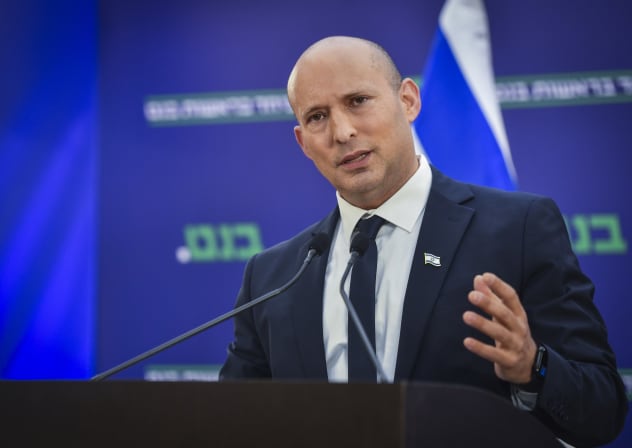
Prime Minister Binyamin Netanyahu announced on Sunday the establishment
of a professional committee made up of 15 ministers to examine the
social justice protest leaders' demands. The announcement came on the heels of
nationwide rallies Saturday that saw over 300,000 people take to the streets with demands of "social justice" and "a welfare state."
The committee will be headed by
chairman of the National Economic Council Professor Manuel
Trachtenberg.
RELATED:
PM: I'm aware of hardship, cost of living in Israel
'If we don’t connect to protesters, Labor loses relevance'
Kadima to housing protesters: Make it political Prime Minister's Office Director-General Eyal
Gabbai told Israel Radio Sunday morning that the group has been charged
with submitting its proposals for social-economic reform to the
government within a month.
Trachtenberg
responded to his appointment as head of the new committee cautiously, saying that
he is accepting the post with "mixed feelings" – enthusiasm for creating social
reform, and suspicion of the risks such work would entail and of the
difficulty of meeting the nation's expectations.
"We are witness
to a powerful process," he explained, and the burden rests on the
committee's ability to translate the demands of the protesters into a
plan of action. Trachtenberg quipped that he wishes there were a Rosetta
Stone that could help with the process.
Speaking at a cabinet meeting last week, Netanyahu said the roundtable
would invite to appear before it representatives of various different
sectors. The ministers will then recommend practical plans to ease the
economic situation of the country's citizens, and bring these plans to
the social-economic cabinet. The cabinet, led by Finance Minister Yuval
Steinitz, would then review the proposals and determine whether or not
they will be accepted.
Last week social protest leaders rejected Netanyahu's ministerial roundtable initiative.
Speaking at a press conference with Israeli media, organizers said that
dialogue should be carried out "transparently" with the prime minister
himself and not "a ministerial assembly."