What do we become when we decide to execute?
My son, Yuval, was killed on October 7. I know the feeling when the death penalty seems not only justified, but inevitable. That is precisely why I try not to trust it completely.

My son, Yuval, was killed on October 7. I know the feeling when the death penalty seems not only justified, but inevitable. That is precisely why I try not to trust it completely.


"Congratulations, President Trump. All Israelis rejoice in the incredible rescue of a brave American pilot by America's dauntless warriors,” Netanyahu said.
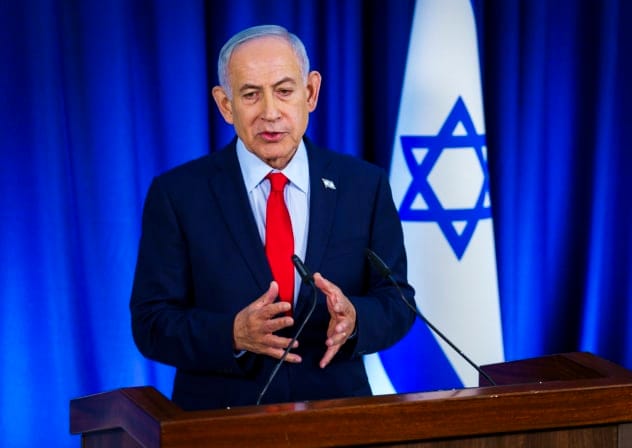
A recent survey reveals a significant shift in young Israeli voters' political preferences, with a growing right-wing alignment and strong support for Netanyahu.

POLITICAL AFFAIRS: The opposition’s critique of Prime Minister Benjamin Netanyahu's government may be undermining its own credibility.

“The next government will be based on a ‘covenant of those who serve,’" said Bennett. "Anyone who can be with me in a tank in Gaza can be with me in the government.”

At the start of Operation Roaring Lion, Netanyahu announced that the draft bill would be “set aside” for the sake of national unity and would not be advanced during wartime.

For Prof. Yoram Rabin, a criminal and constitutional law scholar and president of the College of Management Academic Studies, the law is both a moral rupture and a legally vulnerable one.

The petition argues that the law creates a discriminatory system, saying the West Bank amendments apply only to Palestinians.

Rights group asks justices to freeze law immediately; additional petitions are expected.

The allocations to haredi institutions had previously been blocked by legal advisors, with some opposition lawmakers issuing apologies for the mistake.

The justices repeatedly returned to the breadth of the police request for the full footage, with Isaac Amit suggesting that a demand for everything risked resembling a “fishing expedition."