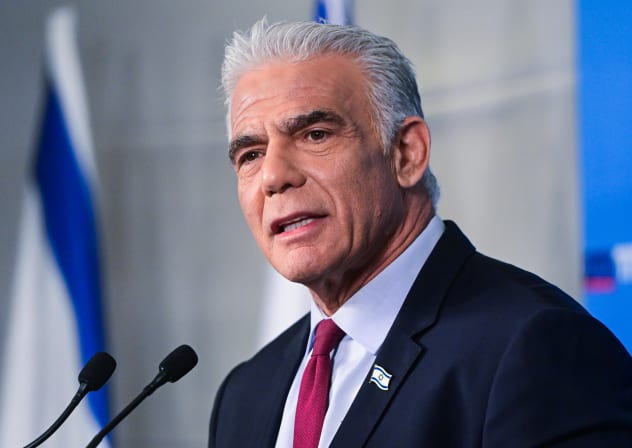
Foreign Minister Avigdor Liberman said Friday that he was considering
withdrawing the Israeli ambassador to the UN Human Rights Council and
severing ties with the body, following its establishment of a
fact-finding mission to probe the effects of settlements on Palestinian
human rights.
Liberman added that he will convene a meeting in the foreign ministry to discuss the possibility that Israel will not cooperate with the council in their investigation.
During a meeting with President of Singapore Tony
Tan Keng Yam, the foreign minster also said that he will try to persuade countries such
as the United States to quit the council too.
Prime Minister Binyamin Netanyahu reacted to the decision on Thursday, saying the
council is “hypocritical” and should be “ashamed of itself.”
It is the
first such fact-finding mission by the council. The council, which met in
Geneva, also approved four other resolutions against Israel, including one
opposing its actions on the Golan Heights.
By a vote of 36 to 1, with 10
abstentions, the council decided to dispatch the fact-finding mission to
“investigate the implications” of the settlements on “the Palestinian people
throughout the Occupied Palestinian Territory, including east
Jerusalem.”
Only the US called the resolution biased and voted against
it.
It also rejected the other four resolutions.
Europe was
divided on the fact-finding mission, with Norway, Switzerland, Belgium, Austria
and Russia voting for the measure, and Italy, Spain, the Czech Republic,
Hungary, Poland, Romania and Moldova abstaining.
Among other countries
with whom Israel has good ties who voted for the measure were Angola, Nigeria,
Uganda, China, India, the Philippines, Thailand, Chile, Mexico, Peru and
Uruguay.
The other countries that abstained were Guatemala, Costa Rica
and Cameroon.
“This is a hypocritical council with an automatic majority
against Israel,” Netanyahu said in response.
“This council ought to be
ashamed of itself,” he said. “Until today, the council has made 91 decisions, 39
of which dealt with Israel, three with Syria and one with Iran.”
“One
only had to listen to the Syrian representative speak about human rights at the
council on Thursday to understand how detached from reality it is,” he
said.
Another proof of its distance from reality, Netanyahu added, was
the fact that this week it facilitated the lecture of an activist from Hamas at
an NGO side event in its building.
Hamas is an organization whose
ideology is based on “the murder of innocents,” he said.
The Foreign
Ministry released a statement saying that the resolution was “yet another
surrealistic decision” from the council that is more interested in promoting a
one-sided political agenda than in human rights.
“While all over the
Middle East human rights are violated in an unprecedented scale, the HRC
ridicules itself by dedicating its time and resources to establish a superfluous
and extravagant body whose sole purpose is to satisfy the Palestinians’ whims
and to harm future chances to reach an agreement through peaceful means,” the
statement said. “The Palestinians must understand that they cannot have it both
ways: they cannot enjoy cooperation with Israel and at the same time initiate
political clashes in international forums.”
The statement said that had
the Palestinians truly been interested in solving the settlement issue, they
would immediately resume negotiations on all the core issues. “Their deliberate
choice to foster confrontation and provocation rather than compromise and
reconciliation is nothing but a destructive strategy that the international
community should firmly reject,” the statement read.
The Goldstone
Commission following 2009’s Operation Cast Lead in Gaza that accused Israel of
war crimes originated through a similar type of decision by the Human Rights
Council. Israel did not cooperate with that committee.
A government
official said Israel would not “cooperate with a kangaroo court.” The official
added, “We are not going to make something illegitimate legitimate.”
US
representative to the council Charles Blaha warned it that a fact-finding
mission would sap resources and time as well as push the Israelis and
Palestinians further apart.
Italy and Spain issued a statement to the
council in which they said they believed that settlements were illegal under
international law.
“However, a fact-finding mission would be a
duplication of existing mechanisms. It will not help redress an overall scenario
which advocates for, absolutely advocates for, serious negotiations and a clear
political will to carry them on,” they said.
The Czech Republic made a
similar statement.
Austria, however, supported the measure even though it
felt that the proposal was not flexible enough and that other alternatives might
have been sought.
Still, Austria said it agreed in principle that
settlements were illegal, present an obstacle to peace and threaten a two-state
solution.
“Austria and the EU and the international community have
repeatedly called on the government of Israel to end all settlement activity,”
it said.
A PA spokesman said he hopes the decision will send a message to Israel.
Herb Keinon, Tovah Lazaroff in Brussels and Khaled Abu Toameh contributed to this report.