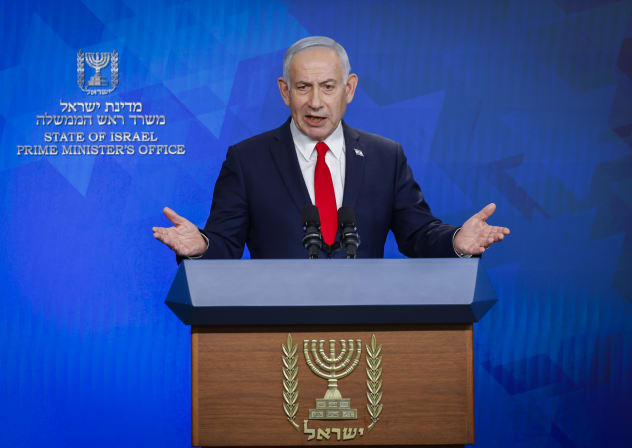
Prime Minister Binyamin Netanyahu said on Wednesday that the Plesner report recommendations are "moving us in the right direction" to solve the Tal Law crisis.
Netanyahu added that in his view the solution will include some form of personal sanctions on haredim who continue to avoid the military, stating that "one who shirks" in his obligation to do military service "will not receive the same benefits as one who serves."
Meanwhile, Channel 2 news reported that Kadima has given Netanyahu an ultimatum that he must accept the Plesner report recommendations by Monday at 2:00 p.m., although other Israeli media seemed to indicate that contacts between Netanyahu and Kadima party leader Shaul Mofaz could lead to a deal long before.
Earlier in the day, Mofaz convened the Kadima faction at the Knesset, briefing the MKs
about his decision to give Netanyahu an ultimatum on accepting the
recommendations of the Keshev Committee on equalizing the burden of IDF service.
He then enabled MKs to speak their mind on the matter.
While some MKs
like Avi Dichter and Othniel Schneller were dead set against leaving the
coalition, others like Shlomo Molla and Majallie Whbee said the party made a
mistake by joining in the first place and should leave as soon as
possible.
Dichter said there was no need for an ultimatum. Former
minister Tzahi Hanegbi expressed support for Mofaz's leadership and optimism
that a deal could be worked out between Netanyahu and Mofaz to keep Kadima in
the coalition.
“In politics, you never get 100 percent of what you want,”
Hanegbi said after the meeting. “You have to do your best to get whatever you
can. We already achieved a lot. There will now be negotiations, which we should
handle smartly while keeping our cool.”
Kadima faction chairwoman Dalia
Itzik said she did not believe Kadima would leave the coalition. MKs said she
spoke passionately at the closed-door meeting about working to achieve Kadima's
goals from inside the government.
“Now is the time for a dose of sanity,”
Itzik said. “The question is what is stronger, the grudge or the idea, and I
think the idea is stronger. Despite Netanyahu's mistakes, we are in the middle
of a historic process, and we cannot miss this opportunity. This is not the time
to go to elections. This is the time to let the politicians reach
understandings.”
Kadima rebel MK Robert Tibaev, who is normally
Netanyahu's fiercest critic in the party, surprised his colleagues by saying he
did not believe Kadima should leave the coalition over the current
crisis.
MK Marina Solodkin said she though that in the end, the entire
faction would end up standing by Mofaz, “because he is acting in the right way
and taking the party in the right direction: Standing up for our principles but
making compromises on what doesn't really matter.”
Other MKs were more
critical of their leader. Molla said he did not understand what Mofaz was trying
to achieve. He predicted that Mofaz would “cave into Netanyahu” and keep Kadima
in the coalition.
“Kadima must give the prime minister a clear ultimatum
with a clear timetable for passing a law to equalize the burden based on the
recommendations of the Keshev committee,” MK Yoel Hasson said. “Netanyahu's
behavior over the past few days indicates that he is not interested in the real
change that Kadima so desires.”
Whbee went further, accusing Netanyahu of
spitting in Kadima's face and Mofaz of thinking it was rain.
"Either we
leave the coalition or we are just playing mind-games with the public,” Whbee
said.
Molla, Whbee, Hasson, and other MKs have been rumored to be
considering leaving Kadima for a new party being formed by former Kadima council
chairman Haim Ramon, which may end up getting led by former Kadima leader Tzipi
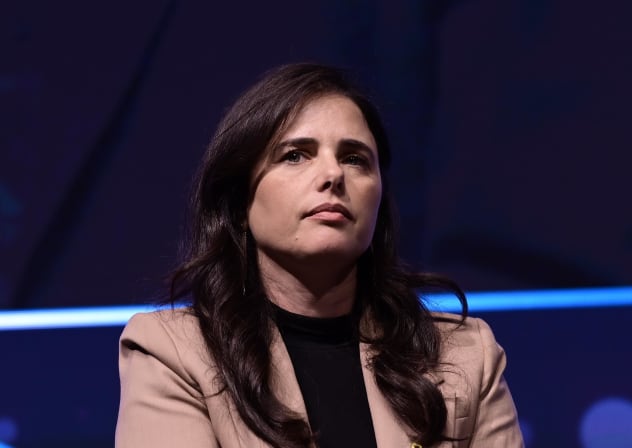
Livni. She issued thinly veiled criticism of Mofaz Wednesday at a teachers
conference in Tel Aviv.
“The Supreme Court created a rare opportunity for
real change, so we should not be satisfied with a cosmetic alteration,” Livni
said. “The question is not how to maintain a political partnership in the
government but rather how the people of Israel will deal with the threats the
country is facing.”
Gil Hoffman contributed to this report.