Petitioners urge High Court to unfreeze urgent funding for authorities in Israel's North, South
The remaining Education Ministry and National Missions Ministry transfers remain frozen unless the court decides otherwise.

The remaining Education Ministry and National Missions Ministry transfers remain frozen unless the court decides otherwise.


The decision was reportedly made despite social media threats against Eisenkot and warnings from the defense sector that hostile actors may target former senior officials.

When inquired by KAN, Ohana's office responded: "It is unclear to us what is new about the Knesset speaker's consistent position that the Knesset will not meekly accept being trampled."

Baharav-Miara said the election period would get in the way of a decision and noted that the current government had not established one anyway.
"You are making a fool of yourself," residents shouted at him. "You're a clown. Everyone is laughing at you. You are a champion of failure. They didn't even give you a visa to the United States."

Petitioners challenged the Finance Committee’s authority to approve the funds during the election recess, while the Knesset and Finance Ministry argued that the proceedings were lawful.

"There is no one in the world who will do the work for us. There is no country in the world that will send its soldiers to shed their blood and forcibly disarm Hamas," he told the students.

Smotrich further asserted that Netanyahu's stated goals for Gaza were only "halfway there," with the missing half being full Israeli control of Gaza, including Israeli settlement there.

Likud is seeking the data and documents underlying the initiative's activities within five days, saying the material is needed to determine whether further legal action is warranted.

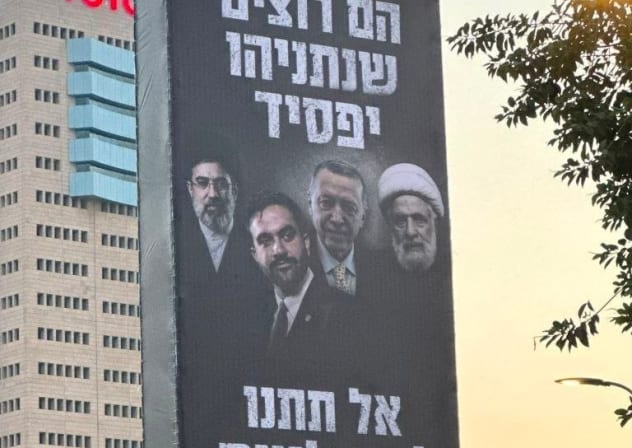
The billboard features superimposed images of Mamdani, Khamenei, Qassem, and Erdogan, and reads: “They want Netanyahu to lose; don’t let them win.”
Ahead of Tuesday's hearing, the Knesset argued that Ohana lawfully authorized the disputed Finance Committee meeting despite opposition objections.
