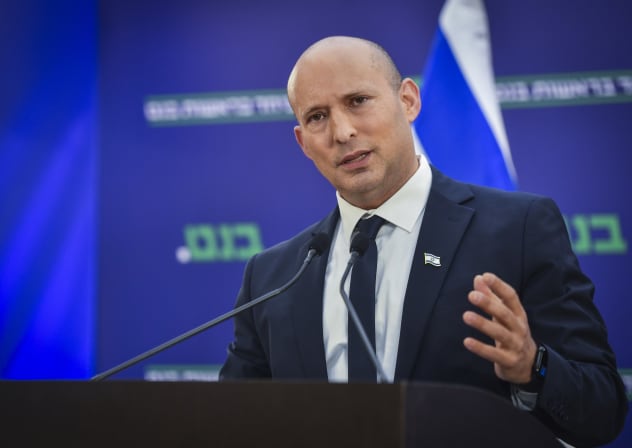
Prime Minister Binyamin Netanyahu and Kadima leader Shaul Mofaz on Wednesday
evening tried to settle their dispute over how to equalize the burden of IDF
service, following a clash between Vice Premier Moshe Ya’alon and MK Yohanan
Plesner, their respective representatives on the issue.
Sources close to
Mofaz said that in the meeting with Netanyahu there was neither a breakthrough
nor a breakdown.
“In all negotiations, there are moments of tension, like
what has happened today,” Mofaz said in a speech to 150 yeshiva students in
Jerusalem following his meeting with the prime minister. “At the moment we’re
discussing the actual text of the bill and we’re making progress. But if we
don’t come to an agreement, we won’t be partners in the coalition.”
“The
negotiations will continue tomorrow. I don’t want to establish deadlines, which
will only make more problems. The deadline will be established by the results
[of the negotiations],” he said.
At a hastily called meeting of the
Kadima faction, Mofaz received authorization to decide on his own whether the
party should quit the coalition as early as this weekend. Several MKs urged him
to leave immediately but he decided to give Netanyahu another chance.
The
main dispute between Likud and Kadima was over whether there should be quotas
limiting the number of yeshiva students permitted to avoid the draft, as Kadima
demands, or merely setting targets for the number of haredim drafted, which the
Likud prefers. The parties also disagree on the final age at which service could
be avoided and the extent of sanctions against draft evaders.
“We support
financial sanctions but oppose criminal sanctions,” a source close to Netanyahu
said. “In a Jewish state, no one will go to prison for studying Torah.”
Mofaz said that if the Likud and Kadima are unable to agree on a new law now, 10
or 15 years could pass before another opportunity arises to change the
situation. He said the new law should be drafted with understanding for
the demands of different parts of society, but also needs to include terms that
compel service.
“We didn’t come to the coalition to wage war against
haredim,” Mofaz told the yeshiva students. “I want the status of the haredi
community in 15 years to be much better than today. I want haredim to be able to
integrate into society, to advance your own future. It will be better for your
society to achieve this as well as society in general.”
Ya’alon and
Plesner will meet again on Thursday, but both sides expressed pessimism that the
crisis could be resolved, especially amid the bad blood created by their public
dispute.
If they fail to reach a compromise, it is likely that Kadima’s
28 MKs will leave the coalition, and the Defense Ministry will issue a directive
refraining from arresting 18-year-olds who do not go to the army immediately
when the “Tal Law” that facilitated exemptions from service expires on July 31.
Meanwhile, efforts to draft a new law could continue over the
summer.
“Without a meaningful solution that will make history, we will
not remain in the government,” Mofaz told the Kadima faction. “We are in
a crisis, but there is an opportunity and a small period of time to solve it. If
there won’t be a decision soon, we will leave.”
According to Plesner, he
walked out of a meeting with Ya’alon because negotiations on a universal service
bill had hit a “dead end” after the minister backtracked on key
issues. Plesner’s associates warned that Ya’alon was trying to turn the
bill into “a copy of the Tal Law,” which allowed haredim to indefinitely
postpone service, and render it “empty of content.”
Ya’alon rejected
Kadima’s claims that there was a “blow up” in the meeting with Plesner, saying
he only heard that talks were off via the media. He said it was Kadima that had
backtracked on the quota issue but that he was ready to negotiate
again.
“We will bring more people sharing the burden in the Arab and
haredi sectors with or without Kadima,” Ya’alon said. “There is a principled
argument on whether we want more haredim in the army or to declare war on the
haredim. They are insisting on throwing haredim in jail. Throw people in
jail for studying Torah? If we do that, all the progress that has been made with
the programs that there already are will go backward.”
In an interview
with the haredi radio station Kol Chai, Ya’alon accused Plesner of wanting to
“declare war on the haredi sector.”
“We need to [enlist yeshiva students]
gradually, because the army can’t prepare itself to absorb masses of haredim on
one day, and we don’t need to start putting people in jail because of this,” he
said. “We want [national] unity along with the draft, and not a civil war
without a draft. If we declare war on those studying Torah and say that we’ll
put in jail whoever doesn’t enlist, then we won’t succeed in drafting
anyone.”
Labor chairwoman Shelly Yechimovich had urged Mofaz to announce
in the Kadima faction meeting that his party would immediately quit the
coalition, “and stop the political farce surrounding the Tal Law, which will not
yield real results even if a new law is approved.
“Elections should be
held in September and this was avoided just because of a political exercise of
survival,” Yechimovich said. “Now we have to go to the public and let it
have its say in a wide range of significant issues in Israeli society.”