Olmert: I leave court today standing tall
09/30/2012 14:30
Former PM receives suspended sentence, NIS 75,300 fine for breach of public trust.
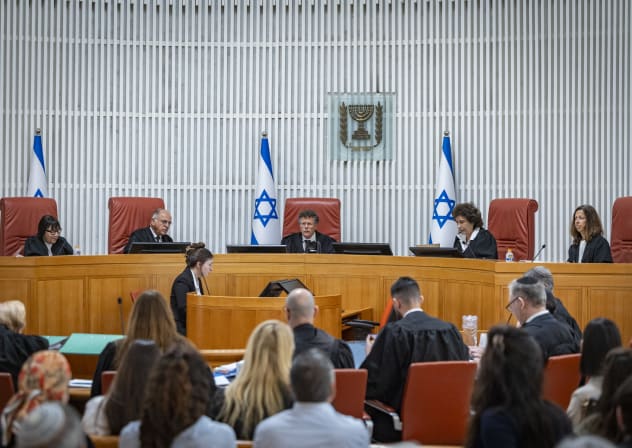
Olmert, Zaken Photo: Pool / Olivia Fitosi
Former prime minister Ehud Olmert
said Monday that he was leaving court with his head held high after avoiding a
six-month community service sentence in a conviction for breach of public trust.
The court sentenced him to a one-year suspended sentence and fined him NIS
75,300.
“A few weeks ago I told the judges that I wanted to leave court
standing tall, and today I leave court standing tall,” Olmert said at a brief
press conference following the sentencing hearing in the Investment Center
Affair.
“I said I would learn the lessons of the conviction,” Olmert
added.
The sentencing is for the one minor crime of which Olmert was
convicted in his Jerusalem District Court corruption trial – breach of public
trust in the Investment Center Affair.
The suspended sentence is
conditional, meaning Olmert would only have to serve prison time if he committed
a similar crime in the next three years.
The ruling once again shocked
pundits, who believed that Olmert had achieved a major victory by his acquittals
and avoidance of the state seeking a conviction of moral turpitude, but that
there was no way out of at least six months of community service as the most
lenient penalty when his crime could even have carried prison time.
The
Investment Center Affair involved Olmert improperly using his position as
industry, trade and labor minister to favor friends and allies, most notably
long-time friend and aide Uri Messer.
Reading their 27-page ruling in the
sentencing, the judges noted that Olmert improperly favored Messer four
times.
But at the same time, as a lenient consideration, the judges noted
that neither Olmert himself nor Messer directly benefitted from Olmert’s
actions, rather Messer’s clients benefitted.
Early on in reading the
sentencing opinion, the court noted that breach of public trust was not a mere
“technical” violation as some have termed it.
Rather, the court said it
was a real crime and a crime particularly applicable to public servants. Olmert
was acquitted in July of all serious crimes involving significant prison time in
a host of affairs.
At oral argument three weeks ago, the state had
recommended the court hand down a six-month prison sentence to be served through
community service.
Olmert had said that having to give up his position as
prime minister and four years of harrying litigation and inquisitions were
penalties far greater than six months of community service.
He said that,
therefore, he should be given no penalty and be left with his
conviction.
Ultimately, the court mostly adopted Olmert’s arguments,
concluding its opinion regarding Olmert with extended remarks about the special
circumstances of having been forced to give up being prime minister and of his
35 years of service to the nation.
In some ways as shocking – or even
more shocking from a legal perspective – was the lenient sentence of Shula
Zaken.
The court gave former Olmert bureau chief Shula Zaken a mere
nine-month suspended sentence. Zaken also received no prison time, despite being
convicted of three crimes, two involving fraud.
Olmert’s lenient sentence
was slightly more understandable from a legal perspective having not been
convicted of fraud, but only breach of public trust. Fraud is a more severe
crime and could have carried a much longer prison sentence.
The state had
also surprised the country three weeks ago in sidestepping the issue of moral
turpitude and suggesting to the court that the issue could be left on the back
burner until and if Olmert ever decides to make a political comeback.
A
finding of moral turpitude would have essentially ended Olmert’s political
career since it prohibits participation in politics for seven years and Olmert
will turn 67 on September 30.