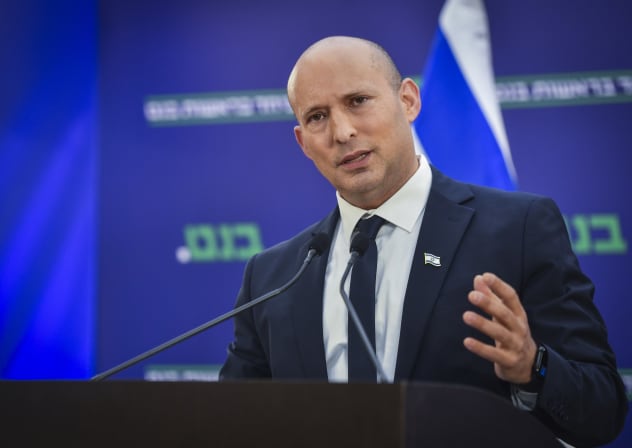
Ofer Shelah, the sixthplaced candidate on Yesh Atid’s electoral list, insisted
on Wednesday that the party’s proposals for drafting haredi men into national
service constitute “a red line” for joining a coalition
government.
Speaking to The Jerusalem Post, Shelah said that it was of
vital importance that a situation be reached in which all 18-year-old men are
drafted into national service programs, and stressed that if Prime Minister
Binyamin Netanyahu wanted Yesh Atid to join a governing coalition, the party’s
plan for universal national service would need to be
implemented.
Conflicts between the demands of haredi parties and Yair
Lapid’s Yesh Atid on the issue of haredi national service enlistment could
stymie any attempt by the prime minister to form a broad coalition.
“It
is 100 percent a red line for us, and we would seek to advance our plan for
universal national service as the first piece of government- backed legislation
in the next Knesset session,” Shelah said.
Shas officials, however, brushed aside such concerns and
suggested that Lapid would be willing to compromise with them and come to an
agreement in order to join a coalition with Likud Beytenu and Shas.
A
Shas strategist close to party joint leader Arye Deri said that Yesh Atid’s
pronouncements on the issue were “mere bluster” designed to play to the
electorate and increase its share of the vote.
He also pointed out that
during a debate in December, Lapid refused to rule out joining a government with
Deri, despite describing him as “unethical,” a “convicted felon” and “not
morally fit to sit in Israel’s government.”
“Lapid will need to be
pragmatic,” the Shas official opined. “You can’t always get everything you
want.”
Yesh Atid’s plan for universal service provides for a blanket
five-year exemption for all haredi 18-year-old men from military service,
enabling them to join the workforce, during which time the army and civilian
service would prepare for the absorption of large numbers of haredi recruits
into tracks designed for their lifestyle.
After the five-year period, all
18-year-old males would from then on be required to enlist, apart from 1,000
exceptional Torah scholars, and those who refuse to serve “would forfeit all
government funding and benefits with the exception of basic social
security.”
Deri and Shas have repeatedly stressed that any enrolled
full-time yeshiva student who is not studying accordingly should enlist in some
form of national service, although the meaning of “not studying” has not been
clearly defined.
Last week, Deri’s party coleader Interior Minister Eli
Yishai said that a yeshiva student “not studying for the full day should go to
the army,” the closest any haredi official has come to defining which yeshiva
students should be entitled to keep studying and which should enlist.
It
is presumed, by both secular and haredi politicians, that out of the
approximately 45,000 haredim enrolled in full-time yeshiva study in lieu of
military service, a large number do not adequately fulfill their study
requirements, although definite statistics are unavailable.