Even though it was a given that Labor would not enter a coalition led by
Prime Minister Binyamin Netanyahu, party leader Shelly Yacimovich made
the position clear Thursday after meeting with President Shimon Peres.
Labor did not recommend anyone to form the next government, as had been expected, but left it to the President's discretion.

Mark Neiman/GPO

Tzipi Livni meets with President Shimon Peres, January 31, 2013.

Marc Israel Sellem/The Jerusalem Post

Bayit Yehudi leader recommends Prime Minister Binyamin Netanyahu to the president, January 31, 2013.

Marc Israel Sellem/ The Jerusalem Post

Peres receives election results from Rubinstein, January 30, 2013.

Marc Israel Sellem/The Jerusalem Post

Ariye Deri leaves content from his meeting with President Shimon Peres, January 31, 2013.

Marc Israel Sellem/The Jerusalem Post

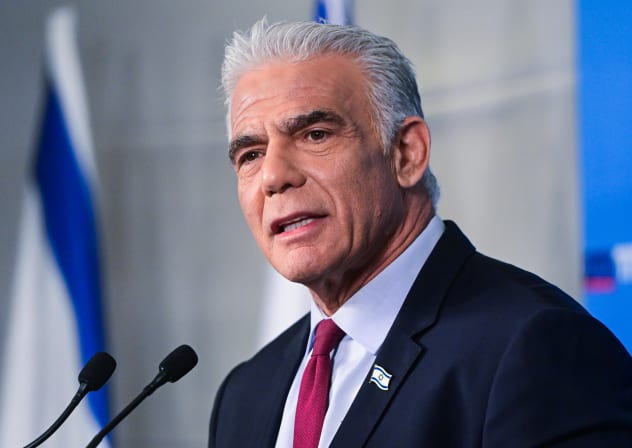
Yair Lapid meets with President Shimon Peres, January 30, 2013.

Marc Israel Sellem/The Jerusalem Post

Labor party leader Shelly Yacimovich, January 31, 2013.

Marc Israel Sellem/The Jerusalem Post

Naftali Bennett of Bayit Yehudi speaks to the press, January 31, 2013.
"We
will serve the public from the opposition," said Yacimovich, stressing
that she did not have anything personal against Netanyahu, but it was a
matter of ideological differences which cannot be bridged.
Labor
would support the government in matters of security and matters relating
to the peace process, she said, but would remain an alternative to any
incoming government.
Yacimovich was critical of Lapid's decision
to join a Netanyahu led coalition, saying it did not bode well for the
economically disadvantaged.
The Tzipi Livni Party on Thursday said it is not making a recommendation
for prime minister, but is judging the coalition by its performance.
The
party said that they are unable to recommend a candidate, because the
composition of the coalition and their policies are still unknown.
"We have to take Israel out of political isolation and resume negotiations," Livni said.
Zehava Gal-On of the Meretz party also made no recommendation to President Shimon Peres.
United Arab List-Ta’al leaders Ibrahim Sarsour and Ahmed Tibi complained to Peres that Arabs are not properly integrated into society and they hoped the president would use his influence to change this. Tibi said elections are an important aspect of democracy but so is the integration of minorities.
"Minorities can be part of the coalition or the opposition, but neither of them wanted to include us," Tibi said. He said it was problematic that there was only one candidate for prime minister and that UAL-Taal would not recommend anyone to be tasked with forming a coalition, even though its members could think of more suitable people than Netanyahu.
Hadash and Balad are, like Labor, Meretz and UAL-Taal also
not expected to recommend anyone, while Kadima plans to recommend
Netanyahu.
Prior to this, Naftali Bennett, leader of Bayit Yehudi
committed a major faux pas by not addressing the media who were waiting
for him in a side room where representatives of other parties had
previously addressed them
The media were told by Ayelet Frish,
the spokeswoman for President Shimon Peres, that Bennett had decided not
to speak to the media.
The leader recommended Netanyahu to be the next prime minister.
Arye Deri, of the Shas party on Thursday also recommended Prime Minister Binyamin Netanyahu to form the next government.
Deri said, "According to the meetings that we had with Netanyahu, he told us he would start serious negotiations next week."
"I don't think he'll allow other parties to disqualify us," Deri added.
Deri
gave President Shimon Peres a letter from Shas spiritual leader Ovadia
Yosef, in which he compelled him to ensure there would be no rift in the
nation, and reminded him that he had been Ben Gurion's emissary in the
initial agreement to exempt yeshiva students from military service.
United
Torah Judaism on Thursday asked the president to use all his influence
to prevent a rift in the nation, and warned that "anybody who genuinely
torn away from studying Torah will cause a serious division in the
nation."
Rabbi Gafni (UTJ) reminded the nation that even in the days of King David, half the nation studied, and half the nation fought.
He also said: "We see what is happening in the Arab states around us. We do not want to see that here."
UTJ recommended Netanyahu to be the next prime minister.
The five other parties in the 19th Knesset will meet with Peres later on Thursday.
Jpost.com staff contributed to this report.