Coalition talks continued to inch forward on Thursday, with only nine days left
until the deadline for Prime Minister Binyamin Netanyahu to form a
government.
The Likud Beytenu and Bayit Yehudi negotiating teams met in
the evening and agreed to some of the terms of their coalition agreement,
foremost of which being that any peace treaty will be brought to a national
referendum before being ratified by the Knesset.
In addition, Prime
Minister Binyamin Netanyahu’s June 2009 Bar-Ilan speech, in which he called for
the establishment of a demilitarized Palestinian state, will not be mentioned in
the coalition’s guidelines.
The one coalition agreement Likud Beytenu
signed so far, with Tzipi Livni’s Hatnua party, says that a peace treaty would
have to be brought to a government and Knesset vote, and a referendum only “if
necessary.”
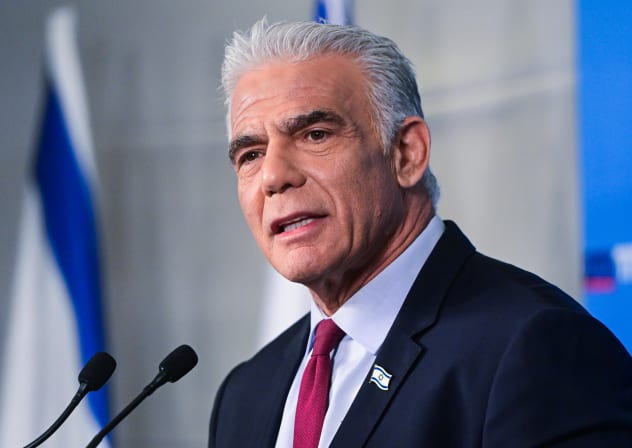
Netanyahu and Yesh Atid chairman Yair Lapid met on Thursday,
coming closer to a final agreement.
The prime minister is standing firm
on his promise to save the Foreign Ministry for Yisrael Beytenu chairman Avigdor
Liberman until after his legal troubles pass. Likud Beytenu maintained its offer
for Lapid to be finance minister, which he does not want, and Netanyahu’s
negotiating team is working to find the right portfolio for the Yesh Atid
leader.
Yesh Atid showed readiness to be more flexible on the number of
ministries, accepting a drop from 30 to 23, or 24 after Liberman’s return,
instead of the party’s campaign promise of 18.
In addition, a law will be
passed within a month of the government being sworn in that there can only be up
to 18 ministers, starting from after the next election.
Both Yesh Atid
and Bayit Yehudi dealt with religion and state issues, with some major
differences in their stances, despite their alliance.
Yesh Atid demanded
public transportation on Saturdays, the legalization of civil marriages for
same-sex couples and the requiring of all schools, including haredi ones, to
study the core curriculum.
The party has a detailed plan for haredi
enlistment, which would require them to join the IDF or national service at age
18, following a five-year period in which the ultra-Orthodox would be encouraged
to join the workforce.
Bayit Yehudi’s requests were made in more general
terms, such as “a commitment to new discourse on matters of religion and state
in an atmosphere of mutual tolerance” and “a commitment to create solutions for
haredim in the IDF and national service by creating new options that suit this
public, and not by compulsion.”
The party opposes gay marriage and
supports civil unions only in cases in which both members of the couple are not
Jewish, and will only back transportation on Saturdays in non-haredi areas and if
religious drivers will not be pressured to work on Shabbat.
On Wednesday
night, a senior Yesh Atid official informed the media that Yesh Atid, Bayit
Yehudi and Kadima are forming a 33-MK bloc – two seats larger than Likud Beytenu
– and demanding the Foreign and Finance ministries.
Soon afterward, Lapid
and Bennett posted Facebook statuses taking issue with those calling the tactic
an “ultimatum.”
Kadima would not confirm the Yesh Atid official’s
statements, saying only that the three parties have been working together for
several weeks.