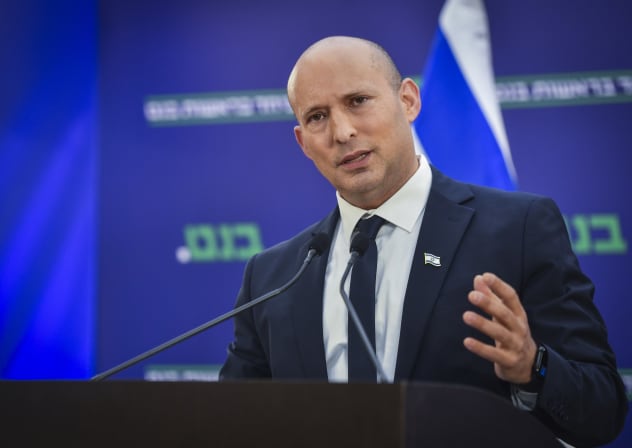
The negotiating teams of Likud Beytenu, the Bayit Yehudi and Yesh Atid are to
meet on Thursday in order to iron out the final details of the coalition
agreement.
The final stages of the talks follow late night coalition
talks Wednesday, with Bayit Yehudi chairman Naftali Bennett negotiating to break
the impasse between Prime Minister Binyamin Netanyahu and Yesh Atid leader Yair
Lapid.
After days of arguing over the Education and Interior portfolios,
the number of ministries in the government, the Knesset Finance Committee, and
changing Hatnua's coalition deal, the parties reached an apparent compromise
brokered by Bennett on Monday evening, meeting late at night to iron out the
final details.
Shai Piron of Yesh Atid will be Education Minister, while
the Likud's Gideon Sa'ar will be Interior Minister. The government will have 22
ministers, including Netanyahu, meaning that the table added for the last
30-minister government, that was removed this week, can remain
dismantled.
The Bayit Yehudi will hold the Knesset Finance Committee. In
addition, Hatnua's coalition agreement remained the same, and the party has two
ministers – Tzipi Livni as Justice and Amir Peretz as Environmental
Protection.
Lapid will be Finance Minister, as expected, and candidates
for the Interior Ministry Meir Cohen and Yael German will be Welfare Minister
and Health Minister, respectively. Ya'akov Peri will be Science Minister and
Ofer Shelach, a former military reporter, will be Deputy Defense
Minister.
Bennett will be Vice Premier and have three portfolios. He will
be the Economy and Trade Minister, a new name for the Industry, Trade and Labor
portfolio, and have authority over the Diaspora and Jerusalem Ministry as well
as an expanded Religious Services Ministry that includes conversion, the chief
rabbinate and supervision of yeshivas. Bayit Yehudi MK Eli Ben Dahan will be
Deputy Religious Services Ministry with all of the responsibilities of a
minister.
A senior Bayit Yehudi source emphasized that the party fought
to get the Diaspora portfolio, because it sees Israel's connection to Jewish
communities around the world as essential. In addition, the party made sure to
put education for Jewish tradition in the coalition's guidelines.
Bayit
Yehudi's Uri Ariel, a former Yesh Council secretary-general, will become Housing
and Construction Minister, which will include responsibility for the Israel
Lands Authority, even though Netanyahu had promised it to former Welfare
Minister Moshe Kachlon. In that vein, the party demanded that the coalition
guidelines include support for settlements of all kinds.
While Yisrael
Beytenu MKs' positions are already decided, most of the Likud ministers' fates
remain to be seen. While they will continue to be ministers, it is unclear who
will get the Communications, Infrastructure, Strategic Affairs or Home Front
Ministries – Gilad Erdan, Silvan Shalom, Limor Livnat or Yuval Steinitz, and
which of the party's younger generation will be deputy ministers. Israel Katz is
expected to remain Transportation Minister and Moshe Ya'alon will be Defense
Minister. Yuli Edelstein will serve as Knesset Speaker, and Tzachi Hanegbi is
the leading candidate for coalition chairman.
The government is expected
to have only four female ministers – Livni, Immigration and Absorption Minister
Sofa Landver, Livnat, and German - and three ministers of Sephardic descent
–Cohen, Shalom, and Peretz.
The three parties' coalition negotiating
teams were working on the final agreement at press time Wednesday
night.
On Thursday morning, the Bayit Yehudi Central Committee is
expected to vote on the agreement, in accordance with the party's by-laws, and
Bennett, Lapid and Netanyahu will sign it later that day. The government will be
sworn in at the Knesset next week.
The agreement is expected to easily
pass a Bayit Yehudi Central Committee vote.
"We are very happy with this
deal. We will be able to focus on implementing our campaign promises in regards
to the economy, housing, religion and connect with Jews from the diaspora. I
expect the vote will be close to unanimous," central committee member Jeremy
Saltan said.
On Wednesday afternoon, going to new elections seemed like a
realistic option, with Yesh Atid and Likud Beytenu each claiming the Education
Ministry.
At noon, a senior Likud source sent out a notice that "if there
is no breakthrough in negotiations with Lapid in the next few hours and he does
not back down from his exaggerated demands, we will start speedy negotiations
with the haredi parties." Soon after, Yesh Atid said they will not give up the
Education Ministry, and they are fighting a battle for Israel's future
image.
"Presenting Yesh Atid as extortionists is twisting the truth. Yesh
Atid agreed to reduce the number of portfolios it deserves in order to decrease
the amount of ministers in the government," a party official said.
As the
rhetoric grew more hostile, Bennett traveled to Lapid's Tel Aviv home to work
out a deal. After that, he went to Jerusalem, and spoke to Netanyahu. Finally,
he presented the compromise that the sides have since accepted: Piron as
Education Minister, Yesh Atid will give up the Interior Ministry, Hatnua will
keep its second portfolio, Likud gets an additional deputy ministership and
Bayit Yehudi gets the Finance Committee.
Sources close to the
negotiations say that Bennett told Lapid if he does not accept the compromise,
he will tell Netanyahu that he's willing to join a government with the haredi
parties. The Bayit Yehudi leader then told Netanyahu that if he doesn't accept
the proposal, he and Lapid won't join the coalition and there will be a new
election.
Earlier Wednesday, Meretz MK Issawi Freij proposed a bill to
shorten the amount of time allotted for negotiations to 21 days.
"The
current situation is intolerable and harmful to society and the market," Freij
said. "To put the entire country on hold in order to play negotiating games is
irresponsible." According to the Meretz MK, Netanyahu is busy with "media spins
and fights over portfolios" instead of dealing with the deficit or passing a
budget.