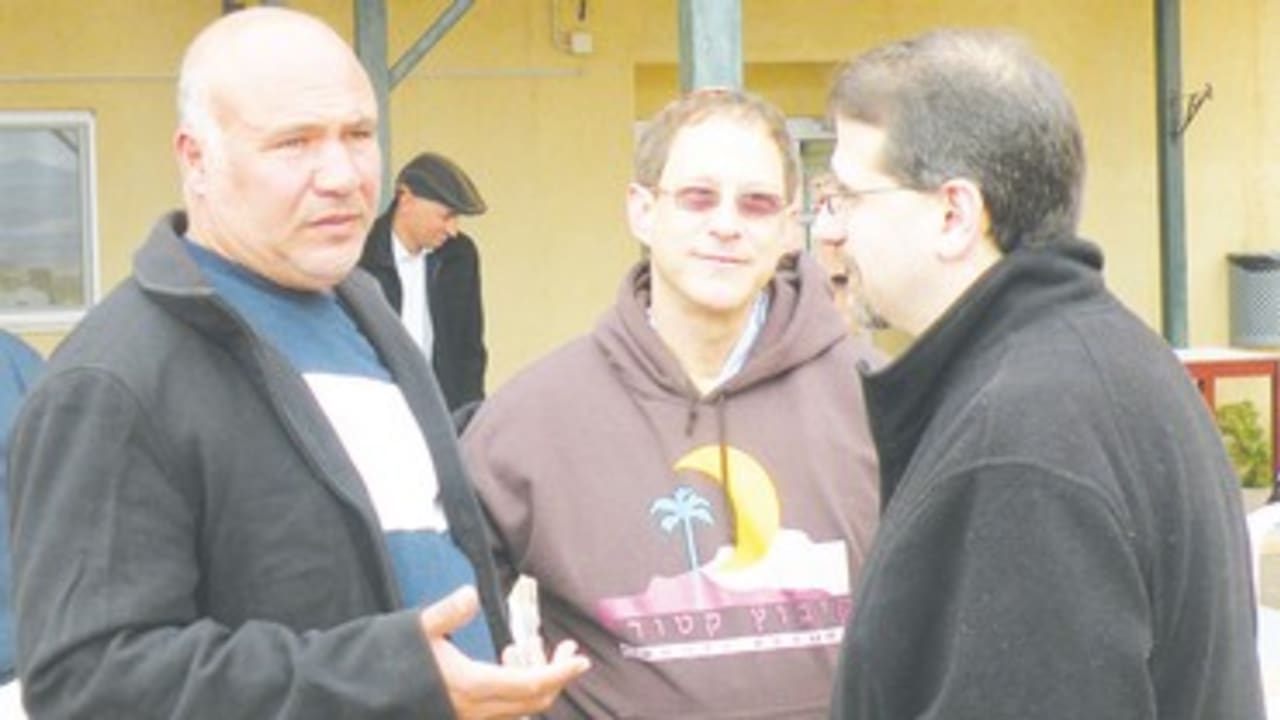
While Haj Mousa Tarabin moves about with a smile seemingly glued to his face, he cannot help but feel slighted as he battles continuous impediments to establishing his 8-megawatt solar field.“I am a man who compromised with the state,” Tarabin told The Jerusalem Post during an exclusive interview while en route to his southern village of Tarabin last week.Although the Tarabin tribe originally lived on land that became the town of Ofakim, its members now reside in an area about 20 kilometers to the northeast.Initially, the government requested that the tribe relocate temporarily to make way for army training, and it first was transferred to the Segev Shalom area, and then to the Omer area, Tarabin explained.“They didn’t return us to our land, and from then until today we wait for our land,” he said.Tarabin added that he agreed to a government compromise that gave him 20 percent of the amount of land the tribe lost, and monetary compensation for the remainder. About four years ago, after the state began rezoning agricultural land for construction, a key figure walked into his life.“We met here a very important person, and it was my honor to meet him,” he said, gesturing over to Yosef Abramowitz, who was also sitting in the backseat of the car.As president and cofounder of Arava Power Company, responsible for the establishment of Israel’s first mediumsized solar field, Abramowitz approached Tarabin about building an 8-megawatt field on 15 hectares (37 acres) of his land. Part of an array of new projects being initiated by the firm, the field was to be the first Beduin community solar site.When the men eventually grew closer and decided to move forward, the project received a funding pledge for 80% of the $30 million project from the Overseas Private Investment Corporation (OPIC), a United States government development agency.“I call [Abramowitz] today not just the head of our project, but a person who is my brother and family,” Tarabin said.But starting in January 2012, the Public Utility Authority twice delayed approval for Tarabin’s solar field license application, saying only that it was doing its utmost to confirm that solar installations met its standards and would continue to discuss the Tarabin project. But by the time Tarabin received his license, the existing 300-megawatt, medium-sized solar field quota had already been maxed out by other projects.“I really wanted the state to realize that we compromised, that we are also faithful, that we are today an integral part of the state,” Tarabin told the Post. “I really respect the State of Israel. I respect the democracy that is here. But very unfortunately this is not enough. This doesn’t give all citizens their rights equally and what they deserve.”While the government approved an additional 300- megawatt quota this past fall, the Finance Ministry appealed the decision due to financial concerns – meaning the new quota is now on hold.Getting the project off the ground will be essential to the Tarabin community as it would provide a crucial new source of income, as well as new job openings to the 60-70 families there, the tribal leader explained. “The state was concerned about us and put us inside houses. That’s not our life – we are Beduin. We live in the desert,” Tarabin said.“But we listened to the state,” he continued. “We followed its direction, yet we are lacking a livelihood. We need to pay electricity bills, we need to pay for telephones, we need to pay for water. Many things are needed in a house.”There is no point in building a house if you are going to have no quality of life inside its stone walls, Tarabin argued, adding that such a situation “is not what a citizen of Israel deserves.”Not only would building the field benefit his community, he explained, but it would benefit the state by adding clean energy to the electric grid and financially supporting an impoverished community. Expressing his disappointment, he said that if the government truly supported the country’s Beduin community, the project would have been carried out a long time ago.“This is about livelihood, about the future, about our children whom we need to educate,” he said.In response to what they, too, saw as an injustice toward the Beduin community, then-MKs Einat Wilf (Independence) and Ghaleb Majadele (Labor) launched a bill in June that would require the Public Utility Authority to allocate a specific quota of no less than 10% of the existing cap for mediumsized solar fields to the Beduin community. About two dozen MKs in total officially or unofficially expressed support for the bill, but Wilf and Majadele were unable to advance it before the dissolution of the 18th Knesset.Abramowitz and other executives at Arava Power were among those lobbying for the bill.“The Beduin are part of the state, have always supported the state and serve in the army,” Tarabin said. “So I think the country needs to give us more generous treatment – in behavior, in rights and in allowing us to conduct our project.”Noting that he feels “deprived” because he cannot implement his project, he stressed that Israel was not a “bad country” whatsoever.“It is a good country,” he said.“But it doesn’t help enough. It doesn’t consider everyone equally. And that’s something that hurts inside. And I really feel that I am deprived. Therefore, I turn to every person who can assist us to help us establish this project.”Although Tarabin has yet to see work begin on his solar field, he told the Post he was confident it would happen.“I believe that there is nothing that will stand before desire, and I believe that there will be a project in the end,” he said. “I am a man who does not despair."