Treating Israel’s cat problems
03/16/2012 02:29
When Ilene Lubin first made aliya from Michigan, she never thought she would be immersed in a world of fighting feral felines.
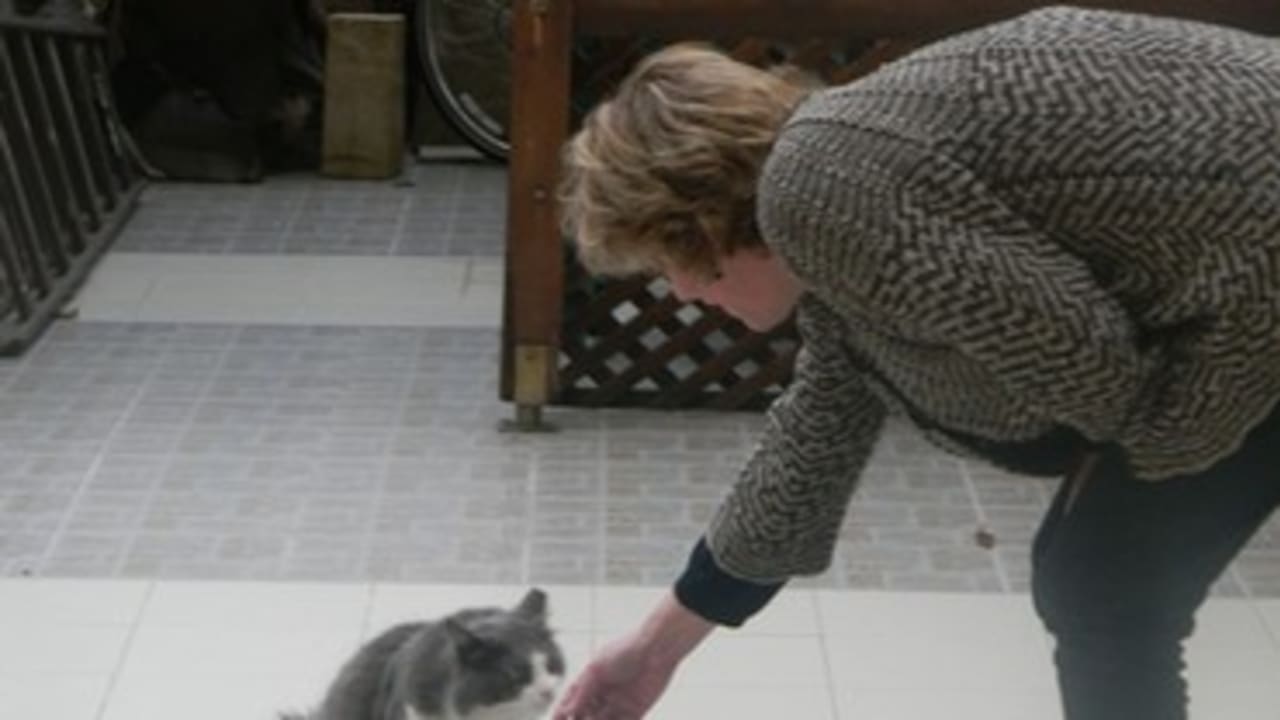
Ilene Lubin bends down to pet a cat Photo: Ilene Lubin
When Ilene Lubin first made aliya from Michigan about a year-and-a-half ago, she
never thought that she would be immersed in a world of fighting feral
felines.
“If you would have told me before I made aliya that I would know
about cats what I know now, I would say you’re crazy,” she told The Jerusalem
Post on Thursday.
But the screeches of dueling street cats and crowds of
the animals that blocked her building’s door made her desperate for a
solution.
“That was the hardest part of my aliya – dealing with the
environment issues in Israel,” she said.
About a year ago, Lubin and her
husband first started using their pocket money to bring stray cats – about 20,
thus far – from Givat Ze’ev, north of Jerusalem, for spaying and neutering at
local veterinary clinics.
And in August, Lubin decided to establish a
full-fledged nonprofit organization whose mission would be “to solve the stray
and feral cat epidemic that plagues the streets and neighborhoods of
Israel.”
The organization, Meow Mitzvah Mission of Israel, aims to
“conquer and divide” to improve Israel’s cities, beginning with Jerusalem, one
neighborhood at a time. Although still very much in its “infancy stage,” the
Meow Mitzvah Mission is about to receive official 5013c status from the United
States government, Lubin said.
Cats were not prominent in Israel’s
streets until the 1930s, when they were brought in to help eradicate a rat
problem, but this decision ultimately caused a “cat infestation” in and of
itself. No one knows exactly how many of the street cats live in Israel now, but
estimates say about 2 million, according to Meow Mission.
The new
organization’s philosophy is based on a P.E.A.C.E. initiative – Provide
long-term, ethical solutions for reducing and controlling street cat
overpopulation; Educate community members about feral and stray cats; Advocate
for neutering and vaccination programs; Collaborate with private and public
organizations to achieve the organization’s goals; and Enhance quality of life
for Israel’s residents.
The specific neutering and vaccination route that
the Meow Mitzvah Mission advocates is through an acronym called “TNVR+M”: Trap a
colony of cats in a humane fashion, Neuter males and spay females, Vaccinate for
rabies and other diseases, Return the cats to their outdoor homes, and Monitor
and provide for basic future needs and ongoing medical care when
necessary.
Meow Mitzvah Mission would pay for all of the costs associated
with this program through private donations, and aims to work with each
individual municipality to handle the logistics. Lubin has received $10,000
worth of start-up funds from American donors thus far. Average vaccination and
spaying or neutering for feral cats costs about NIS 100- 150 per animal, she
said.
“Our main focus is to work within Jerusalem initially and then
expand throughout the country,” Lubin said, noting that there are, however,
already a couple of strong programs in Haifa and Tel Aviv. “We want to have some
success with a few communities here so we can have a model.”
All of the
cats that Lubin has taken in for sterilization and vaccination personally have
come from colonies in Givat Ze’ev, and most of the females have been pregnant.
Once the veterinarians administer the treatments, they clip off part of the
animal’s left ear – “an international symbol” that indicates the cats have been
cared for, according to Lubin.
“In order for us to truly reduce the
number of cats on the street and have an impact on the overpopulation crisis – I
call it an epidemic – in order to really truly have an impact, you have to spay
and neuter a minimum of 70 percent of the cats on the streets,” she said.