The Jerusalem Post
Jpost search icon google-icon iphone
  Set as Homepage
Wed, Jun 19, 2013   11 Tammuz, 5773
newspapers magazines
 
    • Breaking News
    • Diplomacy & Politics
    • Defense
    • National
    • Mideast
    • Syria
    • Iran
    • World
    • Business
    • Sports
    • Health & Science
    • Environment
  • Video
  • Opinion
    • Columnists
    • Editorials
    • Op-Eds
    • Letters
  • Jewish World
  • Lifestyle
    • Arts & Culture
    • Food & Wine
    • Travel
  • Features
    • Insights & Features
    • Week in review
    • On the Web
    • Shalva Superheroes
    • Obama in Israel
  • Blogs
    • In the news
    • Judaism
    • From the Middle East
    • Lifestyle
    • Aliya
    • Science and Technology
  • JPost Apps
    • iPhone app
    • iPad app
    • Android app
    • Twitter
    • Facebook
    • RSS feeds
    • JPost Toolbar
    • JPost Newsletter
    • JPost Alert
  • Premium Zone
    • The Jerusalem Report
    • Magazine
    • Metro
    • In Jerusalem
    • ePaper
    • Expert Opinion
    • Q&A
    • Dash
    • Christian Edition
    • Ivrit
  • French
    • Politique & Social
    • Affaires Palestiniennes
    • Diplomatie & Monde
    • Art & Culture
    • Israel
  • Green Israel
JPost Learn Hebrew  
Advertise with us  
Nefesh Guided Aliyah  
Eldan  
AFMDA  
YTA  
Isram Group  
JPost Twitter  
JPost Facebook  
Classifieds  


Breaking News
 
 
  • JPost.com
  • Features
  • In Thespotlight
 

This Week in History: Israel’s deadliest terror attack

By MICHAEL OMER-MAN
LAST UPDATED: 03/11/2011 10:52
Tweet

Coastal Road Massacre killed 38, wounded over 70 and lead to Operation Litani, aimed at pushing PLO operatives out of southern Lebanon.

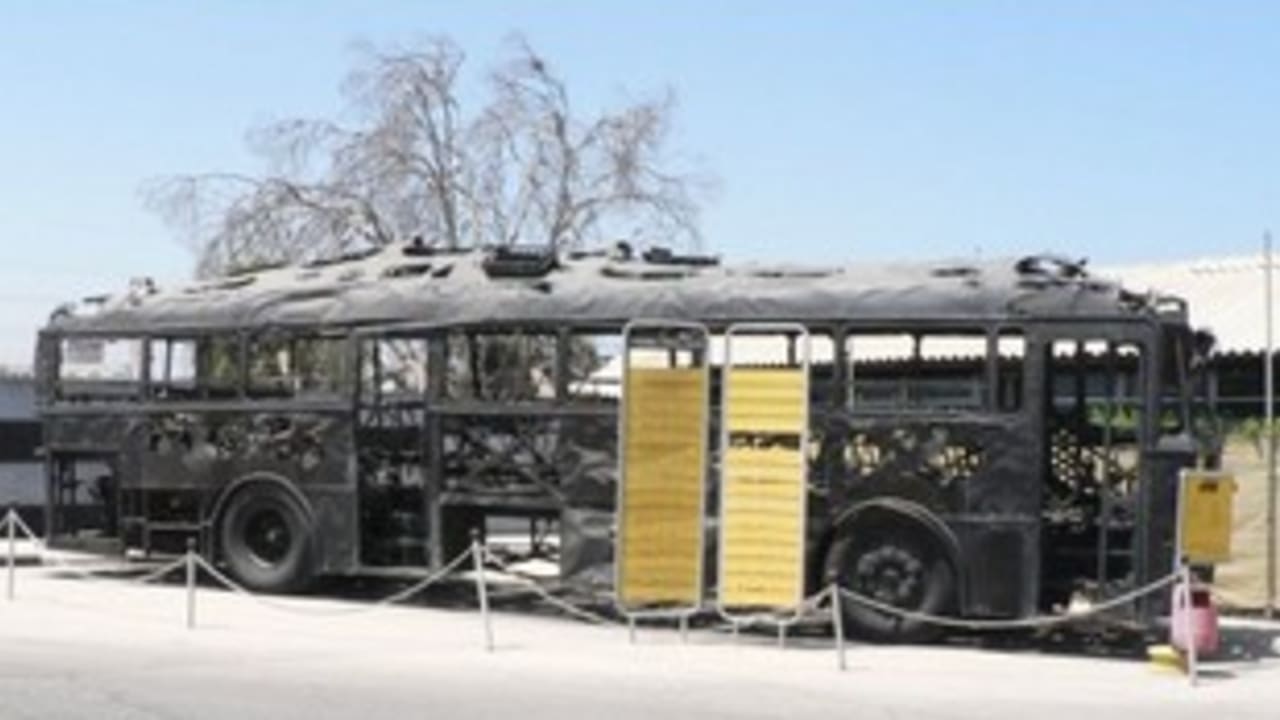
Coastal Road Massacre Bus
Coastal Road Massacre Bus Photo: Wikimedia commons
Initially botched by the terrorists themselves, the Coastal Road Massacre failed to stop peace with Egypt but led to an invasion of southern Lebanon.

On March 9, 1978, 13 Fatah terrorists left southern Lebanon on a boat headed for Tel Aviv. Two days later, in particularly rough seas, they transferred to two smaller Zodiac landing craft. Two of the terrorists drowned when one of the crafts capsized. Determined to carry out their deadly mission, the 11 surviving terrorists carried on and landed on a beach at Kibbutz Ma’agan Michael. What happened next would claim 38 innocent lives, wound over 70 and lead to Operation Litani, a large-scale IDF operation aimed at pushing PLO operatives out of southern Lebanon.

RELATED:
This Week in History: The first Wikileak?
This Week in History: IAF shoots down Libyan Flight 114

On the morning of Saturday March 11, the surviving Fatah men (and one woman) made landfall on an Israeli beach. Realizing they had not landed in Tel Aviv as planned, the terrorists nonchalantly ate lunch on the beach for nearly an hour before approaching an American nature photographer who happened to be on same beach that day. They asked her where they were and for directions to Tel Aviv, which she naively provided. The terrorists, worried that the photographer would alert authorities to their presence, shot and killed her before walking to the nearby Tel Aviv-Haifa highway.

After making the short walk to the Coastal Road, the terrorists flagged down and hijacked a passing taxi, killing its occupants, and began driving south towards their original destination – Tel Aviv. Soon after embarking on the short journey, the group of terrorists stopped a northbound chartered Egged bus, hijacked it and ordered the driver to turn around and head south. Heading down the highway, the Fatah cell began shooting and throwing grenades at passing cars, at one point throwing a body from their commandeered bus.

Along the 30-mile drive to Tel Aviv, the terrorists managed to stop another bus, ordering its passengers to pile into the first bus. With over 70 hostages on board and a trail of carnage behind them along the Coastal Road, police were alerted to the developing attack and were by that point trailing the hijacked bus packed with Israeli civilians. Police quickly attempted to set up a roadblock, but determined to reach the Tel Aviv metropolis, the terrorists plowed the bus right through it. The deadly rampage continued against any vehicle unlucky enough to be on the road that day.

Perhaps because it took place on a Saturday but more likely due to the speed at which the attack was transpiring, anti-terror forces were unable to mobilize quickly enough to reach the terrorists. Police, however, set up a much larger roadblock to halt the bus at the Glilot Junction on the northern edge of Tel Aviv. This second roadblock, much larger in size and aided by nails that officers spread on the highway finally managed to bring the rolling terrorist attack to a standstill. The carnage, however, was far from over.

The police traffic and patrol units that arrived on the scene were not specially trained to deal with terrorist or hostage situations. As the bus came to a stop, a firefight broke out between lightly armed officers and the terrorists who had brought sub-machine guns, grenades and explosives. As heavy gunfire was flying in all directions, police broke the windows of the bus and instructed passengers to jump. Soon after, the bus caught fire. By the time the shooting, explosions and fire were quelled, 37 Israelis and one American were killed, including 13 children, and 71 were wounded in the deadliest terrorist attack in Israeli history. Controversially, the fact that regular police untrained in hostage situations were the only security forces to respond is often blamed for the record-high death toll.

The Coastal Road Massacre, like all terrorist attacks, took place in a wider political context. The attack was carried out on the eve of then-prime minister Menachem Begin’s planned departure for the United States to advance the peace process with Egypt that had begun five months earlier with Egyptian President Anwar Sadat’s historic visit to the Knesset in Jerusalem. A week after the attack, a Fatah leader in Lebanon confirmed that the massacre was in fact (among other things) an attempt to derail the Israeli-Egyptian peace process. The attempt to stop the process failed, however. Although Begin delayed his trip to Washington, the peace process moved forward and a treaty was signed between the warring countries over a year later.

Israel’s response to the Coastal Road Massacre came quickly. Two days after the smoke cleared, the prime minister addressed the attack in a speech to the Knesset. Invoking Nazi imagery, Begin told the plenum, “Gone forever are the days when Jewish blood could be shed with impunity.” Hinting at what his government was planning for the very next day, he said: “We shall do what has to be done.”

On March 14, some 25,000 IDF soldiers entered Lebanon with the stated goal of pushing armed Palestinian groups north of the Litani River. Before the Coastal Road terror attack, Palestinian groups had been shelling northern Israel for some time, but the massacre in central Israel was the clear impetus for the military offensive. As a result of Operation Litani, Palestinian groups, including the PLO, were successfully forced from the area between Israel’s northern border and the Litani River. However, despite the creation and deployment of UNIFIL mere weeks after the invasion, attacks continued, eventually leading to the First Lebanon War four years later.

Recently, the Coastal Road Massacre made its way back into the news when the Palestinian Authority named a square in el-Bireh, near Ramallah, after Dalal Mughrabi, the Fatah woman who led the deadly attack and began the day of carnage when she shot American photographer Gail Rubin on a beach near Ma'agan Michael. In addition, the PA launched a seminar named after Mughrabi. The four-day seminar, called “Martyr Dalal Mughrabi Camp,” was held in Jericho under the auspices of the PA’s Military Science Academy. The PA came under heavy international criticism for honoring the terrorist responsible for the single deadliest attack in Israel.
  • Send
  • Large
  • Small
  • Print
  • Share
This article is by :
Michael Omer-Man

Follow @MikeOmerMan
Recent stories:
  • City notes
  • Haifa Port welcomes record-setting ship ...
  • City Notes: Amateur art
  • City notes: Selfless police of Safed
JPost Community
Tweet
Coastal Road Massacre Terror Attack Lebanon Egypt Begin Sadat PLO Dalal Mughrabi Mughrabi
Tweets by @Jerusalem_Post
Share this article
Tweet
Share
Send
Your comment must be approved by a moderator before being published on JPost.com. Disqus users can post comments automatically.

Comments must adhere to our Talkback policy. If you believe that a comment has breached the Talkback policy, please press the flag icon to bring it to the attention of our moderation team.
JPost Services
conferenceConference
newsletterNewsletter
iphoneMobile Apps
kotelcamKotel Cam
kolboJPost Alert
premiumPremium
JPost TV News  
Mobile Apps  
Bank Hapoalim  
Meir Panim  
Israel Law Center  
Inbal Hotel Jerusale  
Meier on Rothschild  
Weizmann Institute o  
JPost Premium Zone  
JPost kotel Camera  
         
 
Israel Focus
JPost TV News
Watch Now!  
Israel Law Center
The ultimate Mission to Israel, October 21 – 28, 2013 Register now!  
Nefesh B'Nefesh Guided Aliyah
Already living in Israel? Enjoy the Benefits of Aliyah!  
One year International MBA
in English, Bar-Ilan University, Israel – Open House July 9, 2013, 17:30  
Give "Freedom" this Passover
to needy Israeli families. Donate now  
YTA – A Yeshiva in Israel…
in English. Come Join Us  
War Threatens
Protect the People of Northern Israel  
Bank Hapoalim
Israeli's number one bank  
Jerusalem Post Lite
Lite Edition of the Jerusalem Post for English improvement  
Learn Hebrew with us
Get 10 minutes free personal coaching in Hebrew through phone or Skype  
JPost newspapers
Sign up for the JPost newspapers and receive one month free subscription  
Kosher English Magazine
English language weekly magazine - especially for religious people  
JReport Kindle Edition
Now you can get the Jerusalem Report directly to your Kindle  
JPost Premium Edition
The very best articles are available only in our Premium edition  
Lifestyle Magazine
 
 
Real Estate
Meier on Rothschild
Tel Aviv's Most Prestigious Address  
Don't Look For a House!
In Israel, our website will do it for you!  
 
Travel
Tourism Magazine
June 2013  
The Inbal Jerusalem Hotel
Hot summer deal, order now!  
Eldan Rent a Car
20% off all Car Rental Reservations in Israel  
Hertz Car Rental
Special Online Discounts!  
The King David Jerusalem Hotel
One of the world's truly iconic hotels, and a Jerusalem landmark  


Sites Of Interest:

Jerusalem Hotels
KKL-JNF
Poalim Online
BreitBart.com
Our Friends
Jerusalem Attractions
Jerusalem Tours
itraveljerusalem.com

JPost sites:

Learn Hebrew
The Jerusalem Report
Our Magazines
JPost Edition Francaise
Green Israel
Christian World
Jerusalem Post Lite

Services:

JPost Mobile Apps
JPost Premium
JPost Newsletter
JPost Toolbar
JPost News Ticker
JPost RSS feeds
JPost Archives
JPost Alert
JPost Kotel Cam

JPost Conferences:

NYC Conference
Diplomatic Conference

Information:

About Us
Feedback
Staff E-mails
Copyright
Sitemap
News Partners
Advertise with Us
Statistics
Ad Specs
Terms Of Service
Jpost.com, the online edition of the Jerusalem Post Newspaper - the most read and best-selling English-language newspaper in Israel. For analysis and opinion from Israel, the Jewish World and the Middle East. Jpost.com offers expert and in-depth reporting from Israel, the Jewish World and the Middle East, including diplomacy and defense, the Palestinian-Israeli conflict, the Arab Spring, the Mideast peace process, politics in Israel, life in Jerusalem, Israel's international affairs, Iran and its nuclear program, Syria and the Syrian civil war, Lebanon, the Palestinian Authority, the West Bank and Gaza Strip, Israel's world of business and finance, and Jewish life in Israel and the Diaspora.
 
About Us | Advertise with Us | Subscribe | Premium | Newsletter | RSS | Contact Us
 
All rights reserved © The Jerusalem Post 1995 - 2012