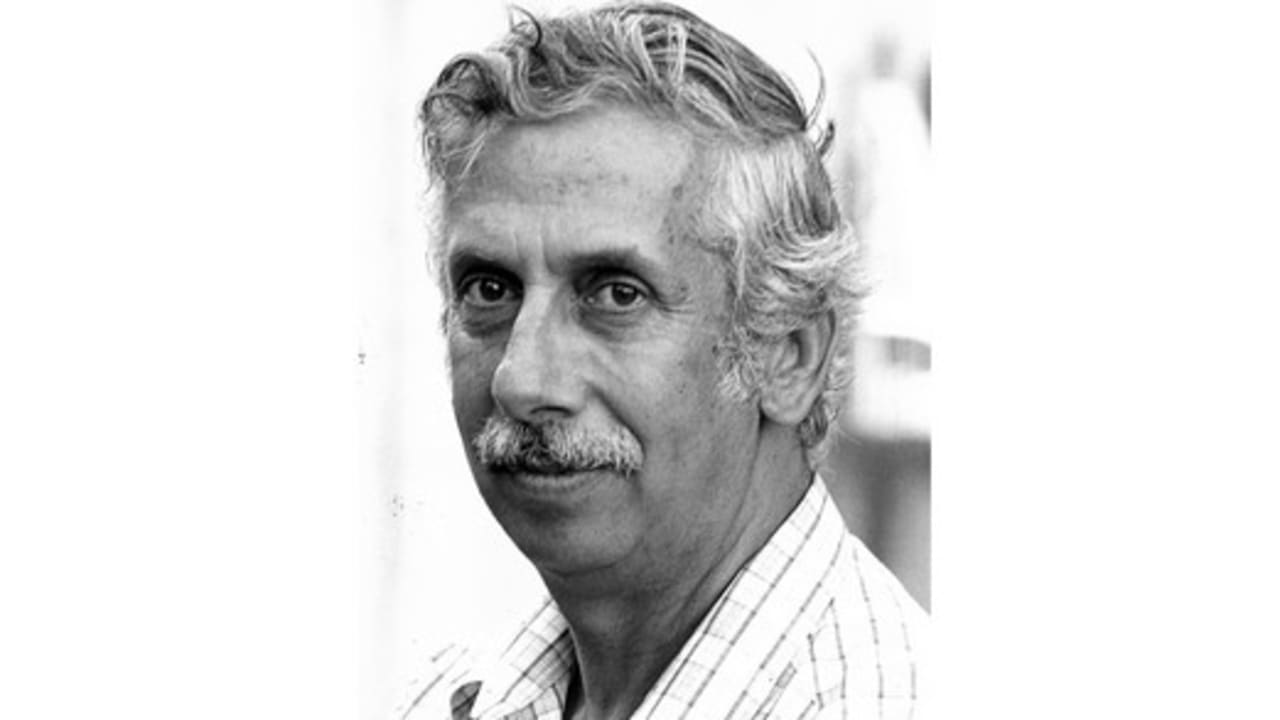
WHEN ABRAHAM Rabinovich arrived in Israel in June 1967, he had two weeks before he had to return to his job at a Long Island newspaper.But the Suffolk Sun never got its reporter back, and Rabinovich went on to work for The Jerusalem Post for 30 years, becoming acquainted with legendary Jerusalem mayor Teddy Kollek, visiting the front lines during the Yom Kippur War and covering hassidic clashes in Mea She’arim.“I came, and five days later the war started. Six days later it was over and I still had three days,” he recounts, of his early days in the country. Rabinovich says he thought about touring the for a few days before flying back, but then “I said no, I can’t leave this, it is just too exciting.”So Rabinovich – known to friends and colleagues as Bumie – began to interview civilians and soldiers about the war.“My initial intention was just to hang around and see things happen,” he says, “but then I discovered that you can’t just hang around – people keep asking you what you’re doing. So to say something I said, OK, I’m going to write a book.”Though he wasn’t working for the Post at the time, his sister was, and “I came into a ready made hevra at The Jerusalem Post,” even writing stories for them during and after the war.“I began modestly to speak to soldiers and ask them who their lieutenant was,” he says.“I’d get to the lieutenant and ask how to get to his officer and so on and so on. I was caught up in it and I saw I couldn’t get by just on fragments of this or that... I had to have a story.“It became clear to me that the only way to go on this was to write a book – a real book – that would tell the story, both the civilian side and the military side.”Rabinovich worked on the book, which was to become The Battle for Jerusalem: An Unintended Conquest, for the next two years.“I traveled around the country, because there were three different brigades fighting in Jerusalem – one was the Jerusalem Brigade which was local, then there was the Paratroopers Brigade and the Armored Brigade... people from all over the country. I visited some 50 yishuvim, most of which were kibbutzim...and I began to knit things together into a story with a continuity – a beginning and an end.”Toward the end of his two years of research, Rabinovich married an Israeli – a teacher from his ulpan (not his own teacher) – and started working for the Post.“Even then [it was] without the intention of staying,” he says. “I [was thinking I] would stay for a few years maybe... but then came babies and here we are.”IN THE 43 years that followed, Rabinovich spent 30 of them as a reporter for the Post, including 10 as the Jerusalem beat reporter, where he became well acquainted with the legendary Jerusalem mayor Teddy Kollek.“He was a wonderful personality and a treat to be with,” says Rabinovich. “He was real.”Rabinovich and Kollek had a memorable first encounter: day one of the Six Day War.“I was running around the villa area when the shooting started – at first it was rifle fire, machine gun fire, then it turned into artillery fire and I was looking for some place to duck into,” Rabinovich recounts.“I came across a little park and all the buildings except one were shut, and I ran into it. There in the lobby was a group of people – like waiting for the rain to stop… I looked up and there’s a sign on the wall that said ‘the Jerusalem Municipality.’ I said, ‘Is this city hall?’ and they said ‘yes.’ ‘Is the mayor here?’ ‘Yes.’ ‘What’s his name?’ ‘Teddy Kollek.’” Rabinovich asked if he could speak to him, and was instructed to take the elevator to the top floor of the building.“There he was, standing outside, waiting to see me.”As gunfire ricocheted around the city, Kollek and Rabinovich talked.“We both stared out his window watching the shells explode outside in the city,” Rabinovich recounts.“It looked like the whole city was being blown apart – what it was, was smoke coming from greenery – trees burning, not buildings burning.”“Then he said, ‘I’m going down to see the houses on the border.’ I said, ‘Can I come with you?’ and he said ‘no.’” Rabinovich went anyway, and the two of them ran toward the Old City, watching the gunfire along the border up close.“That was my first meeting with Teddy,” says Rabinovich, “and we continued our relationship… he also had this intimate relationship with the paper.”That close relationship eventually led to a serious clash between the two over a story that Rabinovich wrote about the Monastery of the Cross fencing off part of its land.“When I talked to [Kollek] about it, he said he supported it, and evidently I made clear I was going to write an article attacking it,” Rabinovich recalled.“I went down there and spoke to people – kids and parents coming there – all of them condemning the notion that they were going to close off this chunk of land that was so valuable, so precious to them.“When I came into the paper on Sunday… I saw that they changed the quotes and made this article into something praising the wall. The guys at the paper told me that Teddy had come up the night before and was closeted with Lea Ben-Dor [the deputy editor at the time], and obviously she made changes at his behest... I didn’t speak to Teddy for some time.”RABINOVICH’S COVERAGE of Jerusalem inevitably brought him into contact with the haredi population, centered at that time mostly in Mea She’arim.Before he started the beat, “I really didn’t know anything about [haredim],” he recalls. “I’d seen them of course, even had [haredi] relatives, but I didn’t know them – I didn’t know what moved them, I didn’t know the fierce competition among them.“After a while I learned that their violence is connected to money, and just like the mafia have their turfs, [for them] it was the hechsher [kashrut certification], because that was a major source of income.”Rabinovich says he once encountered a man who had been badly hurt during a hassidic clash – “part of his beard had been ripped off... they beat the hell out of him.”It was an experience he described as one that challenged for him the “line between being a reporter and being yourself as a polite human being.”There was one figure on the very outskirts of hassidic society in Jerusalem who held a more personal connection for Rabinovich – Moshe Hirsch, a leader of the anti-Zionist Natorei Karta sect infamous for his relationship with late Palestinian Authority leader Yasser Arafat. Hirsch, Rabinovich’s cousin, became an adviser to Arafat in the 1990s, even leading a Natorei Karta delegation to France in 2004, to pray for him as he lay in a coma.Though Hirsch was vilified by the mainstream Jewish community as a traitor and a murderer, “he was a wonderful fellow with a great sense of humor,” says Rabinovich. “I loved him, he can believe whatever he wants to believe, it doesn’t bother me.”Though Rabinovich does have one regret when it comes to his relationship with “my cousin Moish.”“One of my great regrets is not having gone with him to [see] Arafat,” he says. “He was going there periodically... I asked him once if they would agree to my accompanying him on one of those visits and he said OK, but I didn’t follow through with it and I’m really sorry I didn’t.”IN 30 YEARS of working as a reporter for the Post, Rabinovich worked under six editors as well as nine prime ministers – going from writing up stories on a typewriter to emailing them in.“The paper has changed very much,” since he began working there, he says, “it was a very exciting life – a wonderful, wonderful job.”Though he worked under many editors, “they became a bit of a blur, now,” he recalls, two figures stand out for him – Ted Lurie, editor-in-chief from 1955 until his death in 1974, and Ari Rath, a longtime news editor who served as co-editor in chief from 1975 to 1989.“Ari knew everybody in the country and everybody knew him, [people] of every status – guys pushing brooms and heads of companies,” Rabinovich recalled.“The door to his office was always open, anyone [could] walk in.”But he also remembers periods in the late 1980s and early 1990s when things were more unsettled.“There were periods of great unpleasantness, there were economic issues, people let go, political issues, strikes, tensions,” he says. “And the paper underwent a political transformation, an ideological transformation,” distancing itself from its origins.“In the old days, before my time – but it was part of office lore – Moshe Sharett, when he was foreign minister, would come up to the office many evenings, to discuss the next day’s editorial with the editor.”AFTER HE left the Jerusalem beat, Rabinovich covered various topics, mostly writing features for The Jerusalem Post magazine. At one point, he says, he covered the Arab world.“When peace came with Egypt, Rath planned to establish a Jerusalem Post bureau in Cairo… we were all going to take turns being the bureau chief – I was looking forward to it but it fell through.“Ari also… was trying to establish distribution of The Jerusalem Post in Beirut when he thought that there would be relations – so that also didn’t quite work out.”Rabinovich traveled to Cairo several times, as well as to Jordan.“During the post-Camp David period I went to Morocco with the idea of trying to get an interview with the king – that didn’t work, but it was an interesting period.”But his most memorable journalistic moments come from his time covering Israel’s wars. Even his wartime encounter with Kollek was not the most dramatic point of the Six Day War for him.When he woke up on the third day of the war – after sleeping in a park – Rabinovich walked over to the Post office, and heard from the head of the copy desk at the time, Charlie Weiss, about rumors of troops already in the Old City.“I said, well, let’s see if we can get there... we walked through Mandelbaum Gate – which was not a gate, it is a street intersection at the foot of Mea She’arim Street which was the only crossing point between Israel and Jordan.”Normally one side had a Jordanian border control post and the other an Israeli border control post.“We got there and, lo and behold, there was no one there. The post was empty… no one was there and no one was shooting…. so we walked across and we were in Jordan.”Even encountering a dead Jordanian soldier on the side of the road didn’t deter the pair from continuing into the Old City.“After a while we saw Israeli soldiers, paratroopers… they told us to keep walking and get to Lions’ Gate.”“We entered there and reached the Temple Mount which was full of soldiers, prisoners – it was an extremely dramatic scene. Charlie continued on down to the Western Wall and I stayed there to talk to soldiers… I asked them, ‘What’s going to be, what do you want to happen?’” he recalls.“One says, ‘We have to keep everything we’ve got, this war was their fault, let’s keep everything we’ve got’ – at that point the Golan war had not started yet, so all there was was the West Bank and Sinai. Others said, ‘They can have everything back except our holy city’ – all the arguments that would be in Israel until this very day started there.”During the Yom Kippur War, Rabinovich and a former colleague from Newsday drove up to the Golan Heights to see the action. After being blocked from the road leading up there, the pair found a dirt road that they bumped along – passing fenced-off minefields and brush-fires – until they reached a row of tanks.“There was a group of soldiers sitting in the shade eating, and we asked them where the front line was,” he says. “They pointed to the tanks, but it was quiet. Later, when I wrote a book about the Yom Kippur War” – 2004’s The Yom Kippur War: The Epic Encounter That Transformed the Middle East – “I realized we’d come just in a window [of quiet] where the furious defensive battle had just ended the day before... and the next day the offensive began.”He also recalls reporting from Sabra and Shatilla during the First Lebanon War in 1982, and watching as massacre victims were removed from ruins and buried in mass graves.Since his retirement, Rabinovich has worked on several books and spent time with his five grandchildren.His most recent work is a reissue of an updated version of The Battle for Jerusalem published as an e-book, with the addition of greater political context and more of the Arab perspective.Rabinovich has written about almost everything related to Israel – except politics, and he considers himself blessed to have successfully avoided writing about the Knesset in his 30 years as a reporter.“I managed to escape writing about politics,” he says. “I write about interesting people and interesting things – this country is blessed with fascinating people.”