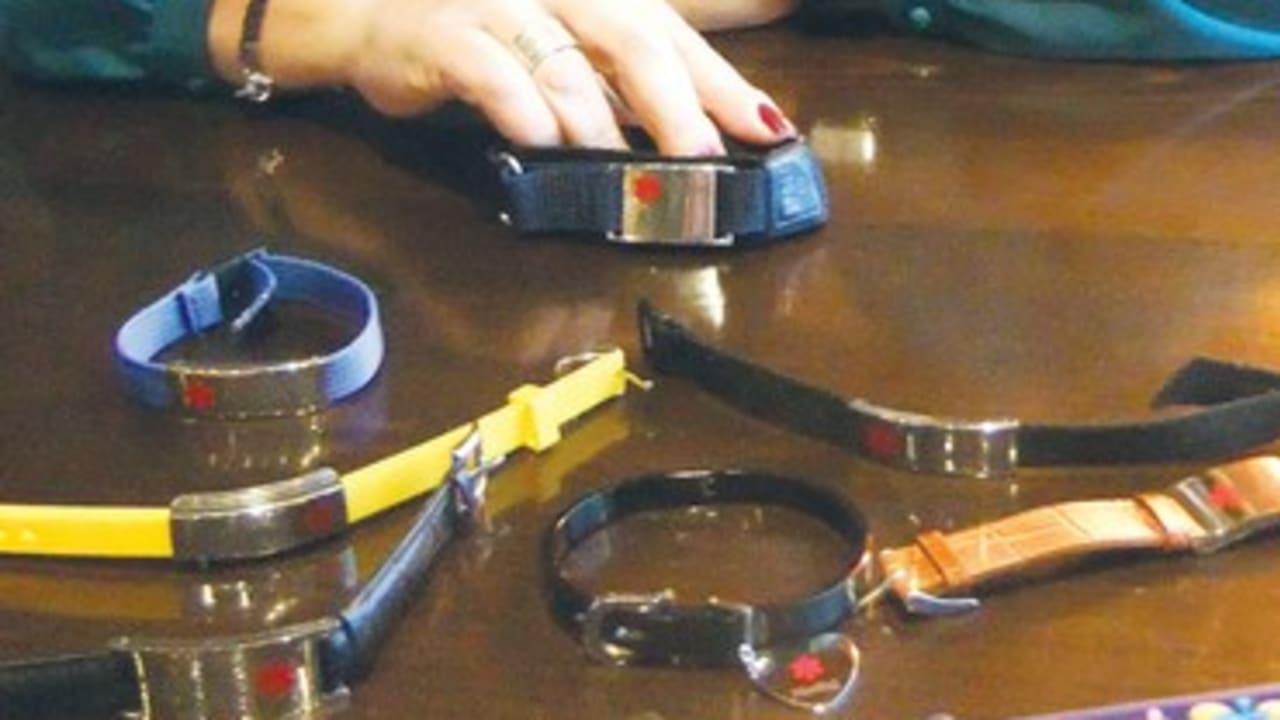
Why didn’t some Israeli think of this before?” would be the natural reaction to hearing about medical ID bracelets that identify conditions, allergies and other vital information when an unidentified person suffers a health emergency. It’s quite amazing that until only a few weeks ago, such a service was unavailable in a country with such high-level medical expertise and a love for innovation. As medical bracelets are available in many countries around the world, why did the idea take so long to arrive here? “Any medical information can be potentially lifesaving when faced with an unconscious patient,” commented Dr.Nahum Kovalski, deputy vice president and chief information officer of the Terem chain of urgent medical care. “For example, knowing which medications a patient is allergic to can be essential to the success of any treatment. In addition, knowing that a patient is diabetic may save critical seconds before starting appropriate care.”A possible reason why such an idea has not been implemented before, he suggested, is that “getting Israelis to pay for this will not be easy, and the ones who need it the most will most likely not buy it.”United Hatzalah of Israel (UH), whose volunteers on ambucycles often reach an unconscious victim first, also endorsed the idea of medical ID bracelets worn by patients who might need immediately help.“We often get to scenes of unconscious individuals – whether it be in a car accident, a sudden collapse on the street or deterioration at a person’s home – and there is no one available or knowledgeable about the patient’s underlying medical condition,” said Eli Beer, founder and president of UH. “As first responders, our volunteers are always looking for ways to shave valuable seconds off response times. Any more information that we can immediately glean on-scene will help us treat the patient even more quickly and effectively and will help us save more lives in Israel.”Dr. Aziz Darawsha, chairman of the department of emergency medicine at Hadassah University Medical Center in Jerusalem’s Ein Kerem and president of the Israel Association of Emergency Medicine, added that medical ID bracelets have existed around the world for two decades, but unfortunately, “it was not [available in Israel] until now, despite its importance. In certain cases, they can save lives. The technology is important, especially for patients with diabetes, heart disease, certain sensitivities and other problems so that treatment is given as needed.”“I suppose it was just waiting for us to do it,” explained Juliet Mandelzweig, joint general manager and co-owner of the MediTag company along with her partners Sara Kushelevich and Michal Adlersberg.“There is a very real need for this, with a huge life saving potential for anyone with allergies, chronic diseases, medications and so on,” Mandelzweig told The Jerusalem Post in an interview. She has received estimates that there are 1.5 million Israelis with conditions who require quick identification.Another Israeli company offered medical ID bracelets about a quarter of a century ago, but for some reason, it disbanded.The partners pounced on the idea when Mandelzweig – who was born in South Africa and became asthmatic and diabetic, was terrified that “I might suddenly pass out, and nobody would know how to help me.” Then, four years ago, the Petah Tikva resident was taken to hospital with a suspected heart attack that gave the idea a push.“I remembered medical ID bracelets from South Africa. It’s not a new invention, but this is the only one in the Israeli market.”The partners set up a company based in Rosh Ha’ayin after discussing the idea with patient groups, urgent care specialists in hospital emergency rooms, Magen David Adom and others. A manufacturer was located in China to make the bracelets in 40 designs, with a company insignia. Engravers who could produce identification on the inside of the bracelet in Hebrew and/or English (inside for privacy) were hired, and a website was constructed.The Israel Medical Association was informed by the new company of its life saving product. Prof. Shmuel Kviti, chief of allergy and clinical immunology at Tel Aviv Sourasky Medical Center, was “ecstatic” when he learned of the product, the coowner said. “He is handing flyers out to our patients.” In addition, the heads of Sourasky’s endocrinology department who worry about insulin-dependent diabetics they treat have endorsed it.PEOPLE WHO learned of the new service asked: “Where have you been all this time?” “We expect that people who travel a lot would prefer to have the identification in English more than in Hebrew, but the engraving could have both languages,” said Mandelzweig. “We expect in the future to incorporate a USB device for storage of data and then maybe a computer chip implanted in the bracelet, but we felt it was more important to start with the company emblem in red and the vital information inside the bracelet.Not everybody who witnesses someone’s collapse or injury is hi-tech enough to read a USB or chip with a scanner using a smartphone. Or they may not have a smartphone at all,” she added.If an Alzheimer’s patient gets lost and is found wandering in the street, a passerby can look at the bracelet and immediately identify the person and the problem, said Mandelzweig, who recommends that Alzheimer’s patients have silicon bracelets that could be worn all the time and not suffer water damage. An ID that is never taken off would help medical or police personnel identify a dementia patient. It would also benefit people who lost their ability to speak and organ transplant recipients.She told the story of a man whose heart is on his right side due to a defect rather than on the left. “Can you imagine a medic using a stethoscope on his chest to listen to his heartbeat and doesn’t find it?” the company co-owner suggested.“He would be confused. If he had a medical ID bracelet, information on his heart could be read immediately. We encourage customers to consult their doctors before deciding what to have engraved on their bracelets.” There are also people who had their blood type etched on the bracelet in case of emergency.Mandelzweig, who works in “body-focused psychotherapy” and has two adult children, recalled the tragic fatal case over a year ago when a young woman with a nut allergy went to a Tel Aviv cafe and grilled the waitress about whether the Belgian waffles she ordered contained nuts. Mistakenly assured that they did not (the syrup in fact contained a nut spread), the young woman immediately lost consciousness after ingesting them. “Nobody knew that her Epipen [an epinephrine auto-injector used to deliver a measured dose to treatment acute allergic reactions to avoid or treat the onset of anaphylactic shock] was in her handbag,” she said. If the allergic woman had a MediTag on her wrist, people could have helped her immediately and saved her life.”Other types of people who would benefit include people with allergies to milk or drugs like penicillin, nuts, latex and other substances, or epileptics who might suddenly have an attack. A medical professional could give help immediately without wasting time. People who take blood thinners to prevent heart attacks or strokes and who suffer from hemorrhages because they didn’t take the right dose should wear the bracelets so action can be taken immediately to prevent them from bleeding to death.“I run for exercise,” said Mandelzweig.“Athletes and hikers abroad might pass out in a foreign country, and nobody would know who you are. There are also non-medical uses. One family was taken their young children to England and ordered bracelets for them to wear in case they got lost.”THE BANDS are made from a variety of materials, but the rectangular plate on which the engraving is done is made from stainless steel, which does not cause allergic reactions. Mandelzweig noted that the bracelets range in price from NIS 167 to NIS 230 and are made for everyday or dressy use. Some are made from silicon in attention-getting colors such as pink or orange, while others are made in brown leather or in black silicon like a watch. There are models for children (diabetics or with other medical problems that could need immediate attention).There are also floral designs and bracelets with semi-precious stones.Patients’ groups, she said, have arranged for discounts for their members who want the bracelets.MediTag hasn’t yet bought advertising space, but it hopes to put ads on the radio and TV and the print media or the Internet so the public will become aware of it.“There is no doubt that the medical ID bracelet will save lives, just as it has abroad in many cases. It means that no time will be wasted in the saving of lives,” she said.“The sky is the limit in applications. We are at beginning of road. We are thinking of a bar code etched on the bracelet, in addition to the USB. We have thought of making fashionable necklaces as well; it depends on what the public want.”It hurts to think of people who have died, or Alzheimer’s patients who have lain in hospital beds for days because no one knew whom to call, she concluded.“MediTag was set up as a business, but we also regard it as a mission, a mitzva,” she concludes. So far, our phone line is flooded, and we have only started. Doctors and rescuers have welcomed us with open arms.”