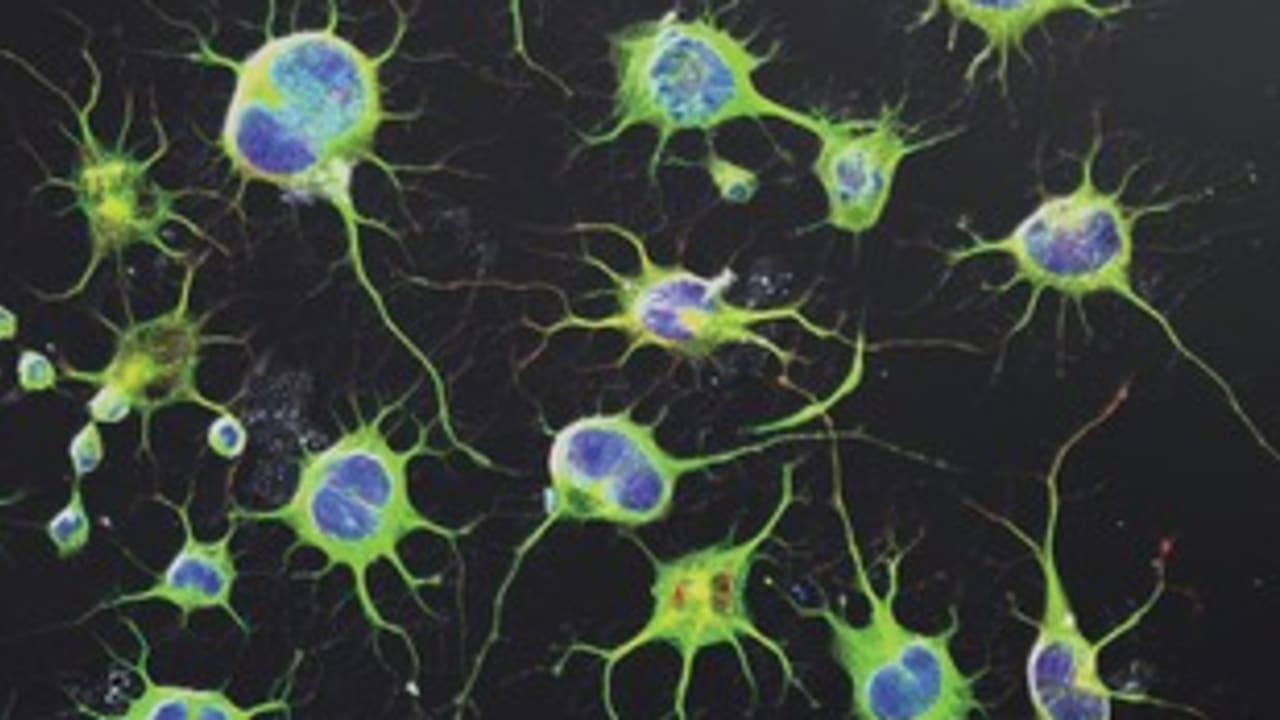
The Technion-Israel Institute of Technology and and the Alfred Mann Institute at the Technion (AMIT) have established a new company for commercialization of stem cell technologies developed for over a decade at the stem cell research center headed by Professor Joseph Itskovitz-Eldor from the Technion’s Bruce and Ruth Rappaport Faculty of Medicine.The company, Accellta, will market technologies that will enable commercial companies and research laboratories to culture masses of homogeneous stem cell lines in a fast and cost-effective manner.The innovative technologies – developed by Itskovitz-Eldor, a world leader in the field of stem cell research, and Dr. Michal Amit, a senior researcher at the stem cell research center – address the need for genetic manipulation of the cells. Although a highly desirable procedure, such manipulation is currently associated with poor outcomes. The revolutionary technologies introduced by Accellta enable successful manipulation of the cells and thus enhance the development of prospective stem cell-based therapies and disease models. In the future the company will also focus on regenerative medicine solutions and stem cell-based therapeutics for currently incurable diseases.Itskovitz-Eldor, chairman of the obstetrics/gynecology department at Rambam Medical Center and director of the Technion’s stem cell center, isolated the first human embryonic stem cells (hESCs) in 1999. This is considered one of the most important scientific breakthroughs in medical history. In the same year, he established the first stem cell research laboratory in Israel and currently holds the largest number of scientific publications in the field of hESCs.Accellta will operate in the global stem cell market, estimated at $2 billion and with double-digit annual growth. The market comprises mostly products and services for stem cell research and development, as most stem cell technologies are still in development and have not yet been authorized for clinical use in humans. The stem cell market is expected to skyrocket in the coming years, once treatments currently under clinical evaluation receive approval from health authorities.AMIT, founded by US billionaire Dr. Alfred Mann, has been operating since 2006 to accelerate the development and commercialization of selected biomedical technologies invented by Technion scientists.Accelita will facilitate the adoption by industrial and clinical entities of some of the world’s most innovative and advanced technologies for culturing pluripotent stem cells (both embryonic and induced). These unique cells have the ability to generate any cell type of the human body.STUDENTS’ SOCIAL NETWORKS CAN PREDICT GRADES How well or badly a student will perform in an academic course can be predicted by analyzing social network data, according to Ben-Gurion University of the Negev researchers, who recently presented their research at the Advanced Media Technology Conference in Macau, Hong Kong.PhD student Michael Fire, of the social networks security research group in BGU’s department of information systems engineering has developed a novel method to predict students’ performance at university or in college. The information can be used to determine which students need the most help, as well as which ones will excel and might be guided to further study or careers in that subject area.“While most papers about social network analysis deal solely with information gathered online, this study draws some of the information from the real world – social interactions that were conducted off the grid,” said Fire.The researchers analyzed data from a BGU course that included assignments submitted online and website logs (containing 10,759 entries) to construct social networks of explicit and implicit cooperation among the students. The implicit connections are used to model all the social interactions that happened “offline” among the students: e-mails with questions, conversations in the lab while preparing the assignments and even course forums.“These connections were very important, as we sought to model the social interactions within the student body,” Fire explained. In addition to analyzing the online submissions of the students who had to work in pairs or in groups, they also tracked login time and computer usage. For instance, if two students submitted their assignments from the same computer, it was a likely indication that the two had worked together to complete the assignment. If two students submitted assignments from different computers, but one right after the other on more than one occasion, the authors assigned a value to that data, as well.“One explanation for what we discovered is that your friends influence your grade in the course, so if you pick your friends well, then you will get a higher grade,” Fire said. “Alternatively, social networks in courses offer conditions whereby good students will pair with other good students, and similarly, weaker ones will pair with weaker students.”HONEY BEES SAY ‘AH’ Honey bees are a highly organized and social species, as demonstrated by their complex colonies and the geometric structure of their hives. For hive building, the honey bee strongly relies on its tactile sense, and a new article in JoVE (Journal of Visualized Experiments) illustrates a novel tactile conditioning experiment using the bees.The technique, presented by the lab of Dr. Volker Dürr of Germany’s Bielefeld University, trains honey bees to stick out their tongues when their antennae touch an object. This procedure allows researchers to analyze how changes in antennal movement correspond to tactile pattern recognition and learning.“We work with honey bees because they are an important model system for behavioral biology and neurobiology. They can be trained,” Dürr said. “If you can train an insect to respond to a certain stimulus, then you can ask the bees questions in the form of ‘Is A like B? If so, stick your tongue out.’” To train the honey bees, researchers let them sample a textured surface with their antennae, and then gave them sugar water. As the training proceeds, the honey bee will start to extend its tongue when it touches the associated surface. The researchers record the movement of the bee’s antennae on video to understand how the bee uses active motion for tactile recognition.“It is clear that if a bee touches something with an antenna, which is a finely textured structure, the bee has to move it [the antenna] to get the information it wants. We don’t fully understand the relevance of this movement,” Dürr explained.By recording the antennal movements, Dürr hopes to gain clearer insight into honey bee behavior.Training new students can often be problematic for this technique.“We actually use this method in teaching often.The conditioning of the bees and recording of their antenna is better expressed in video.”Associate editor Allison Diamond added: “JoVE shows how research on an atypical subject, the honey bee, can be extremely beneficial to scientists, as the bees are a good species to train. We hope videos such as this will push other scientists to adopt similar techniques in their own research.