Trump in excellent health with leg swelling, hand bruising, doctor says
Trump's Tuesday visit to Walter Reed National Military Medical Center in Maryland was his third in 13 months.

Trump's Tuesday visit to Walter Reed National Military Medical Center in Maryland was his third in 13 months.


Donovan's meeting in Cuba is the first in recent memory by a head of Southern Command and comes amid growing concerns in Cuba of a possible US military attack on the Communist-run island.

While China can fire nuclear weapons from submarines and aircraft, the silo fields in the northwestern Xinjiang region and Gansu province are the core of its nuclear forces.

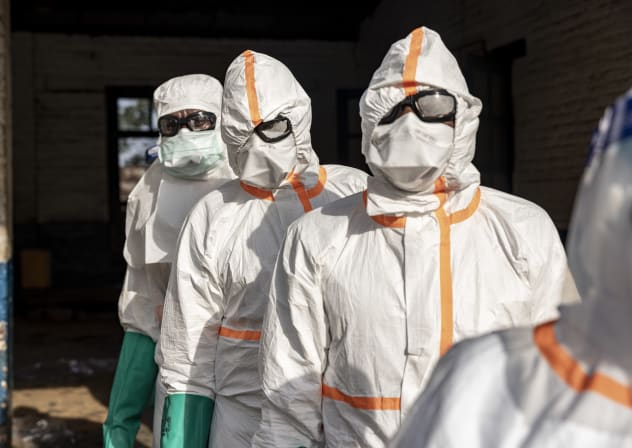
Uganda's health ministry said on Friday that the number of confirmed Ebola cases in the country had risen to nine.
According to police, the allegations were believed to relate to Iran and to the targeting of a British-based journalist at Iran International, which is critical of Tehran's government.

The mosaic was first discovered nearly 30 years ago by Turkish archaeologists during excavations in the ancient city of Zeugma.

French Foreign Minister Jean-Noel Barrot says abuses against French activists, including sexual assault and beatings, are being referred to prosecutors.

Authorities evacuated dozens after a drone hit a 10-story apartment block near the Ukrainian border, intensifying concerns over regional security.

The US Federal Aviation Administration said it was aware of the incident, but added that it was outside its scope and did not impact air traffic in the region.

Under US President Donald Trump, the US has effectively imposed a blockade on Cuba by threatening sanctions on countries supplying it with fuel and triggering power outages.

The US Federal Aviation Administration said that drone operators who enter restricted airspace without approval can face fines of up to $100,000.
