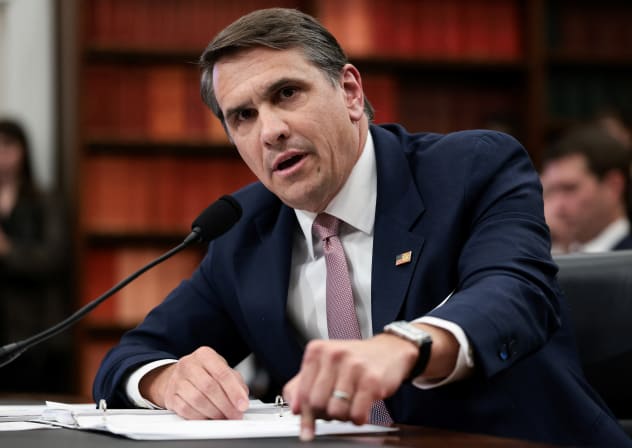
Zuhdi Jasser is a respected Arizona-based doctor of internal medicine and
nuclear cardiology, formerly a lieutenant-commander in the US Navy and attending
physician to the US Congress.
As founder and president of the American
Islamic Forum for Democracy, he is also one of the most controversial Muslims in
the United States.
RELATED:Hearing on lower Manhattan Islamic Center reignites debate'Al Qaida targeting Muslim Americans for terror recruits'Jasser, raised in Wisconsin by Syrian immigrant
parents, describes himself as a devout Sunni Muslim, but his organization’s
unyielding battle against political Islam has placed him in the crosshairs of
groups like the Council on American-Islamic Relations and the Islamic Center of
America, which he says have failed to adequately address the “insidious
separatism” of political Islam.
In a phone interview from Phoenix with
The Jerusalem Post, Jasser offers no apology for testifying in this month’s
contentious House of Representatives hearing on Muslim radicalization in the US.
He says the committee chairman, New York Republican Rep. Peter King, “provided
an opportunity for Muslims to talk about how we are going to solve our own
problems.”
Of the last 220 arrests by the US Department of Justice on
terror charges, Jasser notes, more than 180 of the suspects were
Muslims.
“You have 1.5 percent of the population that is over 80% of the
arrests,” he says.
“And the arc has been increasing.”
Rather than
remain on the defensive, Jasser says, the US and the West at large must take a
muscular, offensive approach toward promoting the ideals of liberalism. Those
who say democracy and political Islam can peacefully coexist, he says, are
ill-informed.
“They don’t understand democracy. My devout Muslim parents
and grandparents understood Sharia. They understood that Sharia, while it means
God’s law, is actually man’s law – once it is implemented in any fashion, it
becomes man’s law.”
Democracy, Jasser says, means more than elections; it
means protection of the individual.
“We need to start having a
conversation about what exactly we mean by democracy,” says Jasser, a firm
proponent of what he refers to as “separation of mosque and
state.”
“There’s a reason the US Constitution doesn’t have the word
Christian in it,” he notes. “You can’t really have a Jew or a Christian as
president of an Islamic society run by Islamic law. You don’t really have equal
rights under God, but rather under Islam.”
An outspoken supporter of
Israel, Jasser sits on the board of the Clarion Fund, a New York-based advocacy
group that last month released the controversial film Iranium, which highlights
the dangers of Iran’s nuclear program.
Jasser is convinced that if given
a level playing field, his group’s ideology of secular government will emerge
victorious in the Middle East.
“Not once has any of the Islamist groups
in the US – the Council on American- Islamic Relations, the Islamic Center of
America – engaged our organization on the idea of liberty and the separation of
mosque and state. They know that if we get to that point, they’ll lose the
argument,” he asserts.
“The desire of every individual before the law,
before one law, and before government, is not a monopoly of the West. It’s a
humanitarian principle that was embodied in the UN Declaration on Human Rights,
the very UN declaration that the Cairo declaration – the Organization of the
Islamic Conference countries – refused to endorse because they know that Sharia
is not compatible with those ideas. But those are humanitarian principles,” he
explains. “I think it’s almost racist to believe Muslims or Arabs have to be
relegated to a collectivist, populist Islamist society because that’s what they
are.”
This week, Syria saw the first embers of popular unrest, but Jasser
says he doesn’t believe President Bashar Assad’s regime is in any immediate
danger.
“People have developed a certain apathy, equaled only perhaps by
that of Saudi Arabia. That apathy has been built over half a century of
oppressive rule, so turning that around will be very difficult. But I
think we’ve seen over the past few weeks that the Syrian people are beginning to
develop a little more courage,” he says.
Jasser notes that while there
was a small Islamist contingent in anti-government rallies in Egypt, the
dominant sentiment there was of a hunger for freedom and progressive
democracy.
“Even if it goes the other way and the [Muslim] Brotherhood
gains some influence, I don’t think we made the wrong decision. Because at the
end of the day if we sided with righteousness and with moral, democratic
governance, I would feel much better going to sleep at night, knowing that the
legacy for my children from America, Israel and the West was one of freedom and
liberty.”
The West, he believes, must work to promote Arab democracy, no
matter how bumpy the road from autocracy might be.
“This binary choice in
the Middle East behind secular fascism and theocratic fascism has got to
change... As a freedom activist and a liberty- loving Muslim who has been
working against the influence of theocracy and Islamism specifically, I could
never articulate a policy that the devil we know is better,” he
says.
“The ‘ADD approach’ of US Mideast policy has been
counterproductive,” Jasser adds. “We need to help them build institutions, get
the ideas of liberty in those countries and have a more patient, pragmatic
approach to the war of ideas. We may take some steps backward before we go
forward.”