Seventeen killed in mass shooting at South Africa tavern, police launch manhunt for suspects
Emergency medical services declared all 17 victims dead at the scene, and the motive for the shooting was not known, the South African Police Service said.
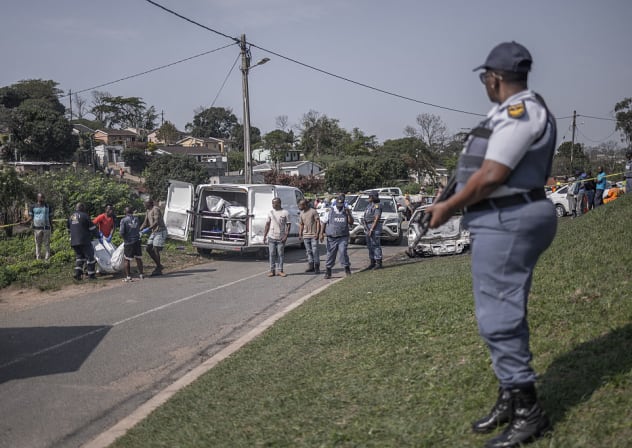
Emergency medical services declared all 17 victims dead at the scene, and the motive for the shooting was not known, the South African Police Service said.


An airplane crash in the Democratic Republic of Congo killed 17 people on Friday, including two of the country's most senior military justice officials, AFP reported.

Ukrainian President Volodymyr Zelensky said Donald Trump has made a final decision to allow Ukraine to manufacture Patriot missile interceptors as Kyiv faces continued Russian attacks.

Russia's Sergei Lavrov and Germany's Johann Wadephul discussed bilateral relations and the war in Ukraine, the Russian foreign ministry said.

Newly uncovered archival documents appeared to challenge the established timeline of Geli Raubal’s 1931 death, placing Hitler in Munich when her body was reportedly discovered.

Trump told reporters at the White House on Saturday that he expects Cuba to 'make a deal' and added that 'we want to help Cuba.'

Pope Leo XIV drew an estimated 800,000 people to Paris's Champs-Élysées on Saturday, urging Catholics to seek happiness in faith rather than material goods during an outdoor Mass.

China pushed back against the United States' policy in its speech at the UN, saying the sovereignty of countries in the Gulf should be respected and called for the blockade against Cuba to be lifted.

Eleven people were killed and 30 injured after an explosion in northwestern Pakistan. Tehreek-e-Taliban Pakistan claims responsibility for the attack.

Authorities recovered a large amount of equipment from the raided sites, including almost 400 computers and more than 300 phones.

China's president Xi Jinping met US President Donald Trump following the United Nations General Assembly in New York and agreed to tariff cuts and open dialogue on AI.
