Over the past several days, Hebrew media reports have been engaged in intense
speculation regarding a possible imminent Israeli strike on Iran’s nuclear
sites.
Defense Minister Ehud Barak appeared to have made a veiled
reference to the issue again on Tuesday, when he told the Knesset that Israel
may have to protect its vital interests alone, while other reports focused on
comments by Interior Minister Eli Yishai, who stated this week that difficult
decisions were “keeping him up at nights,” without elaborating
further.
RELATED:
Ashton: Nuclear talks with Iran could resume soon
Editorial: More vigilance on IranIsrael is believed to have a fully prepared plan to launch such
a strike, which would likely involve at least several hundred
aircraft.
Multiple aerial routes are theoretically available for Israeli
aircraft to reach targets in Iran. In all those paths though, the jets would
likely have to either neutralize or evade radar systems of other countries along
the route, as well as face the potential fallout that could follow an intrusion
of foreign airspace.
Israel also possesses the advanced midair refueling
capabilities required for carrying out sorties over multiple Iranian targets
situated between 1,500 and 2,000 km. away from home. Possible targets
could include uranium- enrichment sites at Natanz and Qom, the uranium-
conversion plant at Isfahan, and a heavy water reactor in Arak suspected of
being used to pursue a plutoniumbased nuclear arms program, as well as
additional facilities.
But getting there is only half the
story.
The Air Force, which according to foreign reports has gone on dry
runs to practice such an attack on previous occasions over the past decade,
would first have to neutralize Iran’s aerial defense capabilities, blind Iran’s
radars, destroy command and control centers and paralyze Iran’s own air force
for a while, before overcoming fortifications and special aerial defense
measures placed by the Iranians around their nuclear sites. The operational
challenge is vast.
The Air Force would in effect have to take temporary
control over sections of Iran’s airspace before being able to target nuclear
facilities, some of which are hidden in mountains or deep
underground.
The mission would require the use of powerful bunker-busting
bombs, as well as possible repeated strikes to ensure success.
According
to a Newsweek article from September, the US has already transferred 55 such
bombs to Israel.
The attack would likely be coordinated with the
assistance of Israeli intelligence satellites that could provide real time
detailed images from the battle arena, as well as Airborne Warning and Control
(AWAC) aircraft.
It could also involve the use of a fleet of giant Heron
2 drones, which are the size of 737 commercial airliners.
These UAVs form
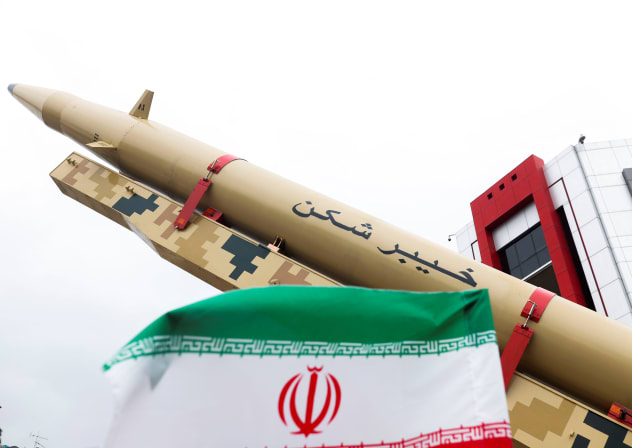
the first line of defense against an expected Iranian counterstrike, involving
the launch of long-range Shihab 3 missiles.
The Israeli drones can
reportedly reach Iran and hover over missile launch sites. Israel’s Arrow
missile defense shield would also come into play to intercept missiles heading
into Israeli airspace.
However, such a strike would undoubtedly touch off
conflict with Iran’s proxy in southern Lebanon, Hezbollah, which is armed with
tens of thousands of rockets, as well as Hamas in Gaza, and possibly with Syria.
The resulting chain of events could easily lead to a major regional war and
long-term instability, so much so that some senior Israeli defense figures have
reportedly been rejecting the idea of attacking Iran for years.