The Jerusalem Post
Jpost search icon google-icon iphone
  Set as Homepage
Thu, May 23, 2013   14 Sivan, 5773
newspapers magazines
 
    • Breaking News
    • Diplomacy & Politics
    • Defense
    • National
    • Mideast
    • Syria
    • Iran
    • World
    • Business
    • Sports
    • Health & Science
    • Environment
  • Video
  • Opinion
    • Columnists
    • Editorials
    • Op-Eds
    • Letters
  • Jewish World
  • Lifestyle
    • Arts & Culture
    • Food & Wine
    • Travel
  • Features
    • Insights & Features
    • Week in review
    • On the Web
    • Shalva Superheroes
    • Obama in Israel
  • Blogs
    • In the news
    • Judaism
    • From the Middle East
    • Lifestyle
    • Aliya
    • Science and Technology
  • JPost Apps
    • iPhone app
    • iPad app
    • Android app
    • Twitter
    • Facebook
    • RSS feeds
    • JPost Toolbar
    • JPost Newsletter
    • JPost Alert
  • Premium Zone
    • The Jerusalem Report
    • The Experts
    • 20 Questions
    • e-paper
    • Ivrit
    • Christian Edition
    • Dash
    • Magazine
    • Metro
    • In Jerusalem
  • French
    • Politique & Social
    • Affaires Palestiniennes
    • Diplomatie & Monde
    • Art & Culture
    • Israel
  • Green Israel
JPost Learn Hebrew  
Advertise with us  
Nefesh Guided Aliyah  
Eldan  
AFMDA  
Africa Israel Group  
Isram Group  
Kupat Ha  
JPost Twitter  
JPost Facebook  
Classifieds  


Breaking News
 
 
  • JPost.com
  • Elections 2012: Egypt goes to the polls
 

New policy group aims to shake up diplomatic strategy

By BEN HARTMAN
LAST UPDATED: 06/21/2010 00:37
Tweet

Israeli public policy group holds inaugural conference in Tel Aviv.

UN Security Council
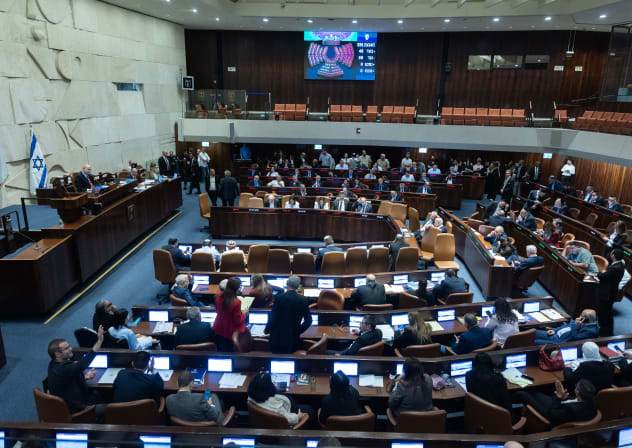
UN Security Council Photo: courtesy
Stressing the need for Israel to come up with a revitalized public discourse on security, diplomacy, and strategy, a new Israeli public policy group held its inaugural conference in Tel Aviv on Sunday.

The Israel Security Council, which is run by the Jerusalem Center for Public Affairs (JCPA), brought together dozens of experts with a wide range of experience in the fields of security, public policy, and academia, as part of an effort to clear up the morass in Israeli diplomacy and strategy through the encouragement of alternatives to long-held diplomatic solutions for Israel. This effort includes at its center a re-examination of the concept of a two-state solution based on an Israeli withdrawal to the ’67 borders.

RELATED:
Public Diplomacy: At war without an army
From scramble to pre-emptive diplomacy

The founders include JCPA chief and former Israel Ambassador to the United Nations Dore Gold, who told The Jerusalem Post before the conference that “the security dimensions of Israel’s needs as it approaches future peace processes has been forgotten,” adding that for too long “the strategy has been that a peace agreement will bring security and not the other way around.”

“Many times diplomats will put forth a proposal and then go to the army to ask, ‘Okay, now how do we make this work?’ It should be the other way around.”

In his address to the conference, Gold said that the main issue facing Israel’s image in the world, and in particular whenever there is a large diplomatic crisis, is not a lack of hasbara, or a lack of sufficient ambassadors with good enough English to get Israel’s point across.

The problem, according to Gold, is that Israel “has no clear message in regard to its goals. If someone asks Palestinian Prime Minister Salam Fayyad what he wants, he’ll say ‘a Palestinian state with east Jerusalem as its capital.’ If someone asks an Israeli politician they say, ‘It’s complicated’ or ‘We want peace,’ or ‘a secure peace.’ The Palestinians have clear targets and we have only indistinct goals.”

Another of the council’s founders, former Israel National Security Council chief and deputy IDF chief of staff Gen. (Res.) Uzi Dayan, said that Israel’s image had recently become “a factor affecting our national security.”

He added that “it’s not enough for us to be strong. Whenever we formulate a strategic endeavor, we need to ask ourselves: How will we explain this?” Dayan also said that a future peace agreement must be based on the preservation of “the defensible borders of Israel.” Retention of Israeli sovereignty over the Jordan valley must be part of any future peace agreement, as the Green Line is no longer relevant as a future border for the state of Israel.

“When we talk about what will be the border to ensure our security, it won’t be on the Green Line and it won’t be the security fence. The only relevant border is the Jordan Valley.

Dayan’s argument was mainly based on the threat of rockets fired from the West Bank and the Jordan Valley on Israeli population and industrial centers on the coastal plain, but also on the uncertainty of what future threats Israel could face on its eastern borders.

“Does anybody know what will happen in the future in Iraq? In another 50 years? What about in Jordan for that matter? “The time has come for our diplomacy to be based on territory controlled by our soldiers.

We have a historic and diplomatic right to do so.”

The council’s board of founders includes former Yesha council chief Pinchas Wallerstein, Likud icon and three-time minister of defense Moshe Arens, as well as former Maccabi Tel Aviv basketball star Tal Brody, and head of NGO Monitor Bar-Ilan Professor Gerald Steinberg, among many others.

Sunday’s conference was also held to promote a pamphlet written by former Israel national security advisor Maj.-Gen. (res.) Giora Eiland, called “Regional Alternatives to the Two-State Solution,” which states that the two-state solution as it’s currently envisioned “is difficult to implement and would not ensure stability.”

The pamphlet argues that there is little reason to believe that concepts that failed in 2000 at Camp David should work again in 2010, and presents other alternatives, including a “Jordanian-Palestinian” federation that includes “three-states: the West Bank, the East Bank, and Gaza,” which would be “states in the American sense, like Pennsylvania or New Jersey.” Another option is one based on exchanges of territory between Israel, Egypt, and Jordan.

In an address to the conference, Eiland referred to the Israel-Palestine conflict as being paradoxical, in that “everyone agrees that the conflict must be solved and virtually every international body agrees that the two-state solution is the way to solve the crisis, yet the two-state solution isn’t seen as desirable and maybe even possible, by either side.”
  • Send
  • Large
  • Small
  • Print
  • Share
This article is by :
Ben Hartman

Follow @Benhartman
Recent stories:
  • Police release portion of bank shooting ...
  • Police to probe officers' conduct in Bed...
  • 'Police fired into room where Alon held ...
  • State vows to curb private gun ownership
JPost Community
Tweet
Israel policy public policy diplomacy Israel Security Council Tel Aviv
Share this article
Tweet
Share
Send
Your comment must be approved by a moderator before being published on JPost.com. Disqus users can post comments automatically.

Comments must adhere to our Talkback policy. If you believe that a comment has breached the Talkback policy, please press the flag icon to bring it to the attention of our moderation team.
JPost Services
conferenceConference
newsletterNewsletter
iphoneMobile Apps
kotelcamKotel Cam
kolboJPost Alert
premiumPremium
JPost TV News  
Mobile Apps  
Bank Hapoalim  
Meir Panim  
Yad Ezra  
Rambam Hospital  
TourLuxe  
Zev Goldstein PLLC  
Penrose Gallery  
JPost Premium Zone  
JPost kotel Camera  
         
 
Israel Focus
JPost TV News
Coming soon to a screen near you!  
Nefesh B'Nefesh Guided Aliyah
Already living in Israel? Enjoy the Benefits of Aliyah!  
Give "Freedom" this Passover
to needy Israeli families. Donate now  
War Threatens
Protect the People of Northern Israel  
China Suppliers
 
Intelligence Squared
The international debate forum, announces it is coming to Israel  
Bank Hapoalim
Israeli's number one bank  
Jerusalem Post Lite
Lite Edition of the Jerusalem Post for English improvement  
Learn Hebrew with us
Get 10 minutes free personal coaching in Hebrew through phone or Skype  
JPost newspapers
Sign up for the JPost newspapers and receive one month free subscription  
Kosher English Magazine
English language weekly magazine - especially for religious people  
JReport Kindle Edition
Now you can get the Jerusalem Report directly to your Kindle  
JPost Premium Edition
The very best articles are available only in our Premium edition  
Lifestyle Magazine
 
 
Real Estate
Don't Look For a House!
In Israel, our website will do it for you!  
 
Travel
Eldan Rent a Car
20% off all Car Rental Reservations in Israel  
Hertz Car Rental
Special Online Discounts!  
The King David Jerusalem Hotel
One of the world's truly iconic hotels, and a Jerusalem landmark  


Sites Of Interest:

Jerusalem Hotels
KKL-JNF
Poalim Online
BreitBart.com
Our Friends
Jerusalem Attractions
Jerusalem Tours
itraveljerusalem.com

JPost sites:

Learn Hebrew
The Jerusalem Report
Our Magazines
JPost Edition Francaise
Green Israel
Christian World
Jerusalem Post Lite

Services:

JPost Mobile Apps
JPost Premium
JPost Newsletter
JPost Toolbar
JPost News Ticker
JPost RSS feeds
JPost Archives
JPost Alert
JPost Kotel Cam

JPost Conferences:

NYC Conference
Diplomatic Conference

Information:

About Us
Feedback
Staff E-mails
Copyright
Sitemap
News Partners
Advertise with Us
Statistics
Ad Specs
Terms Of Service
Jpost.com, the online edition of the Jerusalem Post Newspaper - the most read and best-selling English-language newspaper in Israel. For analysis and opinion from Israel, the Jewish World and the Middle East. Jpost.com offers expert and in-depth reporting from Israel, the Jewish World and the Middle East, including diplomacy and defense, the Palestinian-Israeli conflict, the Arab Spring, the Mideast peace process, politics in Israel, life in Jerusalem, Israel's international affairs, Iran and its nuclear program, Syria and the Syrian civil war, Lebanon, the Palestinian Authority, the West Bank and Gaza Strip, Israel's world of business and finance, and Jewish life in Israel and the Diaspora.
 
About Us | Advertise with Us | Subscribe | Premium | Newsletter | RSS | Contact Us
 
All rights reserved © The Jerusalem Post 1995 - 2012