The scholarly world is abuzz over the discovery of ancient Jewish scrolls in a
cave in Afghanistan’s Samangan province.
If the scrolls are
authenticated, they may be the most significant historical finding in the Jewish
world since that of the Cairo Geniza in the 19th century, Channel 2 Arab affairs
correspondent Ehud Ya’ari reported Friday.
RELATED:Archaeologists discover 2nd Temple seal in J'lem“We know today about a couple
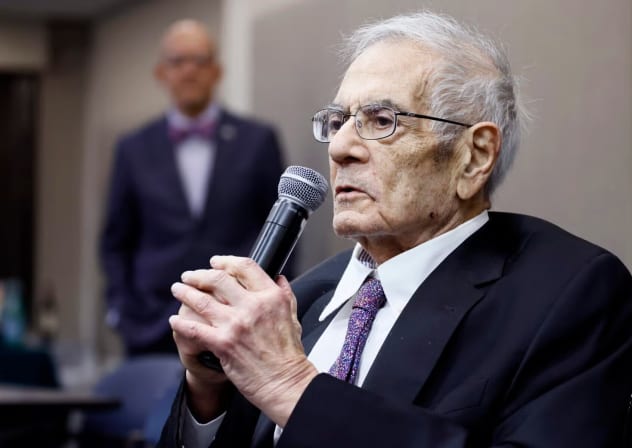
of findings,” Haggai Ben- Shammai, professor emeritus of Arabic language and
literature at the Hebrew University of Jerusalem, was quoted as
saying.
“In all, in my opinion, there are about 150 fragments. It may be
the tip of the iceberg.”
The scrolls, which were part of a geniza – a
burial site for sacred Jewish texts – date from around 1,000 years ago and are
in Arabic, Judeo-Arabic and ancient Persian.
One scroll, a replica of
which was shown to the cameras, was apparently a dirge written for an important
person whose identity has not been determined.
“Where has he gone?” reads
the text. “His family members are now alone.”
Other texts said to have
been found include an unknown history of the Kingdom of Judea, passages from the
Book of Isaiah and some of the works of 10th-century sage Rabbi Sa’adia
Gaon.
In addition, rings with names such as Shmuel Bar-Yosef inscribed in
Hebrew on them have surfaced.
The area in which the scrolls were
discovered is on the Silk Road, a trade route that connected eastern Asia with
the Middle East and Europe, and that Jewish merchants often
traveled.
Ya’ari quoted sources as saying the scrolls had first been
moved to Pakistan’s Peshawar province, and from there been sold to antiquities
dealers in Geneva, London, Dubai and Jerusalem.
He said the Prime
Minister’s Office and several Jewish businessmen had expressed interest in
buying the scrolls from dealers and collectors, but the process was in its early
stages.
The Cairo Geniza has produced 280,000 texts, providing a wealth
of information on almost every aspect of Jewish history.