Two panels debating a broad range of issues affecting the Jewish world took
place at the Presidential Conference in Jerusalem on Wednesday, but one hot
topic that was recently in the news received little attention.
“It was
the elephant in the room,” said Dov Waxman, associate professor of political
science at the City University of New York, who was in the audience. “The
growing demographic weight of Orthodoxy and ultra-Orthodoxy as revealed in the
recent UJA Federation study raises huge and fundamental questions about the
Jewish future.
It has implications for federations to sustain themselves
and also huge implications for the future political and cultural orientation of
Jewish communities.”
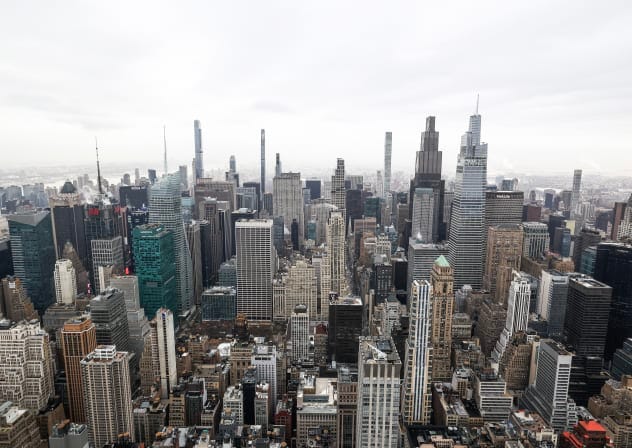
Last week, new data released by the UJA-Federation
of New York showed Orthodox and specifically haredi Jews were by far the single
fastest growing demographic in the Jewish population of that city. According to
the study, the 10 percent increase in the number of Jews living in the New York
metropolitan area over the past decade – who now number 1.5 million – was
largely due to high birth rates among the fervently religious.
At the
same time, the number of people affiliated with Reform and Conservative Judaism
dropped and intermarriage rates among secular Jews remained high at about 50
percent.
“We were surprised by how much attention the study has
received,” said Steven M. Cohen, the researcher who conducted the survey
on behalf of UJA-Federation of New York, and was also attending the conference
on Wednesday.
While Cohen’s study has been discussed at length in Jewish
media, it was mostly skirted around in Jerusalem on Wednesday, even when it did
come up.
During a panel discussion titled “The Challenge of Being Jewish
in the Diaspora,” moderator Steve Linde, editor-in-chief of The Jerusalem Post,
asked Rabbi Rick Jacobs, the president of the Union for Reform Judaism, about
the study’s findings.
“Lets be careful with that study,” replied Jacobs.
“It is the New York Jewish community and it is unlike any Jewish community
except parts of Israel.”
Jacobs called haredi Judaism a “beautiful and
authentic” form of the Jewish faith. He added, however, that non- Orthodox
denominations like his own were equally so and should not be discriminated
against.
“It’s easier to be Jewish in the Diaspora than a non- Orthodox
Jew in Israel,” he said, referring to the exclusion of non-Orthodox rabbis from
the religious establishment in Israel, which is dominated by
Orthodoxy.
Earlier in the day, the New York study was mentioned in
passing on a panel titled “New Interpretations of an Ancient Identity: The Next
Jewish Generation.”
But speakers – which included Yehuda Kurtzer,
president of the Shalom Hartman Institute of North America; columnist Jay
Michaelson and Rabbi Danya Ruttenberg – did not comment on it.
Neither
panel featured an ultra-Orthodox speaker.