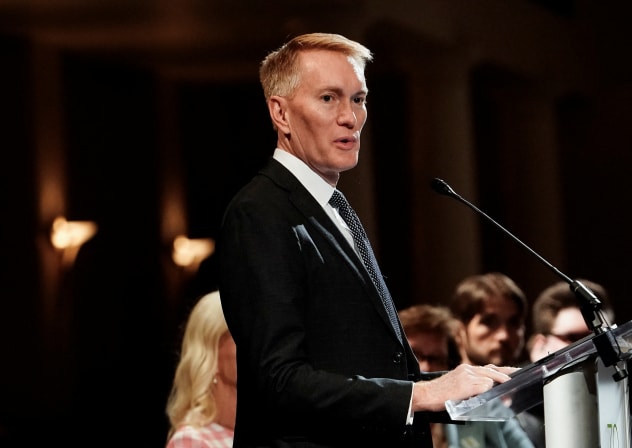
NEW YORK – Israel on Friday called on the international community to recognize
the suffering of Jewish refugees from Arab countries and their material claims
the same way it acknowledges the plight of displaced Palestinians.
Deputy
Foreign Minister Danny Ayalon, Ambassador to the UN Ron Prosor and World Jewish
Congress President Ronald Lauder presented the recently launched diplomatic
campaign in a special gathering at the UN before Israeli officials, foreign
diplomats, activists and journalists.
“Today’s event is about the past
but more importantly about the future,” said Prosor.
“Our purpose is
clear and simple: To give justice for one million Jews whose stories have been
hidden and left untold.”
He added: “For 64 years the history has been
distorted and whitewashed in the UN. Arab countries have never taken
responsibility for creating more than 800,000 refugees.
Yet not a single
syllable – and listen to this – can be heard in any of the 1,888 UN resolutions
on the Mideast.”
Israel was founded on the ethos of being a safe haven
for Jews in their historic homeland as a response to the persecution of Jews
throughout history and the horrors of the Holocaust in Europe in
particular.
The story of its citizens who left, fled or were expelled
from Arabic-speaking countries while the Israeli-Arab conflict flared has been
relatively neglected, a fact Ayalon acknowledged in his speech.
“For some
reason this issue was never raised, never discussed, and without too much mea
culpa, this was wrong,” Ayalon said. “But it’s never too late.”
Critics
have said the timing of the campaign ahead of the gathering of the General
Assembly of the UN next week is not accidental. Palestinian politicians like
Hanan Ashrawi have argued that Jews from Arab lands are not refugees at all and
that, either way, Israel is using their claims as a counter-balance to those of
Palestinian refugees against it.
“The claim that Jews who migrated to
Israel, which is supposed to be their homeland, are ‘refugees’ who were uprooted from their homelands... is a form of deception and delusion,” she wrote
in a recent article in Arab media outlets. “If Israel is their homeland then
they are not ‘refugees,’ they are emigrants who returned either voluntarily or
due to a political decision.”
A chorus of Jewish politicians and
activists at the event, however, said the rights of Palestinian and Jewish
refugees were were not mutually exclusive.
“We should solve both refugee
issues now,” said Lauder. “The world has long recognized the Palestinian refugee
problem and they should recognize those of Jews too.”
Malcolm Hoenlein,
executive vice chairman of the Conference of Presidents of Major American Jewish
Organizations, took aim at the UN, where the gathering was taking place, saying
it passed thousands of resolutions relating to the rights of Palestinian
refugees but not one pertaining to those of Jews from the Middle East and North
Africa.
“It was manipulation by Arab delegates as early as ’48 and they
took it off the agenda never for it to reappear again,” he said. “They say Jews
left freely and were not refugees, denying reality in an attempt to keep this
issue off the agenda.”
Lawyer and pro-Israel activist Alan Dershowitz was
even harsher in his criticism of the international organization.
“Think
about all the refugees from places like Königsberg, who were forced to leave
when the Soviets came or in India and Bangladesh. They have all built new lives
for themselves, only the refugee problem of the Palestinians persists,” he said.
“Why? UN!” Sylvain Abitbol, a Moroccan Jew who emigrated to Montreal in 1967,
the year a wave of anti-Jewish violence and legislation sparked by Israel’s
victory in the Six Day War spread across the Arab world, sat in the crowd
listening to the speeches. He shrugged when asked why it took so long for Israel
to launch the current campaign.
“We’ve been working with Israel for many
years, but it took Ayalon to raise this,” he said.
Whatever the reasons
for the delay and regardless of the political context, he said standing up for
the rights of Jews from Arab countries such as himself was a worthy and just
cause.
“It was very difficult for Jews in Morocco, that’s why I left,” he
said wistfully. “It was not as bad as other countries, true, but it was bad.
Listen, there used to be 200,000 Jews in Morocco and with the exception of about
2,000 who still live there, they all left.”