Rabbis rule on shape of borekas
02/08/2013 02:55
Triangular pastries must be dairy, kashrut division demands.
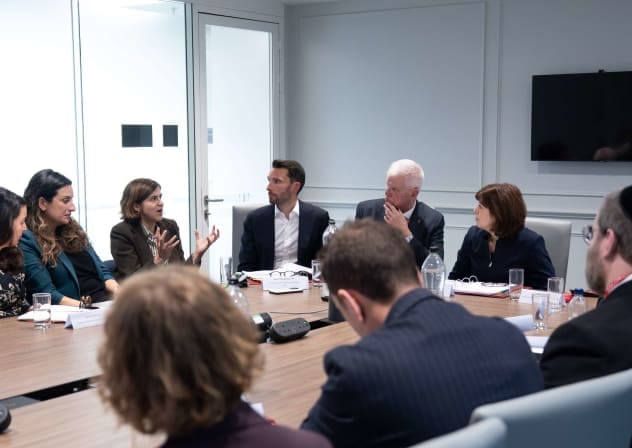
HAGGAI BAR-GIORA (left) and Yaakov Sebag Photo: Courtesy Devora Ginzburg
The Chief Rabbinate’s kashrut division sat down this week with the heads of
Israel’s burekas industry to discuss the shapes of burekas and their impact on
the general populace.
Although seemingly innocuous, the shape of these
fried pastry delicacies can have a significant impact on one’s spiritual
well-being, owing to a set of unwritten principles regarding the shape of these
Middle Eastern snacks that has traditionally indicated to the discerning
customer the contents of the filling that lie therein.
Burekas, a staple
of the Israeli diet, come in many different varieties. Some are filled with
mashed potato, some with spinach, cheese, mushrooms or combinations
thereof.
Other types of burekas can also be filled with ground meat, such
as “Sigarim,” which themselves also come in several varieties, including
non-meaty versions.
A widely accepted convention within the burekas
industry has been to form into triangular shapes any of these tempting pastries
containing cheese or other dairy products.
Burekas free of any dairy
content, the potato bureka being the classic example, are shaped into more
angular rectangles or cubist squares.
In this way, people who adhere to
Jewish dietary laws, which stipulate that one must not consume dairy products
for a certain number of hours after eating meat, would be less likely to
mistakenly eat a cheese and spinach bureka, for example, shortly after having
eaten anything of a meaty nature.
Unfortunately, adherence to the burekas
shape convention has become somewhat flaky in recent years, and this has led to
concern that people may inadvertently be eating right-angled pastries which
nevertheless contain dairy products.
As first reported by Radio Kol Hai,
it was for this reason that rabbis from the Chief Rabbinate’s kashrut division,
including Rabbi Haggai Bar- Giora – responsible for kashrut in industry –
convened on Tuesday with heads of the pastry sector, to reinforce the
time-honored and shapely traditions of old.
It was agreed that the
triangular and rectangular convention of the past would be more strictly adhered
to. Other proposals were examined, such as making sigarim with ground meat
noticeably longer than those without; finger-shaped burekas containing no dairy
to be closed at the ends, with their dairy cousins to be open at the
extremities.
The pastry chiefs were generally receptive to the proposals,
although they expressed certain caveats, and at the end of the lengthy meeting a
series of guidelines were drawn up which will in short order be published by the
rabbinate.
A spokesman for the rabbinate was keen to stress that the
underlying principles for the initiative are well-founded in the Shulchan Aruch,
a seminal and comprehensive work on Jewish law, and that the entire process has
been conducted in an atmosphere of understanding and cooperation which it is
hoped will prevent unwitting errors in the consumption of burekas in the future.