Following the example of this month’s Nakba Day marches, Palestinians and their supporters are preparing to launch another multipronged assault on Israel’s borders this week to mark the “Naksa,” or setback, of Arab defeat and territorial losses in the 1967 Six Day War.
The website “Third Palestinian Intifada” and its Facebook page, “Countdown to the Third Palestinian Intifada,” have posted detailed plans for marches on Israel’s borders with Syria, Lebanon, Jordan and Gaza, as well as processions to Jerusalem’s Al- Aksa Mosque, on three separate dates before and during the war’s anniversary.
RELATED: Palestinian group calls for more 'Nakba Day' style riots Syria condemns Israel's 'criminal acts' against protesters
The group’s “plan of action” calls for mass rallies on June 3, 5 and 7 – the Friday leading up to the Six Day War anniversary, the date on which the war began and the date Israeli troops took Jerusalem, respectively.
Thirteen people were killed on May 15, Nakba Day, while trying to breach Israel’s borders with Syria and Lebanon.
Many of the protesters killed had been shot by the Lebanese Army as the group approached the border with Israel.
Similar rallies were held on Israel’s borders with Jordan and Gaza, and
in the West Bank. In the day’s most dramatic incident, three people were
killed by IDF fire when around 100 Syrians broke through the Golan
Heights border fence at Majdal Shams. Another 10 were killed by Lebanese
troops on the Israel-Lebanon border.
This time, military officials said the IDF will deploy larger forces
along Israel’s northern borders to avoid a repeat of the Nakba Day
disturbances.
The officials said they expect the rallies to be relatively peaceful,
and that they hope an effective troop deployment can prevent border
infiltrations altogether.
“The goal is twofold,” one defense official said. “To prevent
infiltrations, and at the same time, to try to ensure there are no
casualties on either side.”
The May 15 border rallies were coordinated largely through social media
sites, and organizers predict an even greater turnout this time around.
“We will renew the memory of the Naksa, and we will make it a setback to
the occupying entity,” organizers wrote on Facebook. “Thus we declare
with all our strength and with our loudest voice that the seventh of
June, which marks the rape of Jerusalem… is a day of allegiance to
Jerusalem in all countries of the world.”
In March, Facebook closed a page calling for a third intifada against
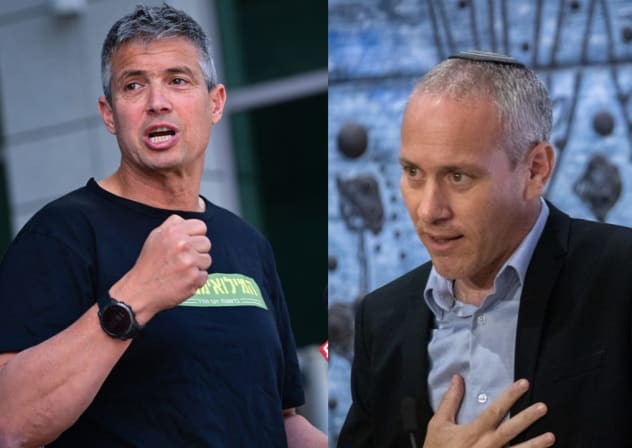
Israel after Public Diplomacy and Diaspora Affairs Minister Yuli
Edelstein complained it was inciting violence.
The current Facebook page, under a slightly different name, was created
in early April, and by mid-May had been followed, or “liked,” by 100,000
people. Over the last two weeks the page’s following has grown to over
375,000.
Organizers wrote that the Nakba Day events prove historic Palestine can
be “liberated” by mass unarmed marches, provided the “umma,” or Islamic
nation, is willing to pay any price, including a million martyrs.
“Our intifada continues, Israel is about to depart, and with God’s help
we will all pray in the mosques and churches of Jerusalem,” they wrote.
Similar notices have been posted on other pro-Palestinian websites.
“On Sunday, June 5, the 44th commemoration of the Naksa, or setback –
Israel’s 1967 expulsion of 300,000 Palestinians following the Six Day
War – Palestinian refugees will return en masse to the borders,” said an
article on the International Solidarity Movement homepage.
Meanwhile, the administrators of a popular Facebook page dedicated to
the Prophet Muhammad have changed the profile picture to an announcement
that the “Continuing Palestinian Intifada” will begin on June 7. The
page, “Rassoul Allah,” is one of the most popular of thousands dedicated
to the Muslim prophet, with 3.7 million “likes.”
Ofir Gendelman, the Prime Minister’s Office spokesman for Arabic media,
said Israel is ready to use “any means necessary” to protect its
borders.
“Activity on Facebook calling for people to march on the borders has
grown in recent weeks, and there are pages telling people exactly where
to go,” he said. “Of course we’re familiar with this activity both on
Facebook and Twitter, and have been for some time. We’re prepared for
any eventuality, whether by use of the police, army, security forces,
Foreign Ministry and of course the Prime Minister’s Office, to provide a
security response to attempts to enter into our territory.
“These people want 300 or 400 casualties in order to create a media and
geopolitical tsunami to distract the world’s attention from what’s
happening in Syria, Lebanon and the Palestinian Authority, and to direct
it at Israel,” he said.
“We must remember that not all those who click ‘like’ on Facebook are
going to board a bus and ride to the border. There’s a difference
between clicking ‘like’ and taking the personal risk of trying to breach
the border,” he said.
“I’m certain the other side will get the message – that we won’t let anyone in, whatever the price. They won’t get in.
The borders under our sovereignty will be maintained, whatever the price.”
According to Third Palestinian Intifada’s “plan of action,” following
prayers on Friday, Arabs in Israel, the West Bank and Jerusalem will
march on the Al- Aksa Mosque to declare their “allegiance” to the holy
city. Egyptians are instructed to gather in Tahrir Square to do the
same, as are residents of “the rest of the Arab, Islamic and Western
capitals.” Gazans and Jordanians are encouraged to march on their
respective borders with Israel.
Two days later, Arab residents of Israel, the West Bank and Jerusalem
are again instructed to march on Al-Aksa Mosque, and to “clash with
Israeli soldiers in contact areas,” while in Lebanon, Syria and Jordan,
protesters are to march “peacefully” to their respective border with
Israel.
In the capitals of Arab, Islamic and Western countries, rallies are
planned outside “Zionist embassies,” including Israel’s diplomatic
missions in Egypt.
On June 7, “millions of Arabs, Muslims, Christians and liberals of the
world, led by university students in different places will swear
allegiance to Jerusalem on the day Jerusalem fell and the mosques and
churches fell to the hands of the Zionists.”
Organizers are calling again for marches on Al-Aksa Mosque, and for a
“construction convoy” from Egypt to Gaza to bring building materials to
the Strip.
“The process of empowerment and liberation, which started in Tunisia and
Egypt, should end with the liberation of Jerusalem and Palestine,”
organizers wrote. “Palestine will be liberated from the river to the
sea, and the sea to the river.”
Eyal Zisser, a senior research fellow at Tel Aviv University’s Dayan
Center, said the association between “Nakba” and “Naksa” is problematic
from Israel’s perspective in that it identifies the defeat of 1967 with
calls for the return of refugees from the War of Independence.
“If we convince ourselves that our problem with the Arab world is not
that they are unwilling to accept our existence, but that it’s over the
West Bank and Gaza, then why are the Palestinians linking the return of
refugees with the ’67 borders?” he said.
Melanie Lidman and Yaakov Katz contributed to this report.
|